
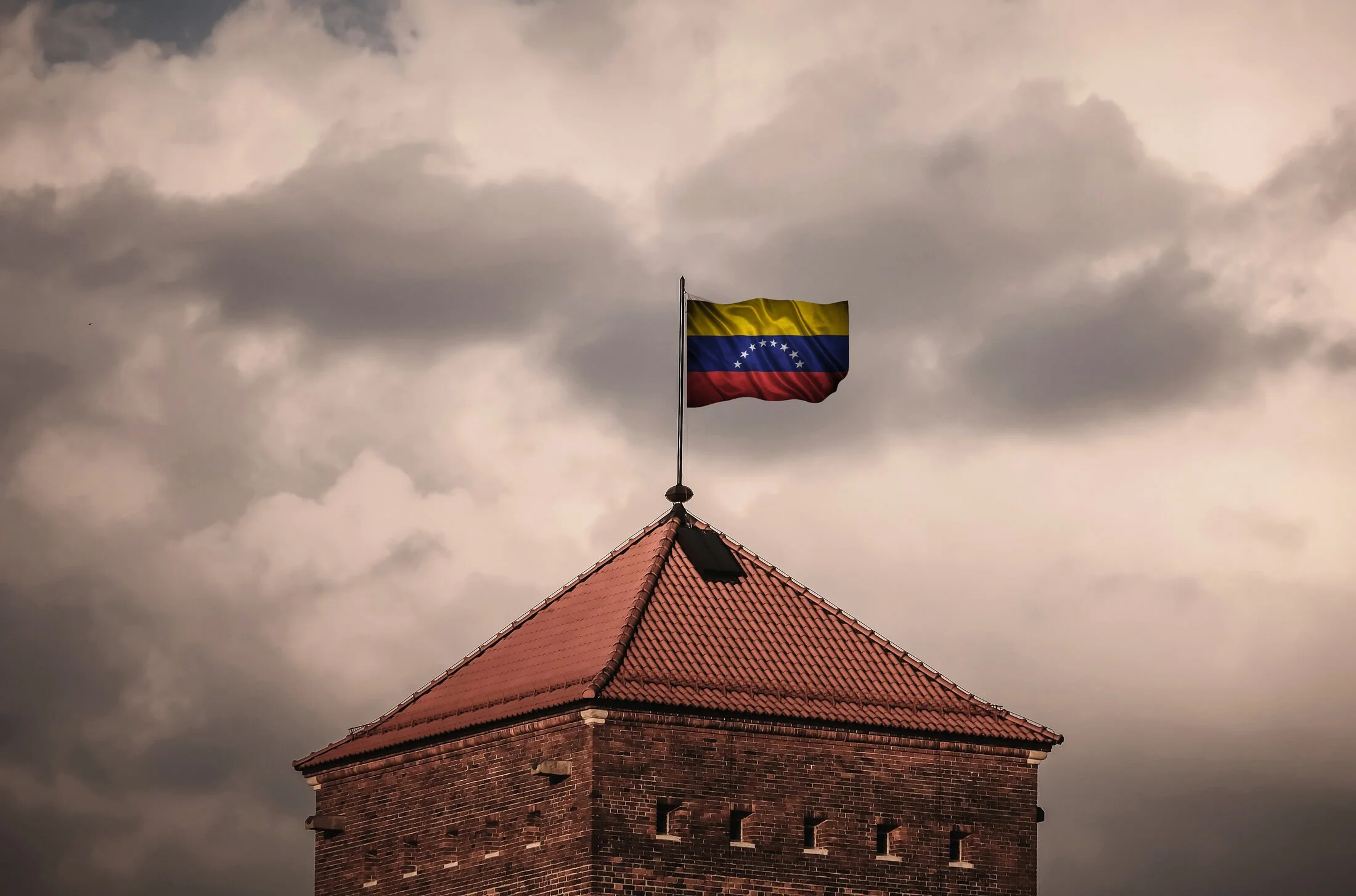
Venezuela Country Profile:
Preservation, Provenance and Sanctions, Not Optimisation
Venezuela has produced one of the largest per-capita wealth flights of the century and nearly eight million emigrants. For clients with a Venezuelan connection, cross-border work is about getting assets, families and documents to a stable jurisdiction with a provenance file that a bank will accept, under a sanctions regime that is being rewritten month by month.
🇻🇪 Key Facts (2026):
Currency: Bolívar (VES, redenominated 2021); official BCV rate in the hundreds of bolívares per dollar and depreciating, with a parallel-market gap that reopened in 2025; the US dollar is the de facto unit of account for prices, rents and savings
Personal income tax (ISLR): 6% to 34% progressive in tax units (UT), on worldwide income for residents; inflation has eroded the UT so that almost any real income reaches the top band, and enforcement on foreign income is minimal in practice
Corporate tax: 15%, 22% and 34% by band; 50% for hydrocarbons
VAT (IVA): 16%
Large financial transactions tax (IGTF): 3% on payments in foreign currency or crypto, since 2022
Capital gains: ordinary income; 1% on listed-share sales
Wealth tax: Impuesto a los Grandes Patrimonios (2019), 0.25% to 1.5% on the net worth of designated special taxpayers above a UT threshold
Estate and gift tax: progressive by kinship and value, to a top rate of 55%
Tax residency trigger: more than 183 days in the calendar year or the preceding year; Venezuelan nationals are presumed resident unless they prove residence elsewhere
Currency controls: formally liberalised since 2018, dollar transactions lawful, but with central bank intervention, bank-level limits and the IGTF
Sanctions: US programme (Executive Orders 13692, 13850 and 13884, PdVSA and Government of Venezuela blocking, extensive SDN listings) in force with expanded general licences after the January 2026 change of government; EU, UK, Canada and Swiss targeted lists in force
Emigration: roughly 7.9 million Venezuelans abroad on UN and R4V figures; common destinations the United States (Miami), Colombia, Spain, Panama, Chile, Peru, Argentina, Ecuador, Brazil and the Dominican Republic
Headline visa thresholds: not applicable as a destination; foreigners obtain temporary residence through SAIME on employment or family grounds
Corporate setup: Compañía Anónima through the Registro Mercantil, USD 1,500 to 3,000 in practice. Annual maintenance: USD 2,000 to 5,000
Personal bank account minimum: none; a cédula is required and non-resident foreigners are effectively excluded
Private banking threshold: no meaningful domestic offering; Venezuelan wealth is banked in Miami, Panama, Madrid and Zurich
Cost of living, comfortable professional family, eastern Caracas: USD 3,000 to 5,000 monthly, in dollars
CRS: not participating; no Multilateral Competent Authority Agreement
FATCA: no IGA; Venezuelan banks register individually as foreign financial institutions
Treaties: roughly 31, including the United States (1999), Spain, Portugal, Canada, the United Kingdom, Germany, France, Italy, the Netherlands, Switzerland, Mexico and Brazil; none with Panama, and none with Colombia since Venezuela left the Andean Community in 2006
Lists: not on the FATF grey list; added to the EU's high-risk third country list in 2025
Population: roughly 28 million resident, materially reduced by emigration
Time zone: UTC-4
Last edited: 5 August 2026 by Joe Martin Hanson (Director & Global Partner) with advice from FTR’s Venezuelan Tax Partners
Why Venezuela Matters
Venezuela has produced one of the largest human and wealth migrations of the twenty-first century. Nearly eight million people have left since 2014, from oil engineers and doctors to the families who built the country's retail, banking and construction sectors, and they have rebuilt lives in Bogotá, Madrid, Miami, Panama City, Santiago and Lima. The wealth that left with them is a large share of the Latin American money that now sits in Panamanian foundations, Spanish property and Florida brokerage accounts.
For a client with a Venezuelan connection, whether assets still in the country, family still there, a Venezuelan passport, or wealth that originated there, the planning problem is preservation and legitimate international relocation, not tax optimisation. The Venezuelan tax system is progressive on paper and barely functional in practice; the real constraints are sanctions, provenance and paperwork.
It matters to FTR for a third reason. Venezuela is the case that justifies the Plan-B conversation with every other Latin American family in the book: a country with the largest oil reserves in the world, a sophisticated professional class and deep capital markets in 2005, whose currency, property rights and banking system were gone within fifteen years. Clients in Bogotá, Lima and Santiago do not need to be told why a second residency and a foundation outside the country exist. They have Venezuelan neighbours.
Visa and Residency Routes
As a destination, Venezuela offers nothing FTR would use. Foreigners obtain temporary residence through SAIME on employment or family grounds, the process is slow and discretionary, and no rentista, investor or retiree route worth the name exists. The relevant residency question runs the other way: how a Venezuelan leaves, and what the destinations require.
Documents. A Venezuelan passport from SAIME costs several hundred dollars in fees and expediting, takes months, and is frequently unavailable for months at a time. Extensions (prórrogas) are issued by sticker. Many jurisdictions accept expired Venezuelan passports for a set period beyond their face date, the United States for five years from expiry, Spain, Colombia and several others on similar terms; a client should check the current position for each border rather than assume it. Apostilled birth, marriage and academic certificates require the Ministry of Foreign Affairs' online system and often an intermediary in Caracas; a family that leaves without a complete apostilled document set will spend years reconstructing it.
Destinations. Colombia's Estatuto Temporal de Protección gives Venezuelans a ten-year temporary status and remains the largest single channel. Spain grants nationality to Ibero-Americans after two years' legal residence, which makes Madrid the preferred landing for families who can fund it, and the Ley de Memoria Democrática route for grandchildren of Spanish emigrants, heavily used by Venezuelans, closed to new applications in October 2025. The United States' Temporary Protected Status designations for Venezuelans were terminated in 2025 and the humanitarian parole programme ended, so the Miami route now runs through investment, employment or family petitions only. Panama, Chile and Peru have all required consular visas for Venezuelans since 2017 to 2019; Panama's Friendly Nations and Qualified Investor routes are open to Venezuelans who qualify but the banking step is the obstacle. Argentina extends Mercosur residence to Venezuelans and remains the easiest legal entry for professionals.
For an HNW Venezuelan family, FTR's usual sequence is a Spanish or Panamanian residency for the family, a US or Spanish base for the next generation, and Portugal or Italy considered where the family has European ancestry.
Tax Peculiarities and Traps
Residence by presumption. A Venezuelan national is presumed tax resident unless they can prove residence elsewhere, and SENIAT's certificate of fiscal residence is needed to claim any treaty. In practice nobody leaving obtains one, which leaves a technical worldwide tax exposure that matters only if the client ever needs to reconcile Venezuelan and destination positions, for example on a treaty claim under the US or Spanish treaty.
Inheritance tax at up to 55%. Venezuela's succession tax is one of the highest headline rates in the world and reaches property located in Venezuela regardless of where the heirs live. A family holding a Caracas apartment or a business through the parents' names faces it on the first death, on a valuation that will be argued in dollars and assessed in bolívares.
The IGTF and the dollar economy. The 3% tax on foreign-currency transactions is the state's way of taxing an economy that has dollarised around it, and it applies to card and transfer payments in dollars. Combined with bank-level limits and the reopened parallel-rate gap, it means moving value out of Venezuela through the formal system costs money and creates records, and moving it informally creates provenance problems at the destination.
Real estate. Venezuelan property is the hardest Venezuelan asset. Title is registered, but registries are unreliable, squatting and invasion risk is real, valuations are informal and in dollars, and a sale to a foreign buyer is impractical. Rental income is negligible against value. Most families hold it as an option on recovery rather than an investment, and should plan on that basis.
Provenance. The Venezuelan-specific trap is not a tax rule but a banking one. Every destination bank asks how the money left Venezuela, when, and how the underlying wealth was earned in a country where a large share of private fortune since 2003 touched the state. A client who cannot document that will be refused in Panama, Spain and Switzerland, and the refusal follows them.
The Structural Layer
For a Venezuelan family already resident in a third country, FTR's default of a Panamanian Private Interest Foundation owning a Panamanian SA, with a modest director's salary paid where the family lives, fits well and is in practice the most common structure Venezuelan wealth already sits in. The foundation provides succession outside Venezuela's 55% regime for non-Venezuelan assets, continuity if a family member returns or is detained, and separation between generations. The SA holds the non-Venezuelan operating and investment assets. The adaptation is at the front: full sanctions screening of every founder, beneficiary, protector and source of funds against OFAC, EU and UK lists and the 50% ownership rule before any document is drafted, and a provenance file good enough for a Panamanian bank on the day it is opened.
For a family still resident in Venezuela, the structure is preservation only. Venezuelan CFC rules exist on paper and are not enforced; the practical constraints are getting funds out lawfully, the IGTF, and keeping the family's Venezuelan assets outside the structure, because a foreign foundation holding Caracas property solves nothing and creates a registration problem. The destination's rules then govern: once the family lands in Colombia, Spain or the United States, the home-country CFC and reporting regimes of that country apply in full, and the Venezuelan origin of the wealth is irrelevant to them.
Sanctions decide who can be a client at all. Persons on the SDN list, entities they own 50% or more, and wealth traceable to PdVSA contracts, currency-arbitrage schemes or state-connected enrichment are outside FTR's work whatever the structure, and the post-January 2026 easing of the programme has not changed the individual listings.
Info-Sharing Reality (CRS and FATCA)
Venezuela does not participate in CRS and has no FATCA IGA. SENIAT receives no automatic information from anyone, and a Venezuelan resident's accounts in Panama, Miami or Madrid are invisible to it. That is not a privacy feature to build on; it is a symptom of a state that has stopped functioning, and it disappears the day the client acquires residence anywhere else.
The exposure is at the destination. A Venezuelan who becomes resident in Colombia reports every foreign account on Formulario 160; in Spain on Modelo 720; in the United States on the FBAR and Form 8938; and every CRS jurisdiction where they hold accounts reports them to the new home country from the first year. Venezuelan banks, meanwhile, report US persons directly to the IRS as registered foreign financial institutions. The family that lived unreported in Caracas for a decade becomes fully reported in Bogotá in year one, and the structure must be built to be declared, not hidden.
Banking Reality
Banesco, Mercantil, Banco Provincial, Bancamiga and the state-owned Banco de Venezuela dominate a system that clears dollars domestically but has almost no correspondent access abroad. International wires from Venezuelan banks are slow, capped and frequently refused by the receiving bank; most cross-border value moves through US accounts and Zelle, stablecoins, or accounts in Panama and Miami opened while the client still could. Accounts require a cédula and non-resident foreigners are effectively excluded; there is no private banking worth the name.
Abroad, Venezuelan nationality is a de-risking flag. Panamanian banks, historically the offshore home of Venezuelan money, now decline most Venezuelan nationals without Panamanian residency and a documented source of wealth, and screen place of birth even on a second passport. US, Spanish and Swiss banks apply enhanced due diligence by default. Venezuela is not on the FATF grey list but was added to the EU's high-risk list in 2025, which hardens the position in every European bank. A Venezuelan client's first structural task is often simply a stable bank account, and it can take longer than the residency.
Cost of Doing Business
A Venezuelan Compañía Anónima costs USD 1,500 to 3,000 to form through the Registro Mercantil, with fees quoted informally in dollars, and USD 2,000 to 5,000 a year to keep compliant with SENIAT, municipal taxes and labour rules; the entity is worth having only to hold local assets or employ local staff. A Panamanian SA runs roughly USD 1,500 to 2,500 to establish and USD 1,000 to 1,800 a year; Singapore about three times the Panamanian setup at USD 4,500 to 7,500 with USD 4,000 to 8,000 in annual compliance; a Colombian SAS USD 800 to 1,500 and USD 2,500 to 5,000. The cost that matters for Venezuelan clients is none of these: it is the enhanced due diligence premium, in time and professional fees, that every bank and registered agent charges a Venezuelan-connected file.
Cost of Living
Monthly, for eastern Caracas (Chacao, Altamira, La Castellana, Los Palos Grandes), in dollars, for the family members who remain.
Lean, single or couple: USD 1,200 to 1,800: a one-bedroom USD 500 to 800, imported groceries at Miami prices, private health cover USD 100 to 200, a generator and water tank as fixed costs.
Comfortable, family of four: USD 3,000 to 5,000: a three-bedroom in Altamira or La Castellana USD 1,200 to 2,000, private clinic cover USD 400 to 800, a car and driver, a bilingual school USD 500 to 1,000 per child.
HNW: USD 8,000 to 15,000 and up: a house in the eastern hills, private security, backup power and water, and international school fees, with medical evacuation cover as standard.
Cultural and Practical Considerations
Venezuela is a country to leave, or to hold a connection to from a distance, and this section is written for the family members and the visits, not for relocation.
Security. Caracas remains among the most dangerous capitals in the world for kidnapping, express robbery and violent crime, though reported homicide rates have fallen from their 2016 peak as the population and the economy shrank. Wealthy residents live behind walls, move with drivers and do not travel at night. Arbitrary detention of dual nationals and foreigners on security pretexts has been used as a political instrument, and a client with a public profile abroad should take advice before any visit.
Infrastructure. Power outages, water rationing and fuel shortages are routine outside the capital and frequent within it; the 2019 nationwide blackout is the reference event. Private healthcare in Caracas is competent at the top clinics and dependent on imported supplies; anything serious is treated abroad.
Politics. The January 2026 removal of the Maduro government was the largest political rupture since 1999 and its outcome is not settled. Sanctions, general licences, oil-sector policy and the treatment of the diaspora's property are all in motion, and any statement about them dates within months. Institutional predictability is nil.
Women, LGBT residents and family law. Full legal equality for women on paper; practical life is constrained by security rather than law. Same-sex marriage is not recognised, no civil union exists, and anti-discrimination protection is partial; Caracas society is socially tolerant in private and the state is not a protector. Family law is civil-law community property with forced heirship reserving half the estate for descendants and ascendants.
Language, integration, climate. Spanish only. Venezuelans are among the warmest and most sociable people in the region and integration for a Spanish-speaking outsider is easy in social terms and irrelevant in practice, because nobody outside a diplomatic or oil-sector posting is arriving. Caracas sits at 900 metres with a benign climate; the coast and interior are tropical.
Diaspora practicalities. Remittances sustain millions of families and move through informal channels, Zelle and crypto; the 3% IGTF and bank limits apply to formal routes. The diaspora abroad faces its own frictions: expired passports, unrecognised qualifications, and Venezuelan nationality as a flag in every bank onboarding.
For High Net Worth (HNW) Families and Investors
The central segment: a family already outside Venezuela needs the sanctions screening and provenance file above before any structure, then the standard foundation and SA with residency in Spain, Panama or the United States. A family still inside needs an exit plan for people and documents first, and money second.
For Multinational Business Owners
Venezuelan operating assets stay in a local company held directly, outside the international structure; the international business sits in the SA under the foundation, and the group is built to survive the local company being lost.
For Retirees
Not applicable; Venezuela is not a retirement or remote-work destination, and Venezuelan retirees abroad are dealt with under the destination profile.
For Online Business Owners and Entrepreneurs
Venezuelan founders building from abroad are treated as residents of wherever they live; the only Venezuelan-specific work is the provenance file and the passport.
Common Traps
Treating Venezuela's absence from CRS as a planning tool; it ends the day the client becomes resident anywhere else, and every destination reports.
Moving money out informally and expecting a Panamanian or Spanish bank to accept it later; the provenance gap is permanent.
Putting Venezuelan real estate into a foreign foundation; it does not protect the property and it creates a Venezuelan registration and tax exposure the family did not have.
Any client whose wealth traces to state contracts, exchange-rate arbitrage or an SDN-listed relative; FTR will not act, and no reputable adviser should.
Assuming the post-2026 easing of sanctions has cleared individuals; the general licences concern sectors, and the listings stand until removed one by one.
Relying on Venezuelan documents being available when needed; the passport and apostille problem is the most common cause of a stalled residency application in the file.
Next Steps
Venezuelan-connected planning is case-specific and starts with sanctions screening and a provenance file, before residency and before structure. If you or your family have assets, income or history in Venezuela, book a scoping call and bring every document you have.
Important note: General information. Not personal tax, legal, or financial advice. Speak to a qualified adviser at FTR or elsewhere before acting.
Continue reading
Suggested next, chosen by our partners.


