
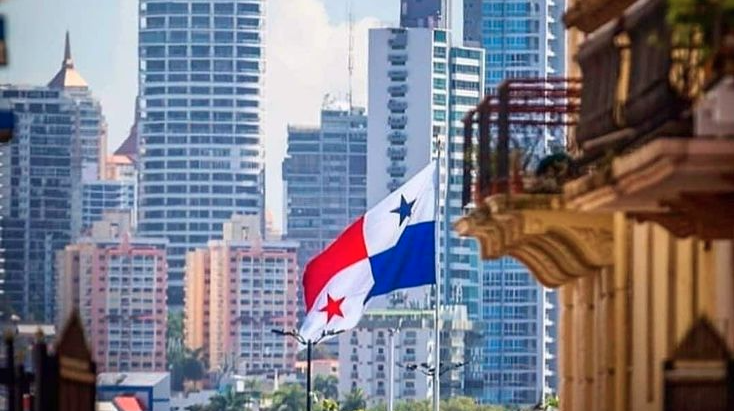
Panama Country Profile:
Territorial Tax, Retiree Haven, and Entrepreneur/Nomad Base
USD-denominated. Territorial tax. World-class retirement visa. Sophisticated foundations. The single most-requested destination and structuring jurisdiction by FTR clients in 2026. Here’s why.
🇵🇦 Key Facts (2026):
Currency: United States Dollar & Balboa (PAB) (PAB fixed at 1:1 with the US Dollar; USD is the effective daily currency).
Personal income tax: 0% on foreign-source income under the territorial framework; progressive up to 25% on Panama-source income.
Corporate tax: 25% on Panama-source; 0% on foreign-source for qualifying Panama SAs with genuine offshore income/operations (ideal for online & virtual service businesses).
VAT (called ITBMS locally): 7% on domestic sales, among the lowest in the Americas.
Capital gains: generally exempt on foreign-source; 10% on Panama-source (with specific exceptions).
Wealth tax: 0%.
Estate/inheritance tax: 0%.
Main Wealth/Business Structures: Panamanian SA (Sociedad Anónima - essentially a private corporation limited by shares) & Panamanian FIP (Private Interest Foundation - a foundation that can own assets, with it’s own legal identity and the express purpose of building family wealth.
Common Reporting Standard (CRS) participation: yes (since 2018) - reports total balance annually.
Foreign Account Tax Compliance Act (FATCA) Model 1 IGA with US: yes.
Treaty network: over 20 double taxation treaties including Spain, France, UK, Portugal, Ireland, Singapore, UAE.
Population: approximately 4.5 million.
Weather: tropical year-round, average 26-32°C. Wet season May to November, dry December to April. Roughly comparable to Miami year-round, with less winter cool-down.
Stability and security: democratic republic since 1989. Panama City rated moderate-to-high personal safety (violent crime concentrated in specific rough neighborhoods; expat, business, and middle-class areas broadly safe). Regional political and economic stability very strong by global standards. USD-denominated economy reduces currency risk substantially.
Banking and financial infrastructure: mature, sophisticated, and well regulated. Over 60 licensed banks including major regional and international institutions. Full SWIFT access. Post-Panama-Papers reform has tightened KYC and reporting but banking remains fully functional. Panama City is a regional financial hub for the Americas.
Last edited: 16 July 2026 by Joe Martin Hanson (Director & Global Partner) with advice from FTR’s Panamanian Tax Partners
Why Panama Matters
Panama does three things better than almost anywhere else:
(1) it pays no tax on foreign income,
(2) it operates entirely in US dollars, and
(3) it has one of the most generous investment visa & retirement visa programs on earth.
Add sophisticated foundation law (the Panamanian Private Interest Foundation is arguably the world’s cleanest succession vehicle), a stable government, an internationally-accredited healthcare system, and geographic proximity to the Americas, and you have why Panama sits at the top of our destination and structuring recommendations.
For an expat/nomad/investor/retiree receiving business or retirement income from Canada, Germany, France, the UK, Australia, or elsewhere, Panama can produce a total effective tax rate close to zero on that income, legitimately. For a High Net Worth investor holding a global portfolio, a Panama SA and foundation combination can consolidate wealth, avoid succession complications, and denominate everything in USD.
Info-Sharing Reality (CRS and FATCA)
Panama participates in the Common Reporting Standard (CRS) and reports account information annually to over 100 partner jurisdictions. If you are tax-resident in Germany, the UK, Australia, Canada, or China, your Panama financial accounts are reported to those authorities each year. Panama has a Model 1 FATCA agreement with the United States, so US person account details flow through to the Internal Revenue Service (IRS).
The practical Plan-B implication: Panama structures alone do not remove you from home-country CRS reporting. Panama tax residency does. This distinction matters enormously for families using Panama as part of privacy planning.
Banking Reality
Panama banking tightened materially after 2018 and the Panama Papers fallout. Without an introduction, minimum deposits for personal accounts typically run USD$20,000 to USD$50,000 at reputable banks. Corporate accounts often require USD$50,000 to USD$250,000 (without an introduction). With an introduction and the right conditions, there’s no minimum for certain major banks.
Onboarding involves heavy Know Your Customer (KYC) checks, professional references, and in most cases an in-person visit.
Strong bank options include Banistmo (part of the Bancolombia group), Banco Aliado, Global Bank, and Multibank. Some international banks have narrowed their retail Panama presence. Private banking is available for higher net worth individuals/families.
Cost Profile
Cost of living in Panama City compares favourably to major North American cities. A comfortable expat lifestyle runs USD$2,000-3,500 per month for a couple; an ultra-luxury lifestyle is available at about USD$6,000-10,000 per month.
Real estate (for purchase) in Panama City ranges from USD$800 per square metre in outer areas to USD$4,000+ in premium districts. In terms of rent, a 2-bedroom in a nice area near the coastline can be rented for ~USD$1,000-1,600 per month.
Corporate setup and maintenance is roughly one-third the cost of comparable Singapore structures.
For Retirees
Panama Pensionado is one of the world’s most generous retiree residency programmes. Applicants aged 18 and above with a lifetime pension of USD$1,000 or more per month qualify (including private pension programs like 401k, Roth IRA, or Superannuation), with reduced thresholds for those investing in Panama real estate. Benefits include specific discounts on healthcare, transportation, entertainment, and permanent residency status.
Under the territorial tax framework, foreign pension income falls entirely outside the Panama tax net. US Social Security, UK State Pension, Canadian CPP and OAS, Australian Age Pension, and various private pensions all receive this treatment.
Healthcare quality is high in Panama City with several private hospitals meeting international standards. International Private Medical Insurance (IPMI) combined with local coverage typically runs USD$250-800 per month per person (depending on age, health, coverage level, etc.). Global emergency coverage is commonly included in many private health policies (useful for nomads and frequent travellers).
For Digital Nomads and Remote Professionals
Panama’s Short-Stay Visa for Remote Workers (introduced 2020) provides an initial nine-month remote work visa, renewable. Longer-term options include the Friendly Nations Visa, accessible to nationals of over 50 countries with proof of economic solvency and Panama-based activity.
Tax residency under Panama’s framework requires physical presence plus centre of vital interests. Once tax-resident, foreign-source income is not subject to Panama tax. Combined with the USD-denominated economy and stable political environment, Panama is a serious nomad destination.
Coworking infrastructure is growing in Panama City (Selina, WeWork, plus various local operators).
For Online Business Owners and Entrepreneurs
The Panama SA is the classic vehicle. For online business owners with a foreign customer base, a Panama SA combined with Panama tax residency for the owner produces territorial tax treatment:
0% Panama corporate tax on qualifying foreign-source income and
0% Panama personal tax on distributions to Panama-resident owners.
The critical caveat is home-country Controlled Foreign Corporation (CFC) rules. A Panama SA owned by someone who remains tax-resident in the US, UK, Australia, or Canada will have its profits attributed back to the owner under home-country attribution rules regardless of Panama’s treatment. The structure works cleanly when the owner becomes genuinely Panama tax-resident.
Substance requirements have increased post-BEPS (the OECD’s Base Erosion and Profit Shifting project), so genuine local operations, staff where appropriate, and proper documentation matter.
For High Net Worth (HNW) Families, Individuals, and Investors
The Panama Private Interest Foundation, under the 1995 Private Interest Foundation Law, is a legal entity with no shareholders. It is governed by a Foundation Council (that you appoint and can amend) under a charter and regulations. It provides multi-generational succession control that discretionary trusts often cannot match in civil-law jurisdictions.
For HNW investors seeking Plan-B jurisdictional diversification, Panama combines meaningful geographic distance from most origin countries, functional banking infrastructure, absence of major-power political influence, and legal structures that support intergenerational transfer.
The Qualifying Investor Visa (introduced 2020) provides accelerated permanent residency for investments of USD$300,000 in Panama real estate or USD$500,000 in Panama securities.
For Young Self-Employed Individuals & Families
Friendly Nations Visa provides straightforward residency for families with proof of economic solvency plus Panama-based professional activity, real property investment, or fixed-term deposit. Family members are included in the primary applicant’s application.
International schools in Panama City include International School of Panama, King’s College, and Metropolitan School of Panama, at fees dramatically lower than Singapore, Hong Kong, or major US cities. Local Panamanian schools of good quality are also available.
Healthcare for families is accessible and affordable through the private system. Panama’s political stability, English-language convenience in expat contexts (as it’s a major trade hub, bilingual services are widely available), and USD-denominated economy make it particularly workable for young families.
Common Traps
Applying territorial tax without becoming Panama tax-resident:
Panama structures without Panama residency do not deliver the intended outcome for owners still tax-resident in a CFC-rule country.
Underestimating banking timelines and documentation requirements.
Failing to build appropriate substance for post-BEPS scrutiny.
Assuming Panama structures provide informational privacy from home-country tax authorities. Under CRS, they do not.
Next Steps
Panama-focused planning across residency, structural, and Plan-B setup: book a scoping call.
Important note: This article is general information for readers considering cross-border retirement or asset structuring. It is not personal tax, legal, or financial advice. Tax laws, visa rules, and treaty positions change regularly. Speak to a qualified adviser at FTR or elsewhere before acting.Continue reading
Suggested next, chosen by our partners.


