
Costa Rica Country Profile:
The Established North American Retirement Destination With a Territorial System That Now Has an Exception
Costa Rica has taken North American retirees for forty years on stability, scenery and a territorial tax system. The lifestyle case still holds; the tax case is workable rather than strong, the treaty network is four countries, and the 2023 substance law means the territorial rule no longer covers every structure.
🇨🇷 Key Facts (2026):
Currency: Costa Rican colón (CRC); roughly 450 to the US dollar at mid-September 2026, the strongest since 2007; US dollars widely accepted and used for property and rent.
Personal income tax: progressive to 25% on Costa Rican-source income.
Territorial system: foreign-source income of individuals generally not taxed; since Law 10,381 (2 October 2023) foreign passive income earned through a Costa Rican entity without economic substance in a multinational group is taxable.
Capital gains: 15% flat on Costa Rican-source gains; the habitual residence exempt.
Corporate tax: 30%; reduced bands of 5% to 20% for smaller companies; free-zone companies 0% for an initial period.
VAT (IVA): 13% standard, reduced 1%, 2% and 4% bands.
Wealth tax: none general; the solidarity tax on luxury homes applies where construction value exceeds CRC 143 million for 2026 (Executive Decree 45358-H), about USD 319,000, at 0.25% to 0.55%.
Property tax: 0.25% of registered value. Purchase costs: about 4% to 5% including 1.5% transfer tax, stamps, registration and legal fees.
Estate and inheritance tax: none.
Non-resident withholding: 15% on dividends and 15% on interest, with lower rates for listed shares and some bank interest.
Tax residency trigger: 183 days in the calendar year, continuous or not.
Pensionado visa: USD 1,000 a month lifetime pension. Rentista visa: USD 2,500 a month for two years, or a USD 60,000 deposit. Inversionista visa: USD 150,000 under Law 9996 (2021), whose five-year term expires in 2026. Digital nomad permit (Law 10,008): USD 3,000 a month, USD 4,000 with family, one year plus one, no path to residency.
Permanent residence: after three years of temporary residence. Citizenship: seven years, five for Central American, Ibero-American and Spanish nationals by birth.
Corporate setup (SA or SRL): USD 1,000 to 2,000. Annual compliance: USD 1,500 to 4,000 plus the legal-entity tax of roughly USD 120 to 400.
Personal bank account minimum: none to USD 500 with residency; tourist accounts limited. Private banking: thin, USD 250,000 to 500,000 where offered; most HNW residents bank in Panama or Miami.
Cost of living, comfortable household: USD 2,500 to 4,000 a month.
CRS: first exchanges 2018. FATCA: Model 1 IGA. Treaties: four in force, Germany, Mexico, Spain and the UAE; none with the United States, Canada or the United Kingdom.
Population: about 5.2 million.
Time zone: UTC-6, no daylight saving.
Last edited: 15 September 2026 by Joe Martin Hanson (Director & Global Partner) with advice from FTR’s Costa Rican Tax Partners
Why Costa Rica Matters
Costa Rica has been on the North American retirement map since the 1980s, longer than Panama, Colombia or Portugal, and the infrastructure of a mature expat destination is all in place: English-speaking lawyers and doctors, established communities in the Central Valley (Escazú, Santa Ana, Atenas, Grecia), on the Guanacaste and Puntarenas coasts and in the mountain towns, and a residency system that, for all its slowness, is designed around foreign retirees.
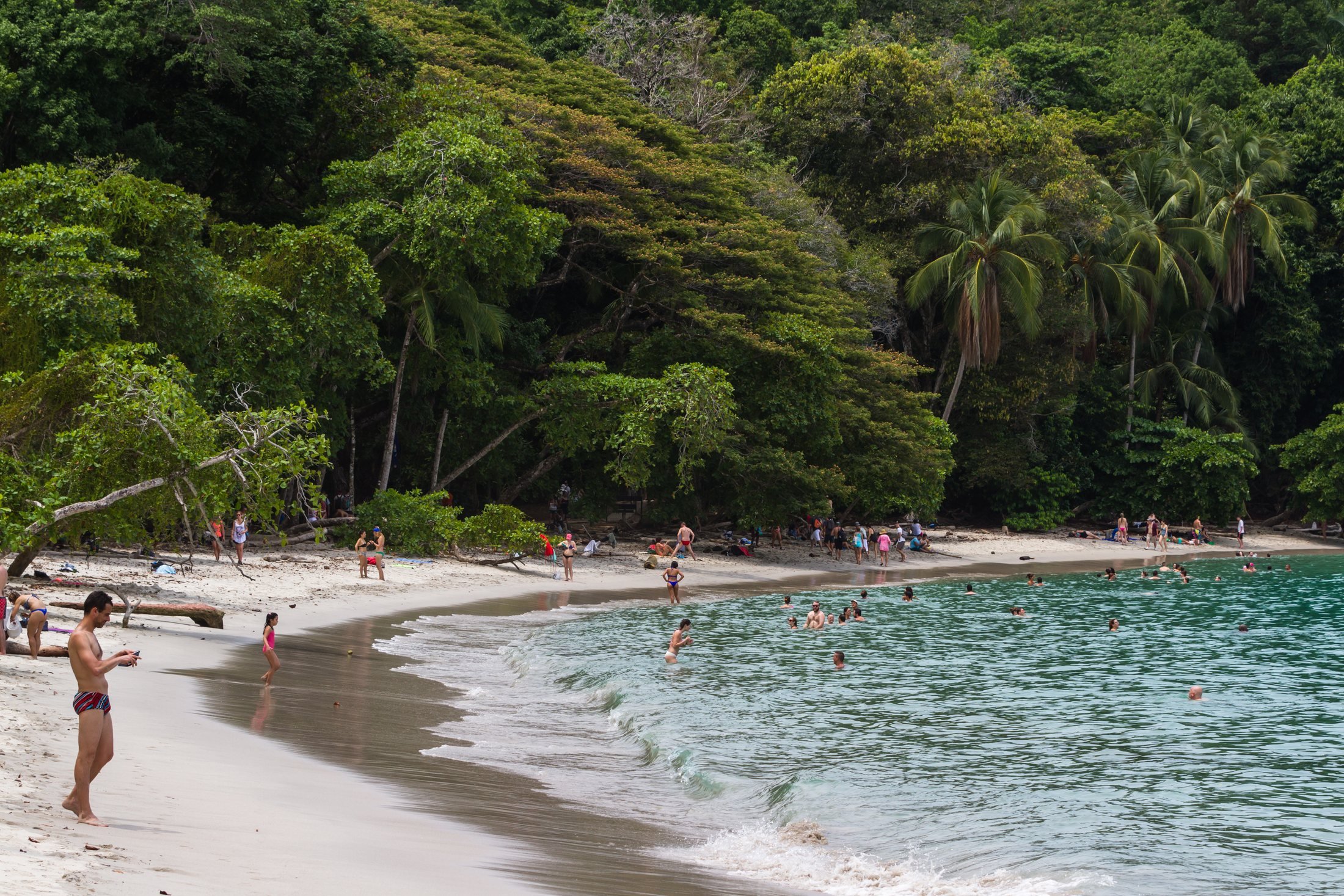
The political stability is genuine. Costa Rica abolished its army in 1948, has had uninterrupted democratic government since, and is calm relative to every neighbour. Add rainforest, two coastlines, a spring-like Central Valley climate and a public health system that covers residents at modest cost, and the lifestyle case is the strongest in Central America.
The tax case is neither the strongest nor the weakest in the region. Foreign pensions, foreign investment income and foreign business profits of an individual are outside Costa Rican tax, which is close to Panama's position but with less sophisticated banking, a treaty network of four countries, and a 2023 substance law aimed at entity-based structures. Costa Rica's appeal is community and environment; the tax angle is a reason not to rule it out, not a reason to choose it.
Visa and Residency Routes
Pensionado. A lifetime pension of at least USD 1,000 a month from a government, corporate or private source, documented and sworn, covering dependants too. The cheapest route and FTR's route for retirees.
Rentista. Stable income of at least USD 2,500 a month guaranteed for two years, or a USD 60,000 deposit in a Costa Rican bank paying out USD 2,500 a month over that period; renewed on fresh proof. FTR's route for pre-retirement clients living on investment income.
Inversionista. USD 150,000 in real estate, shares, securities or a productive business under Law 9996 of 2021, which lowered the threshold from USD 200,000 and added duty-free import of household goods and two vehicles and a transfer-tax exemption on one property; the law was enacted for five years, and the position for applications from mid-2026 must be confirmed before a client relies on the lower figure.
Digital nomad permit (Law 10,008). USD 3,000 a month of foreign income, USD 4,000 with dependants, for one year renewable once, with exemption from Costa Rican income tax on the foreign income. It confers no residency time and leads nowhere; useful for a trial year.
All three residency routes give temporary residence, in which the holder may own and run a business but not take employment, must enrol in the Caja at 7% to 12% of declared income, and must visit Costa Rica at least once a year. Permanent residence follows after three years, with the right to work; citizenship after seven years of residence, five for Central American, Ibero-American and Spanish nationals by birth. Processing at the Dirección General de Migración has run twelve to twenty-four months, during which the applicant may remain on the filed application.
What looks good on paper and fails. The digital nomad permit as a route to residency. The rentista deposit as an investment, since it is consumed as income. And the inversionista at USD 150,000 without checking that the Law 9996 window is still open.
Tax Peculiarities and Traps
The territorial rule and its 2023 exception. Costa Rica taxes Costa Rican-source income only, so a retiree's foreign pension and a resident's foreign portfolio income are ordinarily untaxed. Law 10,381, in force from 2 October 2023 and enacted to get Costa Rica off the EU's non-cooperative list, taxes foreign-source dividends, interest, royalties, capital gains and other movable-capital income when received by a "non-qualified entity": a Costa Rican company that lacks economic substance and belongs to a multinational group. It does not reach an individual's personal foreign income; it does reach the client who routed a foreign portfolio through a Costa Rican SA for convenience.
Capital gains since 2019. Law 9635 introduced a 15% tax on Costa Rican-source capital gains, including on property, with the habitual residence exempt and a transitional 2.25% election on the sale price for assets acquired before July 2019. Rental income is taxed at 15% on 85% of gross unless the landlord opts into the ordinary regime.
Shareholder and beneficial owner register. Every Costa Rican company files its shareholders and ultimate beneficial owners annually with the Central Bank's transparency register (RTBF), and the legal-entity tax and accountant's fee are payable whether or not the company trades. A dormant SA holding a house is not free.
The maritime zone. The first 50 metres above the high-tide line are public and cannot be owned; the next 150 metres are held by municipal concession, which a foreigner with fewer than five years' residence cannot hold a majority of. Much "beachfront" property is concession, not title, and sellers regularly blur the distinction.
The Caja. Enrolment is compulsory for residents and the contribution is assessed on declared income; retirees who understate it face reassessment at renewal.
Treaties. Four in force. A US, Canadian or British client gets no treaty relief in either direction; the United States taxes its citizens regardless, and Canadian departure and non-resident withholding rules apply in full.
The Structural Layer
FTR's default, a Panamanian Private Interest Foundation owning a Panamanian SA with a modest director's salary paid where the client lives, fits Costa Rica well. Costa Rica has no CFC rules for individuals, does not tax an individual's foreign dividends or gains, and the substance law reaches Costa Rican entities, not Panamanian ones held by an individual. The director's salary for work done in Costa Rica is Costa Rican-source and taxed to 25%, which is the price. Panama is an hour's flight away, its banking is a class above, and most Costa Rican HNW families already hold their portfolios there.
The adaptation is not to use a Costa Rican company as the holding vehicle. A Costa Rican SA or SRL is for local operations, local property (where it simplifies transfer and avoids probate) and local staff, and carries the annual tax, the RTBF filing and, if it holds foreign passive assets within a group, the Law 10,381 exposure. For an exporter of services or goods with real premises and staff, the free-zone regime gives a 0% corporate rate for an initial period and reduced rates thereafter; this is why Intel, the medical-device manufacturers and the shared-service centres are here, and it is substance-backed, not paper.
Succession is civil-law with forced heirship for Costa Rican-situs assets and no estate tax; foreign assets under the Panamanian foundation pass under Panamanian law, and a Costa Rican will for local assets completes the arrangement.
Info-Sharing Reality (CRS and FATCA)
Costa Rica exchanges under CRS with first exchanges in 2018 and has a Model 1 FATCA IGA. Costa Rican banks report non-resident account holders through the Ministry of Finance to their home authorities and US persons to the IRS. The counterparties that matter are the United States, Canada, Mexico, Colombia, Spain and Germany. The RTBF register gives the tax authority the beneficial owner of every company.
Costa Rica is fully transparent and never was a privacy jurisdiction in the modern era; Law 10,381 and the 2023 removal from the EU list completed the process. The Chinese HNW lens barely applies: Costa Rica is a lifestyle destination for North Americans and Europeans, and a Plan-B only in the sense of a stable, pleasant second home, not of privacy or a strong passport.
Banking Reality
Banco Nacional and Banco de Costa Rica, state-owned with a state guarantee on deposits; BAC Credomatic, the largest private bank; Davivienda, Promerica, Lafise and Banco General. A resident with a DIMEX card opens an account in person in two to six weeks with proof of income and address; dollar and colón accounts are standard, and SINPE Móvil transfers are universal. Tourists can open a limited account at a state bank on a passport, with low caps until residency is granted. Source-of-funds documentation is taken seriously, and the larger private banks apply US-style compliance because their correspondents demand it.
Correspondent banking and SWIFT access are functional but less internationally integrated than Panama's; large or unusual inbound transfers can sit under review. Costa Rica is on no FATF list and left the EU's Annex II in October 2023. Private banking is thin: BAC and a few brokers offer it from about USD 250,000, and most HNW residents keep their investment relationships in Panama, Miami or Switzerland.
Cost of Doing Business
A Costa Rican SA or SRL costs USD 1,000 to 2,000 to establish through a notary and the registry, with annual compliance of USD 1,500 to 4,000 for accountancy, monthly VAT filings, the RTBF declaration and the resident agent, plus the annual legal-entity tax of roughly USD 120 to 400 depending on turnover. Corporate tax is 30%, with reduced bands for smaller companies and 0% in the free zones.
Panama corporate setup runs roughly one third of the Singapore equivalent, at about USD 1,500 to 2,500 with similar annual maintenance. Costa Rica sits level with Panama on setup, slightly above on annual maintenance once VAT filings and the entity tax are counted, below Colombia and Mexico on ongoing cost, and far below Spain or Portugal. Moderate cost, a professional class that speaks English, and a bureaucracy that is honest and slow.
Cost of Living
Lean, single or couple: USD 1,800 to 2,500 a month; a one- or two-bedroom in Atenas, Grecia, Heredia or an inland town at USD 500 to 900, Caja cover, local produce from the feria and buses; anything imported costs more than in the United States.
Comfortable household: USD 2,500 to 4,000; a two- or three-bedroom in Escazú or Santa Ana at USD 1,500 to 2,500 or in Tamarindo or Nosara at USD 2,000 to 3,500, Caja plus a private policy at USD 150 to 400 a month, one car bought at roughly double the US price, and restaurant costs near US levels in expat zones.
HNW household: USD 6,000 to 10,000 and up; a house in Escazú, Santa Ana or on the Papagayo peninsula at USD 3,500 to 7,000 rent, international schooling at USD 8,000 to 20,000 per child, staff and full private cover.
The Caja covers residents broadly for a contribution set by income; waits for non-urgent specialist care are long, and the private hospitals in San José (CIMA, Clínica Bíblica, Hospital Metropolitano) are internationally accredited and cost a fraction of US equivalents. Foreigners buy titled property directly and without restriction outside the maritime zone; purchase costs are about 4% to 5% and property tax 0.25% a year, with the luxury-home tax above CRC 143 million of construction value.
Cultural and Practical Considerations
Pace and "Tico time". Costa Rica runs on pura vida: unhurried, polite, conflict-averse and late. Tradespeople do not come when they said, and a direct complaint is met with a smile and no change. Someone who needs things to happen on time will find the country maddening; someone who can let it go will find it restful.
Bureaucracy. Honest and very slow. Residency files take a year or two, every document must be apostilled and translated, the Caja and Migración do not talk to each other, and the annual round of vehicle inspection, marchamo and municipal filings consumes days. A lawyer is used for everything.
Security. Safer than its neighbours but no longer as safe as its reputation. Homicides reached a record in 2023 on drug-trafficking violence concentrated in Limón, Puntarenas and parts of San José, and property crime and burglary of unattended houses are common everywhere. Empty land and second homes attract squatters (precaristas) with legal protections that make removal slow, so a caretaker is standard for a beach house left empty for months.
Language and integration. English is spoken widely in Escazú, Santa Ana, Guanacaste's beach towns and among doctors and lawyers, and the expat community can be lived in entirely in English; Spanish is required for the Caja, Migración, municipal offices, most banks and any real relationship with Costa Ricans. Ticos are warm, family-centred and unfailingly courteous, and largely closed socially beyond that; the expat communities of the Central Valley and Guanacaste substitute completely, which suits most retirees and leaves some feeling they have moved to a gated American suburb with better weather.
Climate and health. The Central Valley is spring-like year-round; the coasts are hot and humid, the Caribbean side very wet, and mould, insects and heat affect people with respiratory conditions. The rainy season from May to November makes rural roads difficult, and earthquakes and active volcanoes are part of life.
Women and LGBT residents. No legal restrictions of any kind for women living, travelling or doing business alone; harassment is lower than in most of the region. Same-sex marriage since 2020, anti-discrimination law and a generally tolerant society, though the constitution names Roman Catholicism as the state religion and rural areas are conservative. Religious and dietary constraints do not arise.
Politics and schooling. Stable and democratic, with rising public frustration over crime and cost of living; the volatility a resident feels is in security and infrastructure, not institutions. State schools are free, taught in Spanish and variable; international schools in the Central Valley (Country Day, Lincoln, the British School) and a few in Guanacaste are good at USD 8,000 to 20,000 a year.
For Retirees
The pensionado route above, then Costa Rican tax at zero on the pension and a Caja contribution. No equivalent to Panama's pensionado discount package or Colombia's pension exemption, and a higher cost base than Panama outside the capital; see Article 3.
For Digital Nomads and Remote Professionals
The Law 10,008 permit for a tax-free trial year with no residency time; Guanacaste and the Central Valley have the infrastructure. See Article B23.
For Online Business Owners and Entrepreneurs
The Panamanian default with a Costa Rican residence works; a Costa Rican company is for local operations only. Free zones for anyone with real staff and export sales.
For Multinational Business Owners
Free zones, a skilled bilingual workforce and proximity to the US market; a four-treaty network and 30% headline rate outside the zones.
For High Net Worth (HNW) Families and Investors
A stable, pleasant second home with clean title and no estate tax; not privacy, not a strong passport, not sophisticated banking. Wealth stays in Panama.
Common Traps
Costa Rica does not work as a tax destination in its own right: the territorial system is matched by Panama with better banking and a permanent, better-documented regime, and a four-country treaty network gives most clients no relief at home.
It does not work for a client who wants to hold a foreign portfolio inside a Costa Rican company since Law 10,381, nor for anyone who needs private banking in-country.
It does not work as a cheap destination any more: Escazú, Santa Ana and the Guanacaste coast cost as much as US secondary cities, cars cost double, and imported goods more.
It does not work for a client who needs punctuality, quick residency or an empty house left unattended, nor for one whose picture of Costa Rican safety was formed twenty years ago. And the digital nomad permit does not work as a residency route.
Next Steps
If Costa Rica is on the list, book a scoping call for a direct comparison with Panama and Colombia. The first questions are whether the client wants the Costa Rican community and landscape enough to pay a Panama-level cost base for a weaker tax and banking position, and which visa route the income supports; with those answered we sequence the residency file, the Panamanian structure and the property purchase, including the maritime-zone and squatter checks.
Important note: General information. Not personal tax, legal, or financial advice. Speak to a qualified adviser at FTR or elsewhere before acting.
Continue reading
Suggested next, chosen by our partners.


