
The Complete Guide to Retiring in Colombia: Tax, Visa, Money, Property
Everything a foreigner needs to sort out before the move — visas, tax residency, banking, property, and the one exemption every retiree asks about but almost no one can confirm.
Colombia exempts the first 1,000 UVT of pension income each month — in 2026 that's about COP 52.4 million, roughly USD 16,000 — from income tax.
If that exemption reaches your foreign pension, your Colombian tax bill on it is zero. If it doesn't, you're paying ordinary progressive rates on income you assumed was sheltered. Which one is true is genuinely unresolved right now, and this guide isn't going to pretend otherwise.
Everything else about retiring here is more straightforward: warm weather, excellent healthcare, a cost of living that stretches a modest pension further than it would at home. But get the visa timing, the tax residency date, or the money-movement rules wrong, and you'll spend your first year fighting Colombian bureaucracy and your home country's tax office at the same time. This guide walks you through what's settled, what isn't, and what to do about the difference.
Why Colombia?
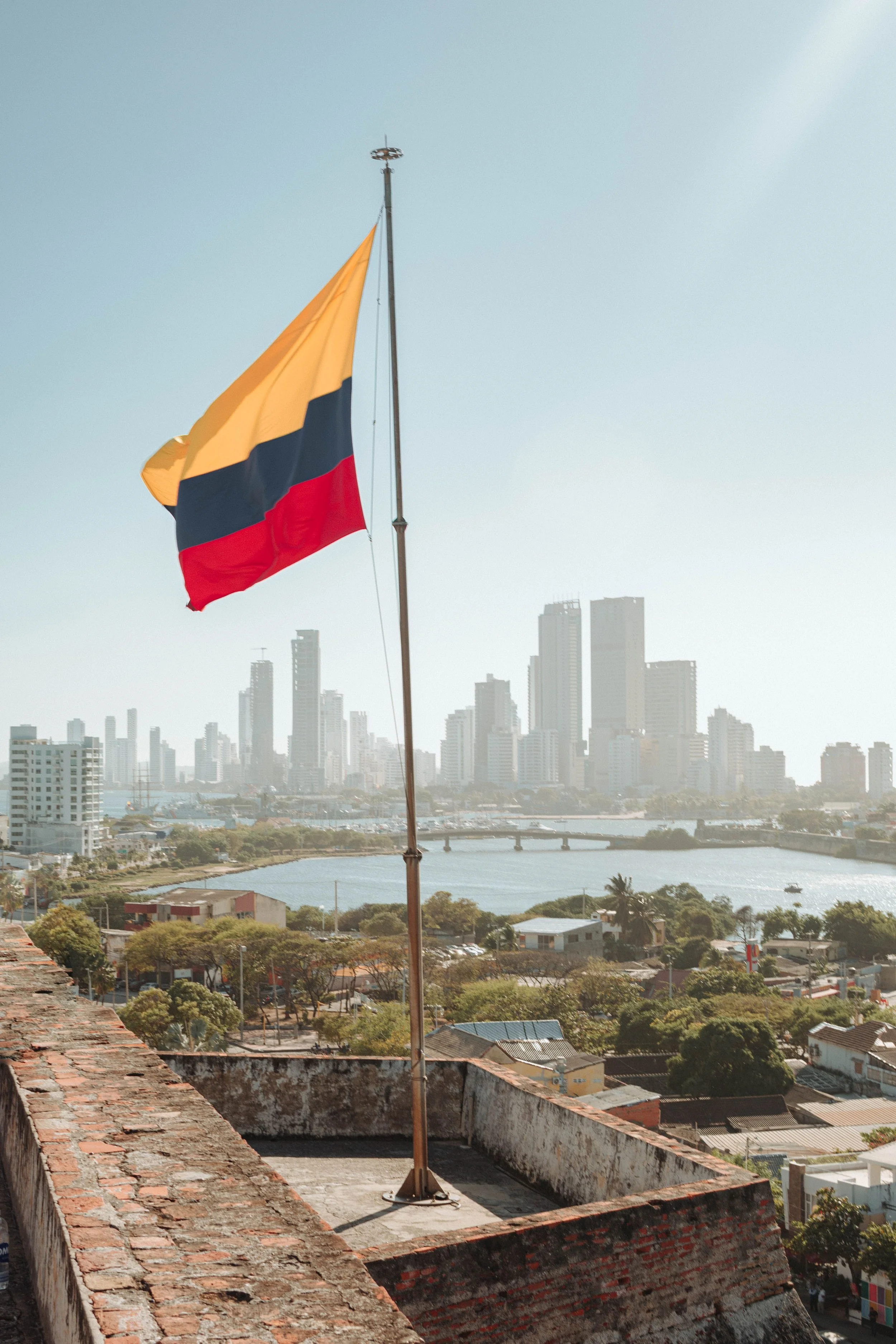
Retirees come here for the obvious reasons: eternal spring in Medellín, colonial charm in Cartagena, cosmopolitan energy in Bogotá, beach living in Santa Marta. Good food, a welcoming culture, and a peso that stretches further than most retirees expect.
There's a quieter reason too. Colombia's tax code goes out of its way to shelter pension income from tax — the open question is how far that shelter reaches for money earned abroad. We'll get into exactly where that stands below.
The Visa: M-Pensionado

If you're drawing a pension, you almost certainly qualify.
You need to show a monthly pension of at least three times Colombia's minimum wage. In 2026 that's around COP 5.25 million per month — roughly USD 1,630 or CAD 2,240. Combined Canadian OAS and CPP clears that bar for most people. So does most Australian superannuation drawdown, UK State Pension, and US Social Security.
The visa runs three years and renews. After five continuous years on it, you can apply for the R (Resident) visa.
The Tax: What's Confirmed and What Isn't
Colombia taxes its residents on worldwide income. Spend 183 days here in any rolling 12-month period, and you're a tax resident — full stop. We cover the day-count mechanics in a separate guide.
Here's the part that actually matters for your budget. Article 206 número 5 of Colombia's tax code exempts the first 1,000 UVT of pension income per month from tax — around COP 52.4 million, roughly USD 16,200 per month. Over a year, that's the equivalent of nearly USD 195,000 in tax-free pension income, for pensions the exemption covers.
The question is which pensions it covers. DIAN's own published doctrine reads the exemption as tied to Colombia's Law 100 de 1993 social security system — the domestic scheme, not pensions paid from abroad. A 2024 pension reform would have extended the exemption expressly to pensions Colombian residents receive from overseas. That would have settled the question in retirees' favour. It didn't happen: Colombia's Constitutional Court suspended the reform law's entry into force on 18 June 2025, and the provision that would have covered foreign pensions is not among the parts still in effect. So the position, as of this writing, is contested rather than confirmed — turning on facts specific to each retiree's pension and how it's structured.
Take Grahame and Diane, 67 and 65, moving from Perth to Medellín. Combined Age Pension and superannuation drawdown: AUD 5,200 a month, about USD 3,400 — comfortably under the ceiling either way. If their pension income is characterized as qualifying under Article 206 número 5, their Colombian tax on it is zero. If Colombia's Law 100-only reading is applied to foreign pensions the way DIAN's doctrine suggests, the same income could face ordinary rates instead. Same couple, same money, two very different outcomes depending on a question that hasn't been settled.
Retirement account drawdowns — Canadian RRSP/RRIF, US 401(k)/IRA, Australian super paid as a lump sum rather than a pension — carry a separate problem on top of the foreign-pension question: Colombian tax authorities have historically leaned toward treating them as investment income rather than pension income, regardless of source country.
Property
Foreigners can buy property in Colombia outright. No restrictions on nationality, no special permissions needed.
There's paperwork, though. You need a Colombian tax ID (a RUT) to buy. You must move the money in through the official banking channel — skip that step and you can't take it back out later. The property also adds to your Colombian wealth-tax base if you eventually cross the threshold.
Buy above roughly USD 190,000, and you also qualify for the M-Inversionista investor visa — a useful backup if you don't have a qualifying pension.
Healthcare
Colombia has one of the strongest healthcare systems in Latin America. Foreigners access it two ways.
The public system (EPS) has broad coverage at reasonable premiums. Private insurance ("prepagada") costs more but gets you into the top hospitals and English-speaking specialists faster. Even at the higher end, it's a fraction of US or Australian prices.
Many expats combine both — EPS for basics, prepagada for peace of mind.
Banking and Getting Your Money In (and ensuring you can get it back out)
Opening a Colombian bank account as a foreigner isn't hard, but it isn't fast. You'll need your visa, your foreigner ID (cédula de extranjería), a Colombian address, and patience.
Bringing meaningful sums into the country has to go through the official foreign-exchange channel. This is the one rule you cannot bend. Break it, and buying property becomes impossible, and getting your money back out later becomes a genuine mess. These strict rules exist deliberately, to make money laundering harder — which, given parts of Colombia's history, is a serious government objective. Try to work around them and you can become a target of suspicion. Your banking setup is worth doing right.
Setting up international direct deposit for your pension into a Colombian peso account is usually simple. Service Canada, the ATO, US Social Security, and the UK DWP all support it.
Alternatively, if you prefer to hold your money in a politically neutral and very stable USD-denominated economy, one of the common services we assist expats in Colombia with is setting up accounts in Panama. Only a 90-minute flight from Colombia, Panama offers a low-tax, business-friendly, well-established and politically neutral financial hub to hold the bulk of your cash in AA-rated, USD-denominated accounts, while enjoying all the lifestyle benefits Colombia has to offer. Many wealthy Colombians use Panamanian financial infrastructure for the same reasons.
Five things that trip people up:
Not knowing exactly when they become a Colombian tax resident.
Consequence: they assume the visa decides it, cross day 183 without noticing, and file late.
Fix: the 183-day rule decides it, not the visa — track your day count from day one.Assuming their home country stops taxing them the moment they leave.
Consequence: they keep getting taxed as a resident of a country they no longer live in.
Fix: formally sever tax residency through that country's own process.Bringing money in outside the official FX channel.
Consequence: they can't move the money back out later, and can't use it to buy property.
Fix: route every meaningful transfer through Colombia's registered exchange channel.Not planning what happens to RRSPs, super, or 401(k)s before moving.
Consequence: they discover after arriving that drawdowns may not get the pension exemption.
Fix: get the characterization question answered before you land, not after — see our guide to the 1,000-UVT rule.Not writing a will that works across both countries.
Consequence: Colombia's forced-heirship rules can override a foreign will on local assets.
Fix: draft or update a will with a Colombian lawyer who understands forced heirship.
These are all issues which FTR helps clients to mitigate. If you want to understand exactly how we might be able to help you, please book in a free consult via the button at the top of the page.
What Most Retirees Get Wrong
Where to Go Next…
Every retiree's situation is different, but the checklist is roughly the same: understand your visa route → understand your tax exposure on both sides → plan your money movement → get your estate documents right for a two-country life.
If you'd like a scoping conversation about your specific situation, book a free 30-minute cross-border consult with our team (click the ‘book consultation’ button at the top of the page), or email our service team at hello@ftr.finance today.
______________________
Important note: This article is general information for readers considering cross-border retirement or asset structuring. It is not personal or professional tax, legal, or financial advice. Tax laws, visa rules, and treaty positions change regularly, and how they apply to you depends on your specific facts, citizenship, source of income, and prior tax history. Speak to a qualified adviser at FTR or elsewhere and obtain tailored professional advice for your situation before acting upon anything in this article.
______________________