
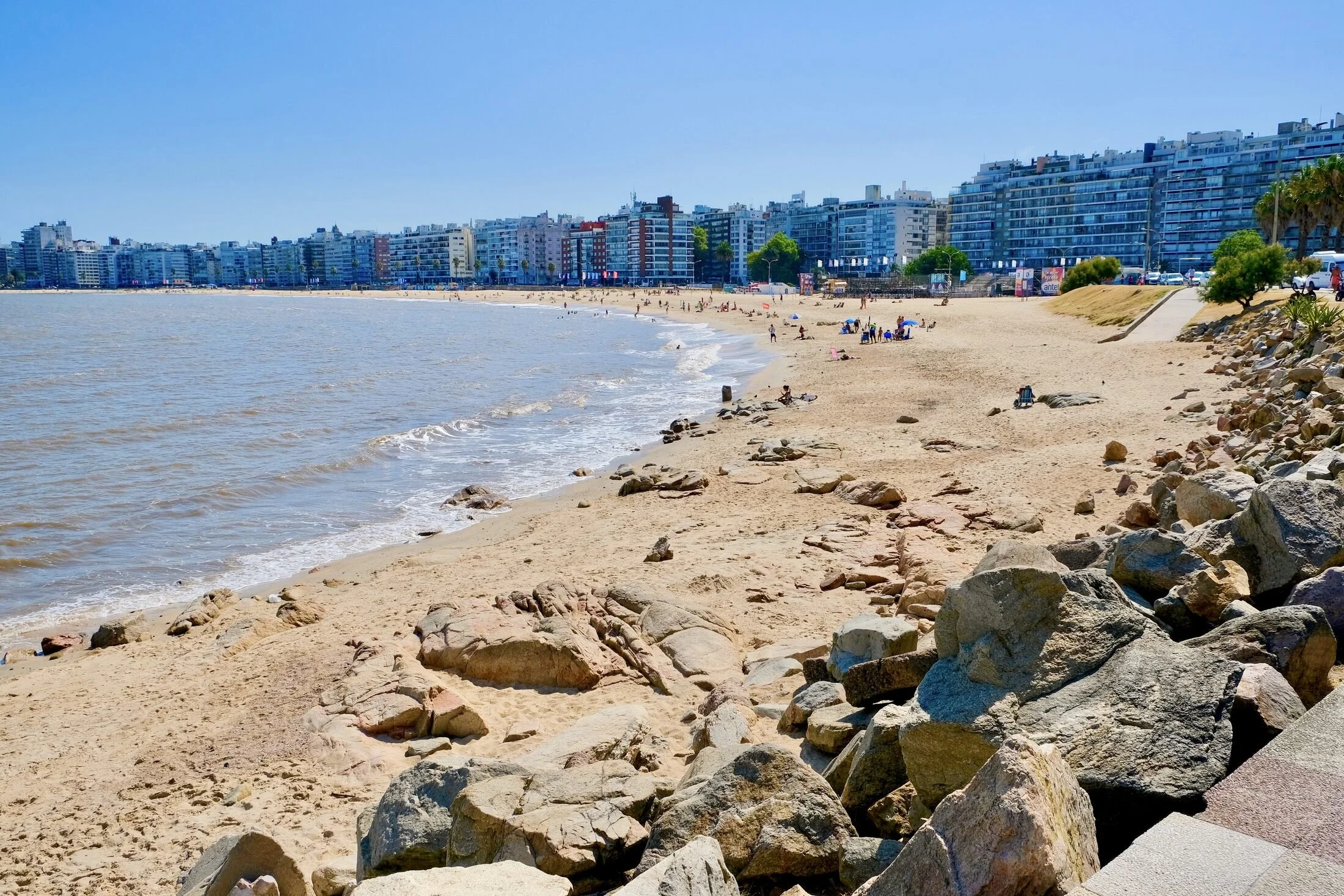
Uruguay Country Profile:
The Stability Play With an Eleven-Year Tax Holiday and a New USD 2 Million Price of Entry
Uruguay is the most politically and financially stable country in Latin America, taxes almost no foreign income, and gives new tax residents an eleven-year exemption on the little it does tax. Since 1 January 2026 the investment route to that status costs roughly USD 2 million, and the alternative flat-rate election is gone. Expensive to live in, cold in winter, and worth it for the right client.
🇺🇾 Key Facts (2026):
Currency: Uruguayan peso (UYU); roughly 40 to the US dollar at mid-September 2026; dollars used alongside pesos for property, cars, rent and savings.
Personal income tax (IRPF Category II): progressive 0% to 36% on Uruguayan-source income.
Foreign-source income: not taxed, except dividends and interest from abroad at 12% (IRPF Category I) once any holiday has ended; foreign pensions, rents and capital gains are outside the net.
New-resident tax holiday: exemption on foreign dividends and interest for the year tax residence is acquired plus the following ten fiscal years, eleven in total; the former permanent 7% election was abolished for new residents from 1 January 2026, and residents leaving the holiday now pay 6% for five years before 12%.
Capital gains (Uruguayan-source): 12%.
Corporate tax (IRAE): 25%; free-zone users 0% on qualifying activity.
VAT (IVA): 22% standard, 10% reduced.
Wealth tax (Impuesto al Patrimonio): Uruguayan-situs assets only; individuals in the region of 0.1% to 0.2% above a non-taxable minimum of roughly USD 160,000; companies 1.5%.
Estate and inheritance tax: none.
Tax residency triggers: more than 183 days in the calendar year; or centre of vital interests (spouse and minor children resident); or centre of economic interests, including qualifying investments under Ley 20.446.
Real estate route to tax residence (Ley 20.446, from 1 January 2026): property above roughly UI 12.5 million, about USD 2 million.
Retiree and rentier legal residency: proof of stable foreign income, in practice around USD 1,500 a month, no statutory investment minimum; Ley 16.340 gives duty-free import of household goods and a vehicle.
Non-resident withholding: 7% on Uruguayan dividends, 12% on Uruguayan interest.
Corporate setup (SAS or SA): USD 2,000 to 4,000. Annual compliance: USD 3,000 to 6,000.
Personal bank account minimum: none to USD 1,000 for residents. Private banking: USD 250,000 to 1 million.
Cost of living, comfortable household: USD 3,000 to 5,000 a month, the highest in Latin America.
CRS: Ley 19.484, first exchanges 2018. FATCA: no intergovernmental agreement; banks comply directly as registered foreign financial institutions. Treaties: about 25, none with the United States.
Population: about 3.4 million.
Time zone: UTC-3, no daylight saving.
Last edited: 24 September 2026 by Joe Martin Hanson (Director & Global Partner) with advice from FTR’s Uruguayan Tax Partners
Why Uruguay Matters
Uruguay offers what no other Latin American retirement or Plan-B destination does: a strong democratic tradition, orderly transfers of power between left and right, the region's strongest rule of law and property rights, a conservative banking sector with no crisis since 2002, and an investment-grade sovereign. The "Switzerland of South America" label was earned on stability and banking privacy; the privacy is gone since 2017, the stability is not.
The tax system is close to territorial. Uruguay does not tax foreign pensions, rents, business profits or capital gains at all; it taxes foreign dividends and interest at 12%, and new tax residents receive an eleven-year exemption on even that. For an HNW retiree living on a portfolio, the result over a decade is close to Panama's, with a stronger legal system underneath it.
The price rose sharply on 1 January 2026. Ley 20.446, the 2025 to 2029 budget law, lifted the real estate route to tax residence from roughly USD 560,000 to 590,000 to about USD 2 million, removed the permanent 7% election, and inserted a transitional 6% rate for residents leaving the holiday. Uruguay is now sold on presence and family ties, or on serious capital, and it is expensive, small, quiet and cold in winter: the right answer for a client who ranks jurisdictional stability above cost and warmth, and the wrong one for almost everyone else.
Visa and Residency Routes
Uruguay separates legal residency, run by the Dirección Nacional de Migración, from tax residency, defined in the income tax law and administered by the DGI. Clients regularly confuse them; the immigration status is easy and the tax status is the one that carries the holiday.
Legal residency for retirees and rentiers. The applicant shows lawful, stable income from abroad, a clean record, a health certificate and a Uruguayan address. There is no statutory minimum; in practice Migración has accepted income in the region of USD 1,500 a month per applicant. Filing is done in Uruguay, a provisional cédula arrives within weeks, and the applicant can live and work while the file, typically twelve to eighteen months, completes; permanent residency follows. Ley 16.340 lets foreign retirees and rentiers import household goods and a vehicle free of duty. FTR's route for retirees and passive-income families; the holiday then turns on meeting the tax residency test, usually by presence. Mercosur nationals receive residency on a simplified file, the route most Argentine families used after 2020.
Real estate investment route (Ley 20.446). Property acquired from 1 January 2026 above roughly UI 12.5 million, about USD 2 million, establishes the centre of economic interests and hence tax residence without the 183-day count. The previous tier, property of about USD 560,000 to 590,000 with sixty days of presence, was removed by the same law. A further route has been reported requiring about USD 100,000 a year to a state innovation fund for the length of the holiday, and a business investment above a UI threshold in the millions of dollars, or a smaller one creating a minimum number of jobs, also qualifies.
Citizenship. Legal citizenship after three years of residence for a married applicant with family, five for a single applicant, with proof of presence and integration. Uruguayan law distinguishes legal from natural citizens, and the passport issued to legal citizens has at times been questioned at foreign borders on that ground; the format has been revised, but the current position should be checked before a client relies on it as a travel document.
What looks good on paper and fails. A residency application without the intention to live in Uruguay: legal residency is readily granted, but the holiday requires 183 days or a USD 2 million property, and a client who does neither is a resident of nowhere with a Uruguayan cédula. And any plan built on the pre-2026 property tier or the 7% election, both gone.
Tax Peculiarities and Traps
The holiday is on a narrow base, and it is eleven years, not ten. Article 6 bis of Title 7 exempts a new tax resident's foreign dividends and interest for the year residence is acquired plus the following ten fiscal years; nothing else foreign was taxable in the first place. After the holiday, residents who arrived under the reformed rules move to 6% for five years and then to the standard 12%. The former election of a permanent 7% instead of the holiday was abolished for new residents from 1 January 2026; anyone who elected it earlier keeps it. The holiday is available once.
Look-through for low-tax entities. Ley 19.484 (2017) attributes dividends and interest earned through entities in jurisdictions of low or no taxation (BONT) directly to the Uruguayan resident individual, so an offshore holding company does not convert taxable foreign yields into untaxed growth. During the holiday this is academic; afterwards it decides whether the 12% is paid, and whether Panama sits on the DGI's BONT list at the relevant date is the operative question.
Presence counting. Sporadic absences of up to thirty days count as days present, which helps a client near the line and traps one trying to stay below it. The centre of vital interests limb catches a client whose spouse and children live in Montevideo while they travel.
Wealth tax on Uruguayan assets. Impuesto al Patrimonio reaches Uruguayan-situs assets only, at low rates for individuals above a non-taxable minimum, doubled for a family unit; foreign assets and Uruguayan bank deposits are outside it, property bought under the USD 2 million route is inside it.
Uruguayan-source rules. Uruguayan rents, gains and business income are taxed at 12% or 25%, property transfers carry a 2% ITP on each side, and a resident who works remotely from Uruguay for foreign clients is earning Uruguayan-source income taxed at Category II rates to 36%. The territorial system does not exempt work performed in Uruguay.
No treaty with the United States. US citizens are taxed by the US regardless; Uruguay has an information exchange agreement with the US and no double tax treaty. Treaties with Germany, Spain, Portugal, Switzerland, the UK, Brazil, Mexico and about twenty others exist, and the tie-breaker matters for a client keeping a home elsewhere.
The Structural Layer
FTR's default, a Panamanian Private Interest Foundation owning a Panamanian SA with a modest director's salary paid where the client lives, fits Uruguay better than almost any destination in the set. Uruguay has no general CFC regime for individuals, does not tax foreign business profits, gains or rents at all, and during the eleven-year holiday does not tax foreign dividends either. The director's salary for work done in Uruguay is Uruguayan-source and taxed at Category II rates, which is the cost of the arrangement. No estate tax and a civil-law forced heirship regime make the foundation useful for succession, provided the Uruguayan reserved shares are respected for Uruguayan-situs assets.
Two adaptations. First, the BONT look-through: if Panama is on the DGI list, dividends and interest arriving at the Panamanian SA are attributed to the client once the holiday ends, so the SA should hold operating and growth assets rather than yield, or the restructuring should be planned in year nine. Second, a client who runs the operating company from Montevideo is generating Uruguayan-source income, and the salary should reflect it.
For a business with Uruguayan customers or staff the vehicle is an SAS, cheap and flexible since 2019, or an SA at 25% IRAE plus 7% dividend withholding. For a service or trading business with foreign customers the Montevideo free zones (Zonamerica, WTC Free Zone, Aguada Park) give 0% IRAE and VAT on qualifying activity in exchange for real premises and a majority Uruguayan payroll; one of the best substance-backed regimes in the hemisphere, and where a multinational owner should look rather than at the Panamanian default.
Info-Sharing Reality (CRS and FATCA)
Uruguay's banking privacy ended with Ley 19.484 in January 2017, which lifted bank secrecy for tax purposes, created a beneficial ownership register at the Central Bank and put Uruguay into CRS with first exchanges in 2018. Uruguayan banks report non-resident account holders through the DGI to their home authorities; the counterparties that matter are Argentina, Brazil, Spain, Germany, the UK, Switzerland, Mexico and Chile. Argentina receives Uruguayan data on Argentine account holders, which is why the wave of Argentine relocations after 2020 was about tax residence rather than concealment. Uruguay has no FATCA intergovernmental agreement; its banks register directly with the IRS and report US persons themselves, so US clients face the standard paperwork and a narrower choice of banks.
Uruguay is not a privacy jurisdiction and has not been for nearly a decade; it offers legal security, not secrecy. For Chinese HNW families it is rarely on the list: distance, a small Chinese community, no direct flights and full CRS exchange with China outweigh the stability. It is a Plan-B for Argentines, Brazilians, Venezuelans and a growing number of Europeans and North Americans who want a stable second base in the southern hemisphere.
Banking Reality
Banco República (BROU, state-owned and the largest), Santander, Itaú, Scotiabank, BBVA, Banque Heritage and Bandes, with Citi for corporate business. Accounts are ordinarily in both pesos and dollars, dollar accounts are used domestically, and there are no exchange controls. A resident with a cédula opens an account in person within one to three weeks with proof of income and address; minimums are nil to about USD 1,000. Non-residents without a residency file will find most banks unwilling since 2017: cédula first, account second.
Higher-end relationships are more accessible than in Colombia or Costa Rica. Santander, Itaú and Heritage run private banking from about USD 250,000 to 1 million, and the Montevideo brokerage houses (Puente, Gletir, Nobilis) manage international portfolios for residents. Correspondent banking and SWIFT access are complete; Uruguay is on no FATF or EU list and left the OECD grey list in 2011. BROU is slow.
Cost of Doing Business
A Uruguayan SAS costs USD 2,000 to 4,000 to establish and an SA slightly more, with annual compliance of USD 3,000 to 6,000 for accountancy, monthly VAT and withholding filings, corporate wealth tax and the annual control levy. Free-zone users pay a zone fee but no IRAE, IP or VAT on qualifying activity.
Panama corporate setup runs roughly one third of the Singapore equivalent, at about USD 1,500 to 2,500 with similar annual maintenance. Uruguay sits above Panama and Colombia on both, roughly level with Spain and Portugal, and well below Singapore; labour costs are the highest in Latin America and labour law is protective. For a foreign-facing service business the free-zone regime can make Uruguay cheaper in tax than any of them despite the overhead.
Cost of Living
Lean, single or couple: USD 1,800 to 2,500 a month; a one-bedroom in Cordón, Parque Rodó or a coastal town at USD 600 to 1,000, a mutualista health plan at about USD 100 per person, buses and local produce; imported goods and cars are expensive everywhere.
Comfortable household: USD 3,000 to 5,000; a two- or three-bedroom in Pocitos, Punta Carretas or Carrasco at USD 1,200 to 2,200, or in Punta del Este out of season at similar rates, a mutualista or the British Hospital scheme at USD 100 to 200 per person, one car, and restaurant and grocery prices at Southern European levels.
HNW household: USD 7,000 to 12,000 and up; a house in Carrasco or on the Punta del Este peninsula, La Barra or José Ignacio at USD 3,000 to 6,000 rent, international schooling at USD 10,000 to 20,000 per child, domestic staff and private cover.
Healthcare through the mutualista system is good and cheap by any Western standard; the British Hospital is the private benchmark, and complex care is competent rather than world-leading. Foreigners buy property without restriction, in dollars, with clean title in a public registry. Montevideo and Punta del Este cost more than comparable Colombian or Panamanian locations: comfortable expatriate life runs USD 3,000 to 5,000 against USD 2,000 to 3,500 in Colombia.
Cultural and Practical Considerations
Pace and size. Uruguay is small, quiet and slow. Montevideo has 1.3 million people and feels like a large provincial town; Punta del Este is full for eight weeks a year and empty for the rest. An ambitious professional who needs a big-city market or a social scene that changes will be bored within a year; clients who want calm, order and predictability find it exactly right.
Climate. Winter is cold, damp and grey from June to September, with temperatures near zero and housing built for summer, often without central heating. Retirees who chose Uruguay from a Punta del Este brochure in January have left after their first July. Visit in winter before buying.
Language and integration. Spanish is necessary for everything: banks, Migración, the DGI, doctors, tradespeople and social life; English is spoken in the international schools, the Punta del Este holiday trade and some professional firms, and nowhere else reliably. Uruguayans are courteous, secular, egalitarian and reserved, with social lives built around family and school-era friends; a foreigner is treated fairly and included slowly. The expat community is small, partly Argentine and Brazilian, and does not substitute for local integration as it does in Costa Rica or Spain. A client without Spanish and without a plan for meeting people will be lonely.
Safety. The safest large country in Latin America by most measures, but Montevideo has ordinary petty crime, some peripheral neighbourhoods to avoid, and a homicide rate above Southern Europe; Punta del Este and the interior are calm. The exposure is theft, not violence.
Bureaucracy. Honest, slow and paper-based. Migración files take a year or more, the notarial system is thorough, and Transparency International ranks Uruguay the least corrupt country in Latin America, which is real and worth paying for. Unions are strong and strikes disrupt schools, transport and ports.
Women and LGBT residents. No legal restrictions and no guardianship concepts of any kind; women living, travelling and doing business alone face no meaningful additional constraint. Same-sex marriage since 2013, adoption rights, gender identity law, legal cannabis for residents and one of the most secular states in the world. Religious and dietary constraints do not arise.
Politics and schooling. Left and right alternate without drama; the 2024 election returned the Frente Amplio in March 2025 and policy continued, budget law included. The volatility a resident feels comes from Argentina next door, whose crises push people, money and prices across the river. State schools are free and adequate, taught in Spanish; the British Schools, Uruguayan American School, St. Catherine's and the German and Italian schools in Montevideo are good at USD 10,000 to 20,000 a year.
For Retirees
Legal residency on foreign income above, tax residence by presence, and an eleven-year holiday on a base that excludes pensions anyway; strongest for portfolio retirees, weaker for those who need warmth or a low cost base. See Article 3.
For Digital Nomads and Remote Professionals
Not the country: work performed in Uruguay is Uruguayan-source and taxed at up to 36%, and the cost of living is the region's highest.
For Online Business Owners and Entrepreneurs
A free-zone company in Montevideo with real staff is a genuine 0% regime with an investment-grade sovereign underneath; the Panamanian default remains the alternative for a business with no Uruguayan footprint.
For Multinational Business Owners
Stable, treaty-connected, Mercosur access, free zones and a strong professional class; expensive labour and a small market.
For High Net Worth (HNW) Families and Investors
The strongest rule-of-law Plan-B in Latin America, at USD 2 million for the investment route or 183 days a year without it; full CRS, no secrecy. For Argentine and Brazilian families it is the obvious choice; for Chinese HNW families it rarely is, see CRS/FATCA Reality.
Common Traps
Uruguay does not work for the cost-driven retiree: it is the most expensive country in Latin America, cars and imports carry heavy duties, and Colombia, Mexico or Panama deliver the same lifestyle for a third less. Nor for the client who wants warmth, size or an English-speaking expat scene.
It does not work as a tax residence of convenience: the pre-2026 property tier is gone, the USD 2 million route is real money, and 183 days a year in Uruguay is 183 days in Uruguay.
It does not work as a privacy jurisdiction, and the holiday is finite; Panama's territorial exemption is permanent, and a client with a forty-year horizon should model year twelve onward at 12%.
It does not work for a US citizen seeking tax relief, since there is no treaty and the US taxes worldwide regardless, nor for a remote worker who believes the territorial system exempts work done from a Montevideo flat.
Next Steps
If Uruguay is on the shortlist, book a scoping call. The first question is whether the client will genuinely spend 183 days a year there; if yes, the holiday is available without investment and the work is sequencing the arrival year and the offshore structure around the eleven-year window. If no, the honest comparison is USD 2 million in Uruguayan property against residence in Panama, and we model both, including year twelve.
Important note: General information. Not personal tax, legal, or financial advice. Speak to a qualified adviser at FTR or elsewhere before acting.
Continue reading
Suggested next, chosen by our partners.


