
Panama for Asset Structuring & Succession: The Honest Complete Guide
Panamanian corporations, foundations, and territorial tax — an honest explanation of what Panama can (and can't) do for your wealth and your family, including the reputational fact most guides leave out.
A Panamanian Foundation can move your estate to your children without a probate court, a forced-heirship fight, or a public filing anywhere.
Most Anglo lawyers have never heard of it, because their legal system never needed one.
The tabloid version of Panama — a hiding place for dodgy money — is a decade out of date, and it was never the whole story anyway. The current version is a stable, US-dollar jurisdiction with a legal system built specifically for holding international wealth, and a succession tool that does things a common-law trust simply can't in a civil-law country like Colombia.
It also carries a reputational complication worth knowing before you set anything up. Both things are true. Here's the honest version of each.
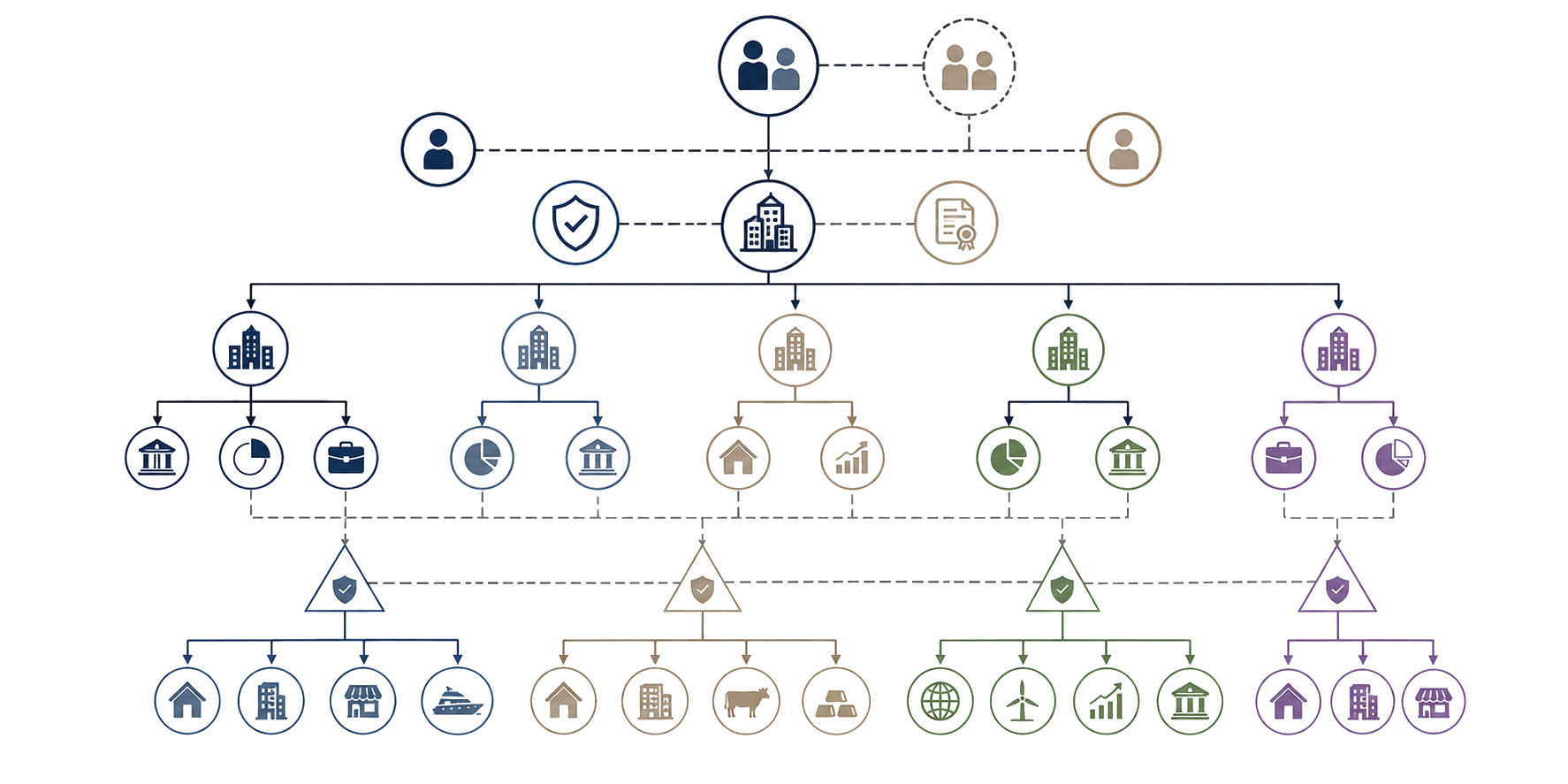
Two key structures:
(I) The Sociedad Anónima [‘SA’]:
A Panamanian SA is a corporation. It can hold a bank account, an investment portfolio, a piece of real estate, or shares in another business.
Two things make it useful. Panama operates a territorial tax system, so the SA pays zero Panamanian tax on income earned outside Panama. And Panama uses the US dollar as legal tender, so the SA holds and transacts in USD with no conversion drama.
An SA is fast to set up — a few weeks — has no minimum capital, and doesn't require the beneficial owner to live in Panama.
(II) The Private Interest Foundation [‘FIP’]:
Australians, Canadians, and Brits mostly haven't heard of this one. It's the most powerful tool Panama offers.
A Panamanian Foundation sits closer to a European stiftung than to a trust. It owns itself. A founder transfers assets in, a council administers them, and a private set of rules (the Reglamento) says who gets what and when.
Three things make it valuable. It bypasses probate on the founder's death — assets pass to beneficiaries privately, with no court file opened anywhere. It overrides forced-heirship rules in civil-law countries like Colombia, which would otherwise dictate how your estate is split. And it gives a genuine layer of asset protection against creditors and lawsuits.
Consider a case shape FTR sees often: a founder with adult children in three different countries — one in a forced-heirship civil-law jurisdiction, one in a common-law country with its own inheritance-tax regime, one still a minor. A will alone would have to fight the forced-heirship rules in country one and go through probate everywhere else. A Foundation, set up with the right Reglamento while the founder is alive, distributes on the founder's terms in all three, privately, without a probate court in any of them. That's the specific problem this structure solves — not wealth in the abstract, but a family spread across legal systems that don't agree with each other.
The Territorial Tax Truth
Panama taxes income earned inside Panama. It doesn't tax income earned outside. That's the whole system.
A Panamanian SA holding a portfolio of US stocks and European bonds pays zero Panamanian corporate tax on the dividends and interest.
The confusion starts when people assume this makes them personally tax-free. It doesn't. If you live in Colombia, Canada, Australia, or almost anywhere else, your home country still wants a piece — and most of them now have controlled-foreign-corporation rules that reach through the SA to tax you as if you owned the assets directly.
Panama's tax advantage is real. It's a tool for legitimate structuring, not a personal escape hatch.
Panama and Global Reporting
Panama signed on to the OECD's Common Reporting Standard. Panamanian banks report account holders automatically to the tax authority in the account holder's country of residence, every year.
If a Colombian tax resident owns a Panamanian SA that owns a bank account, that account is reported to Colombia. Automatically. Use the structure honestly, and there's no "getting caught" story to worry about — everything is on the record from day one.
There's a separate fact worth stating plainly, because a firm that promises the honest version doesn't get to leave it out. Panama currently sits on the European Union's Annex I list of non-cooperative jurisdictions for tax purposes — the actual blacklist, not the lighter "grey list" some guides confuse it with. Per the European Commission's most recent update, on 17 February 2026, that list holds ten jurisdictions: American Samoa, Anguilla, Guam, Palau, Panama, the Russian Federation, Turks and Caicos, the US Virgin Islands, Vanuatu, and Viet Nam. That listing has real consequences if you deal with EU-linked banks or counterparties: enhanced due diligence, in some cases EU withholding-tax measures, and general friction opening or holding accounts. It doesn't change what a Panamanian structure can legally do for you. It does mean you should expect extra paperwork anywhere the EU touches your structure, and you should hear that from us before you hear it from your bank.
Common Question: Couldn't I just find another low-tax jurisdiction that doesn't comply with the OECD's CRS or the US's FATCA regimes?
Yes, there are many 'tax haven' jurisdictions which aren't part of the Global Reporting Regimes (CRS + FATCA) — but unless you like getting audited, investigated, or having your money locked in an account you can't access without physically flying to a random island to withdraw cash, being outside OECD standards is not something you actually want. Banking in 'tax havens' outside of these regimes risks:
Wire Rejections: Global banks frequently block incoming foreign transfers.
Blacklist Scrutiny: Regulators label non-participating states as high-risk.
Account Closures: Mainstream institutions aggressively drop unmapped asset holders, meaning you could get de-banked in all the major Western economies.
FATCA (or similar) Withholding Tax: Unregistered banks face a 30% punitive penalty from US institutions, and similar from OECD CRS participants.
What Panama Legitimately Excels At:
Consolidating a globally scattered investment portfolio into one USD-denominated wrapper.
Passing wealth to children without probate, without forced heirship, and often across multiple jurisdictions cleanly.
Protecting assets from creditors, lawsuits, and messy divorces in the founder's home country.
Providing a long-term holding structure that outlasts the founder — heirs can continue it indefinitely.
Delivering full tax efficiency again if the eventual beneficiaries end up outside Colombia, or any other country with CFC rules that currently reach the structure.
Where Panama Can’t Help You:
It can't shelter you from your current country's income tax if you're actively resident there.
It can't hide anything — CRS reporting is universal, and now sits alongside the EU listing above as a second reason nothing stays quiet.
It's not a fix for US citizens, who remain taxed on worldwide income by the IRS regardless of where they live or where their money sits.
And it isn't free: set-up and annual maintenance costs are real, and below roughly USD 500,000 in relevant assets, the numbers may not justify it.
The right Panamanian structure depends on where you live, where your heirs live, what assets you hold, and what you're trying to achieve. There is no single correct answer.
Book a 30-minute scoping call with our team to walk through your situation by clicking the ‘Book a Consultation’ button at the top of the page, or alternatively, email our Service Team at hello@ftr.finance today.
_______________________________
Important note: This article is general information for readers considering cross-border retirement or asset structuring. It is not personal tax, legal, or financial advice. Tax laws, visa rules, and treaty positions change regularly, and how they apply to you depends on your specific facts, citizenship, source of income, and prior tax history. Speak to a qualified adviser at FTR or elsewhere before acting on anything in this article.
_______________________________
Continue reading
Suggested next, chosen by our partners.


