
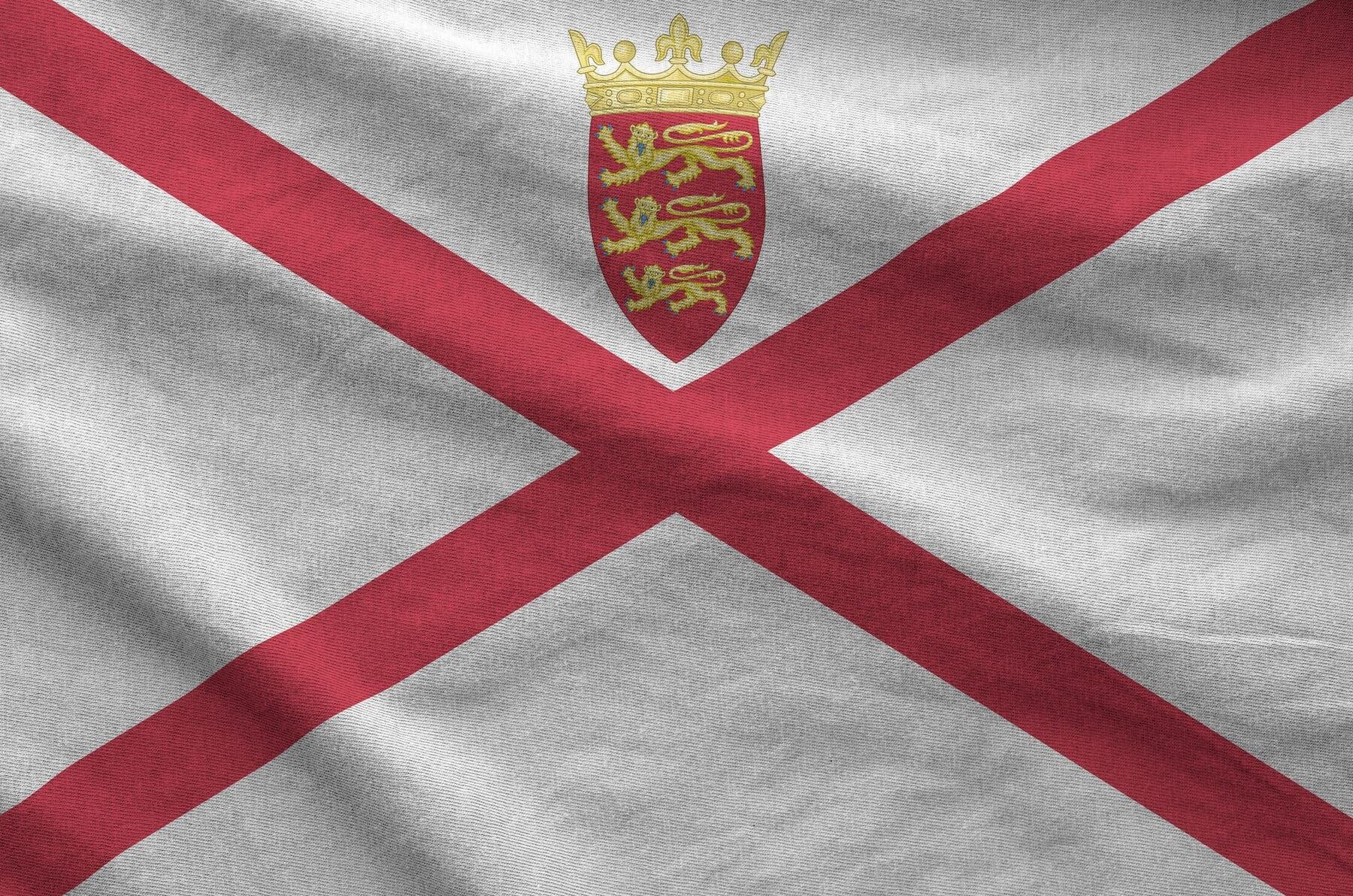
Jersey Country Profile:
The Trust Jurisdiction That Also Sells a Very Expensive Residency
Jersey is where a large share of the world's private wealth is administered, under English-derived trust law, licensed trustees and a 20% flat tax. As a place to live it is priced for people who can commit GBP 250,000 a year in tax and GBP 3.5 million for a house, and it reports everything to everyone.
🇯🇪 Key Facts (2026):
Currency: Jersey Pound (JEP), at par with GBP; approximately 1.35 to USD
Personal income tax: 20% flat on worldwide income for residents, with marginal relief at 26% for lower and middle incomes above the exemption threshold; long-term care contribution of around 1.5% on top; social security 6% employee up to the standard earnings limit
High Value Resident tax: 20% on the first GBP 1.25 million of worldwide income and 1% above; Jersey property income at 20% throughout; minimum annual contribution GBP 250,000
Corporate tax: 0% standard; 10% for financial services companies; 20% for utilities, Jersey property income and large retailers; 15% minimum for multinational groups with revenue above EUR 750 million from 2025 under Pillar Two
VAT/GST: GST 5%
Capital gains tax: 0%
Wealth tax: 0%
Estate/inheritance tax: 0%; probate stamp duty on a sliding scale of roughly 0.5% to 0.75%, capped at GBP 100,000
Property transfer tax: stamp duty or land transaction tax rising to 10.5% on high-value homes, plus a 3% surcharge on second homes and buy-to-let
Tax residency trigger: 183 days in a year of assessment; also, for someone who keeps a place of abode in Jersey, any overnight stay; and visits averaging three months a year over four years
Headline residency thresholds: High Value Residency under Regulation 2(1)(e): annual worldwide income above GBP 1.25 million, personal assets above GBP 10 million, a house purchase of roughly GBP 3.5 million or an apartment of GBP 1.75 million and above, and a minimum annual tax contribution of GBP 250,000; everyone else arrives on a work licence or waits ten years for Entitled status
Corporate setup: GBP 2,500–6,000 (USD 3,400–8,100) through a licensed provider; annual maintenance GBP 5,000–15,000 (USD 6,750–20,250)
Jersey trust setup: GBP 5,000–15,000 (USD 6,750–20,250); annual maintenance GBP 5,000–20,000 and up (USD 6,750–27,000 and up)
Jersey foundation setup: GBP 5,000–15,000 (USD 6,750–20,250)
Personal bank account minimum: none for residents at the high-street branches; GBP 25,000–100,000 for non-resident international accounts
Private banking threshold: GBP 1–2 million investable at most houses
Cost of living, comfortable professional household: GBP 6,000–9,000 monthly (USD 8,100–12,150)
CRS: participating, early adopter, first exchanges 2017
FATCA: Model 1 IGA with the US, signed December 2013
Treaties: around 15 comprehensive double tax agreements, including the UK, Guernsey, the Isle of Man, Luxembourg, Malta, Cyprus, Singapore, Hong Kong, Qatar and the UAE, plus around 40 tax information exchange agreements
Deposit protection: Jersey Depositors Compensation Scheme, GBP 50,000 per person per bank
Constitutional status: self-governing British Crown Dependency; not part of the UK or the EU; British nationality law applies
Population: ~104,000 on 118 square kilometres
Time zone: GMT, UTC+0 (UTC+1 in summer)
Last edited: 18 July 2026 by Joe Martin Hanson (Director & Global Partner) with advice from FTR’s Jersey Tax Partners
Why Jersey Matters
A substantial slice of the world's private wealth infrastructure is administered from St Helier. The Trusts (Jersey) Law 1984 and forty years of case law, a regulator that licenses every trustee and company administrator, and a bench of professionals who do nothing else make Jersey the standard answer when a family wants an English-common-law trust that a Swiss bank, a London solicitor and a New York court will all recognise. The Foundations (Jersey) Law 2009 added a civil-law-friendly vehicle for families from jurisdictions that do not understand trusts.
That reputation is the product. Jersey structures cost more than Panamanian, BVI or Nevis equivalents, and the premium buys professional standards, an accountable trustee with real capital behind it, and a legal system that does not change its mind. For a client whose wealth is large enough that the structure will be litigated over one day, that is worth paying for; for a client with USD 2 million it is not.
As a place to live Jersey is a different proposition. The 20% flat rate with no capital gains or inheritance tax is attractive, but the housing law rations who may live where, and the only route in for someone without a Jersey employer is the High Value Residency, priced for people with GBP 10 million in assets and the willingness to pay GBP 250,000 a year in tax for the privilege. Jersey is FTR's answer for the top of the wealth band and for the trustee, not for the USD 150,000 professional.
Visa and Residency Routes
Two layers govern living in Jersey: British immigration law, which the island applies with local variations and which British and Irish citizens pass automatically under the Common Travel Area, and the Control of Housing and Work (Jersey) Law 2012, which applies to everyone including British citizens and determines whether a person may buy or rent ordinary housing and work without a licence.
High Value Residency, Regulation 2(1)(e). The Chief Minister may grant Entitled status to an applicant whose residence is judged to be in the island's best economic and social interests. In practice that means demonstrated annual worldwide income above GBP 1.25 million, personal assets above GBP 10 million, a clean compliance and reputational record, a business or philanthropic contribution the island can point to, and a commitment to buy a home at or above roughly GBP 3.5 million for a house or GBP 1.75 million for an apartment. The tax deal is 20% on the first GBP 1.25 million of worldwide income and 1% on the balance, which is where the GBP 250,000 minimum annual contribution comes from; Jersey rental income is taxed at 20% regardless. Applications go through Locate Jersey and take two to four months with a non-refundable fee. There is no statutory day count, but the applicant is expected to make Jersey their principal home and to be tax resident here, and the government reviews that. Entitled status gives immediate access to any housing; after ten years' continuous residence it becomes permanent, and British citizenship by naturalisation is available on the usual five-year UK rules since residence in the Islands counts. It is renewable indefinitely and is the route FTR would use for a client with GBP 10 million plus who wants a British legal environment, a short flight to London and a fixed tax bill.
Licensed status is employer-sponsored: a business holding a licence for an essential employee can bring the person in with housing rights for the duration of the job. Non-British nationals also need a work permit under the immigration rules, which mirror the UK Skilled Worker route. This is how most incoming finance, legal and medical professionals arrive, and it dies with the job.
Registered status is what everyone else gets on arrival: the right to live in registered (unqualified) accommodation, which is scarce and expensive, and to work only for an employer with a licence to hire registered staff. After five years the person may work without restriction; after ten years' continuous residence they become Entitled. This is the long road, and it is why a professional cannot simply move to Jersey for the 20% rate.
Setting up a business requires a licence under the same law, granted by the Population Office on economic-benefit criteria. There is no retiree route, no investor visa short of the HVR, and no digital nomad permit. The routes that look good on paper and fail in practice are the ones that assume Jersey is a low-tax version of the south of England that anyone may move to.
Tax Peculiarities and Traps
Residence by overnight stay. A person who keeps a place of abode available in Jersey and spends a single night there in a year of assessment is resident for that year, and someone who visits for an average of three months a year over four years becomes ordinarily resident. A holiday home combined with regular visits creates Jersey residence without intention, which matters less for Jersey (worldwide income at 20%) than for the home country's tie-breaker analysis.
The two-tier housing market. Registered accommodation attracts a rental premium of 30% to 50% over qualified housing, and a Registered resident cannot buy. Clients arriving without HVR or Licensed status routinely underestimate the cost and the ten-year clock.
HVR is a tax deal, not a tax exemption. The GBP 250,000 minimum is payable whether or not income reaches GBP 1.25 million. Failure to maintain the contribution or to live in Jersey genuinely puts the status at risk, and the deal cannot be renegotiated downward later.
Probate stamp duty and forced heirship. Jersey has no inheritance tax, but the Royal Court charges probate stamp duty on the value of the Jersey estate, capped at GBP 100,000, and Jersey customary law retains a form of forced heirship, the légitime, over the movable estate of Jersey-domiciled individuals. A trust or foundation is the ordinary answer, and Article 9 of the trusts law shields Jersey trusts from foreign forced-heirship claims; the domestic rule is the one people forget.
Economic substance. Since 2019 a Jersey tax-resident company carrying on a relevant activity (holding, finance, headquarters, IP, shipping, fund management, insurance, banking, distribution) must show directed and managed in Jersey with adequate people, premises and expenditure, and files a substance return with its tax return. A 0% company that fails the test is fined, reported to the shareholder's home jurisdiction, and ultimately struck off. The 0% rate is not a free lunch for a company run from London or Dubai.
Pillar Two. Groups above EUR 750 million pay 15% on Jersey profits from 2025 under the Multinational Corporate Income Tax; the 0% rate no longer applies to them.
GST on imports and the UK inheritance tax tail. GST at 5% applies to goods imported, with offshore retailers above GBP 300,000 of Jersey sales required to register, so online purchases are not tax-free; and a British client moving to Jersey remains within UK inheritance tax on worldwide assets for three to ten years under the residence-based rules introduced in April 2025.
The Structural Layer
For a client who lives elsewhere, Jersey is a place to put the trustee, not the client. A Jersey discretionary trust with a licensed trustee, or a Jersey foundation with a qualified member on the council, holding a BVI, Jersey or Panamanian company under it, is the premium version of the arrangement FTR builds by default in Panama. The Panamanian Private Interest Foundation over a Panamanian SA does the same job for a fraction of the running cost, and for a client with a USD 2–10 million estate that is where FTR would start; the Jersey trust becomes the right answer when the estate is larger, when a bank or family office insists on a regulated trustee with capital and insurance, when beneficiaries are in litigious jurisdictions, or when the assets include UK property or a listed portfolio that a Panamanian foundation council would struggle to administer credibly. Home-country CFC and trust attribution rules attach to a Jersey structure exactly as they do to a Panamanian one; the jurisdiction is transparent to the settlor's tax authority in both cases, and Jersey's economic substance regime adds a layer Panama does not.
For a client who lives in Jersey, the default needs adapting. An HVR pays 1% above GBP 1.25 million, so there is nothing to shelter and the structure exists for succession alone. An ordinary Jersey resident is taxed at 20% on worldwide income, including distributions from a foreign company or foundation, with no capital gains tax on the underlying disposals; a Jersey trust or foundation administered locally is the natural vehicle and a Panamanian layer adds friction with Jersey banks for no tax gain. The default plainly does not fit a Registered or Licensed resident who may not be here in five years and whose home-country exit has not been planned.
Info-Sharing Reality (CRS and FATCA)
Jersey has exchanged under the Common Reporting Standard since 2017 with the UK, every EU member state, Switzerland, Australia, Canada, China, India, South Africa, Latin America's participating countries and the rest of the network, and reports US persons to the IRS under a Model 1 FATCA agreement in force since 2014. Trusts and foundations administered by Jersey trustees are reporting financial institutions in their own right, so settlors, beneficiaries, protectors and controlling persons are reported to their countries of residence. Jersey's beneficial ownership register has been in place since 1989 and is verified by the regulator; it is available to law enforcement and tax authorities and, on a legitimate-interest basis, more widely.
Nobody serious markets Jersey as private any more, and any adviser who does is a red flag. What Jersey sells is the opposite: a jurisdiction that passed its 2024 MONEYVAL assessment, that the EU rates as cooperative, and whose trustees will tell a client's home tax authority everything the law requires them to. For a Chinese HNW family that means a Jersey trust is reported to Beijing in the same way a Panamanian foundation is; the reason to choose Jersey is the enforceability and professional depth of the structure, and the reason to reject it is cost, not exposure.
Banking Reality
Jersey is one of the deepest offshore banking centres in the world for its size, and one of the most selective. Residents with a registration card open current accounts at HSBC, Lloyds, NatWest International, Barclays and Santander International with no minimum, in person, in one to three weeks. Non-resident international accounts are the specialty: HSBC Expat asks for around GBP 50,000 in savings and investments or an income of GBP 75,000 and up, Lloyds and Santander International and Standard Chartered Jersey sit in the GBP 25,000–100,000 range, and onboarding takes four to twelve weeks of source-of-wealth documentation, tax residency self-certification and, for larger relationships, a video or in-person interview. Private banks and wealth managers, among them RBC Wealth Management, Butterfield, SG Kleinwort Hambros, Nedbank Private Wealth, Investec and EFG, start at GBP 1–2 million investable.
Nationality restrictions follow UK sanctions law and the banks' own appetite: Russian and Belarusian nationals are effectively excluded, US persons are accepted by the larger houses with FATCA reporting, and nationals of high-risk jurisdictions are refused or asked for enhanced documentation. Jersey is on no blacklist or grey list, correspondent banking runs through the banks' own London parents, sterling clearing is native, and SWIFT access is unremarkable. Depositors are covered to GBP 50,000 per bank.
Cost of Doing Business
A Jersey company formed and administered by a licensed trust and corporate services provider costs GBP 2,500–6,000 (USD 3,400–8,100) to establish and GBP 5,000–15,000 a year (USD 6,750–20,250) once registered office, resident directors, substance compliance and accounts are included; the registry fees are minor. A Jersey trust with a licensed trustee is GBP 5,000–15,000 (USD 6,750–20,250) to establish and GBP 5,000–20,000 or more a year (USD 6,750–27,000 or more) depending on the assets and activity. A Jersey foundation is priced similarly at GBP 5,000–15,000 to establish.
Against the set: a Panamanian SA at USD 1,500–2,500 to establish and USD 1,000–1,800 a year, with a Private Interest Foundation above it at a similar cost, is roughly one third of the Singapore equivalent, the anchor for the series, and Jersey sits at Singapore's level or above once a trustee is involved. Cayman is comparable to Jersey for a trust and more expensive for anything bespoke; Guernsey is near-identical to Jersey in cost and product, with historical minor differences in specific structures; a BVI company at USD 1,000–3,000 to establish does the pure holding job for a fraction of Jersey's fee. The Jersey premium reflects professional standards, and it is worth paying only when those standards will be tested.
Cost of Living
Monthly, professional household, at GBP 1 to USD 1.35. Housing is the whole story: the average house price is well above GBP 500,000, a two-bedroom flat in St Helier rents at GBP 2,000–2,800 in qualified accommodation and more in registered, and a four-bedroom family house at GBP 4,000–6,500.
Lean: GBP 3,500–4,500 (USD 4,700–6,100): one-bedroom registered rental, GP visits paid at GBP 50–75 each, bus and bicycle, groceries 15% to 25% above UK prices.
Comfortable: GBP 6,000–9,000 (USD 8,100–12,150): family house, a car, private health top-up, one child at Victoria College or Jersey College for Girls at around GBP 9,000–10,000 a year or in a free States school.
HNW: GBP 15,000 and up (USD 20,250 and up): an HVR-qualifying house in St Brelade or St Saviour, full private healthcare with UK referrals, school fees, and weekly flights.
Hospital care is free for residents after six months; primary care is private and partly subsidised. Flights to Gatwick, Heathrow and London City take about an hour, and ferries run to Poole, Portsmouth and St Malo.
Cultural and Practical Considerations
Jersey is nine miles by five, English-speaking with French road names and a customary law that still surprises English lawyers, and its society is small enough that a newcomer's business and personal reputation are established within a season. Islanders are courteous and reserved; integration for a British professional is easy in the finance district and slow in the parishes, and for a non-British newcomer the professional community substitutes for social integration far more than the island itself does. The two-tier housing law creates a visible class of long-term Registered residents, many of them Portuguese, Polish and Romanian, who do the hospitality and agricultural work and cannot buy a home, and that is the island's main social fault line.
The legal position of women and LGBT residents is that of England: full equality, no guardianship or dress rules, same-sex marriage since 2018 and a socially conservative but tolerant culture. Personal security is excellent. The bite is confinement and weather: winters are grey, wet and windy, fog closes the airport, the sea is cold, and a person who needs a city, anonymity or a long drive will feel the island's edges within a year. Traffic into St Helier is slow, Sunday trading is limited, and everything is more expensive than in the UK. Bureaucracy is efficient, personal and fast by any standard; the government is small enough that a Minister will answer an email. Schooling is good, with free States schools on the English curriculum and four fee-paying colleges at modest fees. Politically Jersey is stable to the point of dullness, governed by an assembly without conventional parties; housing costs and population policy are the recurrent arguments, and a newcomer on HVR status is the visible beneficiary of a policy some islanders resent.
For Retirees
Only through the HVR at the top of the band, or for those who already hold Entitled status; there is no retirement route for anyone else, and Jersey's climate is not what most retirees are leaving for.
For Digital Nomads and Remote Professionals
Unsuited; no permit, no ordinary housing access, and nothing to gain from the island if resident elsewhere.
For Online Business Owners and Entrepreneurs
A Jersey company is over-engineered for an online business; the Panamanian layer with the owner resident elsewhere is the default, and Jersey enters only when the owner's wealth justifies a regulated trustee.
For Multinational Business Owners
Jersey's fund, listing and holding vehicles suit groups raising institutional capital; substance rules mean the board must actually meet here.
For High Net Worth (HNW) Families and Investors
The Jersey trust or foundation is the premium succession vehicle for estates in the tens of millions; the HVR is a credible residence Plan-B for a family that wants British law and London access at a fixed price. For a Chinese HNW family it delivers enforceability and full CRS reporting, not privacy, and the citizenship route runs through British naturalisation over five years or more.
Common Traps
Moving to Jersey for the 20% rate without HVR or a licensed job: Registered status means a decade of rationed housing and a restricted labour market. A holiday home used regularly, which creates residence by overnight stay. A 0% Jersey holding company run from somewhere else, which fails economic substance and is reported. A Jersey trust for a USD 2 million estate, where fees will consume a percentage point of wealth every year for an outcome Panama delivers. Anyone seeking privacy from their home tax authority. Anyone who needs sun, scale or anonymity. And anyone who imagines the HVR minimum of GBP 250,000 is negotiable; it is the price of the ticket.
Next Steps
If a Jersey trust or foundation, or High Value Residency, fits your planning, book a scoping call. FTR will test whether the Jersey premium is justified against the Panamanian default before recommending it.
Important note: General information. Not personal tax, legal, or financial advice. Speak to a qualified adviser at FTR or elsewhere before acting.
Continue reading
Suggested next, chosen by our partners.


