
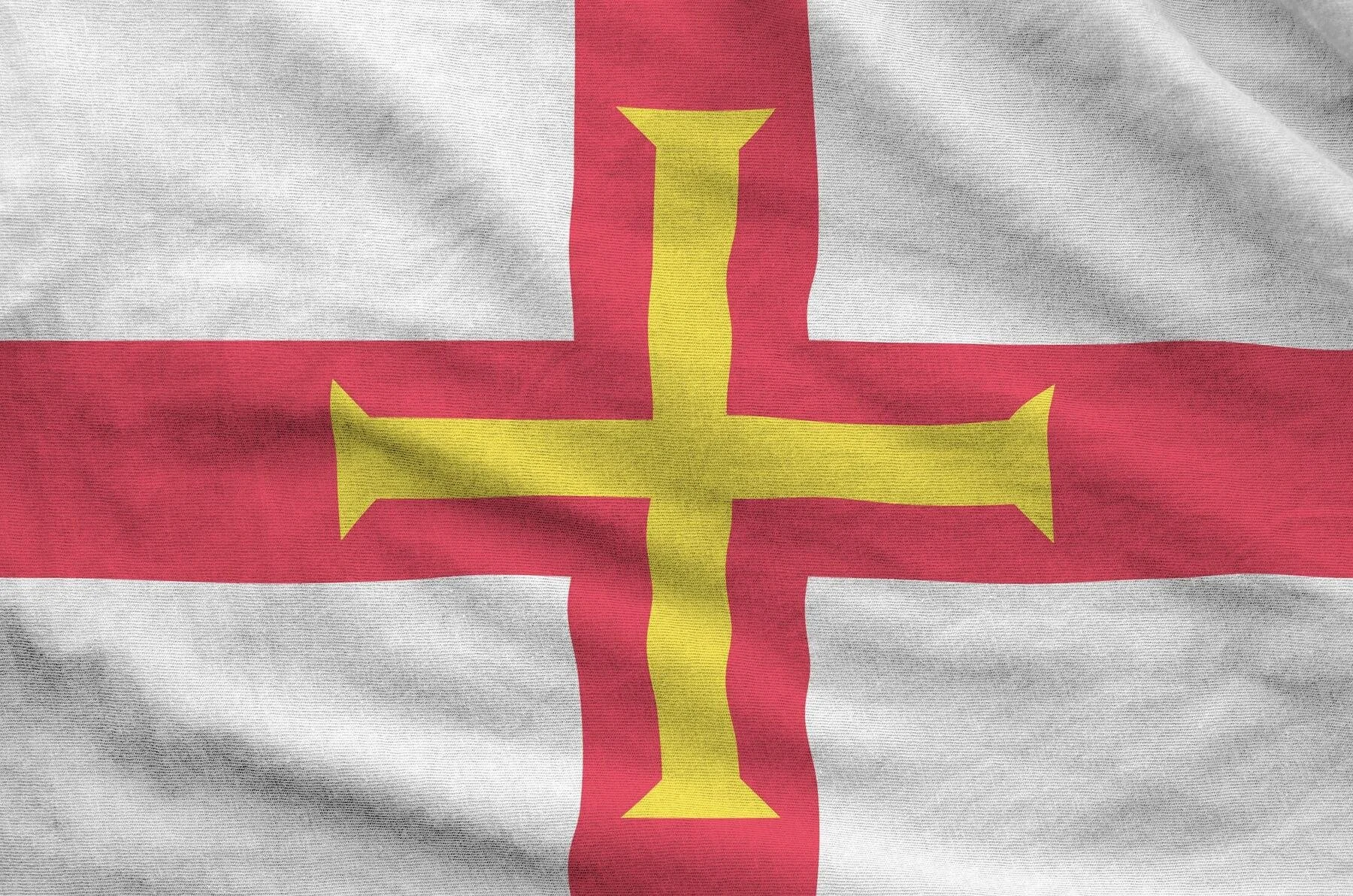
Guernsey Country Profile:
Jersey's Quieter Sister, With Captives, Cells and a Tax Cap
Guernsey runs the same 20% flat tax, zero capital gains and 0/10/20 corporate regime as Jersey, adds Europe's leading captive insurance industry and a personal tax cap, and rations residence through an Open Market housing register rather than a wealth test. Sophisticated, small and premium.
🇬🇬 Key Facts (2026):
Currency: Guernsey Pound (GGP), at par with GBP; approximately 1.35 to USD
Personal income tax: 20% flat on worldwide income for principally resident individuals, after personal allowances; social security contributions on top
Personal tax caps: annual cap of around GBP 160,000 on tax on non-Guernsey-source income, or around GBP 320,000 on tax on all income; a reduced cap of GBP 50,000 for four years for new residents who buy an Open Market property generating at least GBP 50,000 of document duty; a standard charge for resident-only individuals in place of a worldwide return
Corporate tax: 0% standard; 10% on banking, domestic insurance, insurance management, fund administration, custody, fiduciary and licensed investment management; 20% on utilities, Guernsey property income and large retailers; 15% minimum for multinational groups above EUR 750 million revenue from 2025 under Pillar Two
VAT/GST: none; a goods and services tax has been debated repeatedly and remains a live political question
Capital gains tax: 0%
Wealth tax: 0%
Estate/inheritance tax: 0%; modest probate fees
Property transfer tax: document duty on purchases on a sliding scale rising above 5% at the top end
Tax residency trigger: 91 days makes a person resident; 182 days, or 91 days plus 730 days in the preceding four years, makes them principally resident and taxable on worldwide income
Headline residency thresholds: British and Irish citizens may live in Open Market housing without a licence; other nationals need a UK-style work visa, or the Guernsey investor route at about GBP 1 million invested locally; Local Market housing requires an employment permit or local status
Corporate setup: GBP 2,500–6,000 (USD 3,400–8,100) through a licensed provider; annual maintenance GBP 5,000–15,000 (USD 6,750–20,250)
Guernsey trust setup: GBP 5,000–15,000 (USD 6,750–20,250); annual maintenance GBP 5,000–20,000 and up (USD 6,750–27,000 and up)
Guernsey foundation setup: GBP 5,000–15,000 (USD 6,750–20,250)
Captive insurance: Europe's leading captive domicile and the birthplace of the protected cell company, with roughly 200 licensed captives and several hundred cells
Personal bank account minimum: none for residents at the high-street branches; GBP 25,000–100,000 for non-resident international accounts
Private banking threshold: GBP 1–2 million investable
Cost of living, comfortable professional household: GBP 6,000–9,000 monthly (USD 8,100–12,150); materially more in Open Market housing
CRS: participating, early adopter, first exchanges 2017
FATCA: Model 1 IGA with the US, signed December 2013
Treaties: around 15 comprehensive double tax agreements, including the UK, Jersey, the Isle of Man, Luxembourg, Malta, Cyprus, Singapore, Hong Kong, Monaco and Liechtenstein, plus around 60 tax information exchange agreements
Deposit protection: Guernsey Banking Deposit Compensation Scheme, GBP 50,000 per person per bank
Constitutional status: self-governing British Crown Dependency; the Bailiwick also includes Alderney and Sark, each with its own tax quirks
Population: ~64,000 on Guernsey itself, ~67,000 across the Bailiwick, on 65 square kilometres
Time zone: GMT, UTC+0 (UTC+1 in summer)
Last edited: 17 August 2026 by Joe Martin Hanson (Director & Global Partner) with advice from FTR’s Guernsey Tax Partners
Why Guernsey Matters
Guernsey is Jersey's sister island: the same English-derived trust law, a licensed and capitalised trustee profession, a 20% flat tax and a 0/10/20 corporate regime, with minor differences in specific structures. For a pure trust or foundation either island works, and FTR's choice between them usually comes down to which trustee the family already trusts.
Where Guernsey stands apart is insurance and specialist funds. It is the largest captive insurance domicile in Europe, invented the protected cell company in 1997 and the incorporated cell company after it, and hosts a private equity and infrastructure fund industry that punches well above the island's size. For an HNW family whose planning includes a captive, a private placement life policy written through a Guernsey cell, or a fund vehicle alongside the family trust, Guernsey often edges Jersey because the whole arrangement can sit with one regulator and one set of advisers.
Guernsey also offers something Jersey does not: a personal tax cap that a merely wealthy person, rather than a very wealthy one, can use. The four-year GBP 50,000 cap for a new resident who buys an Open Market house is a fixed price for residence that undercuts Jersey's GBP 250,000 by a wide margin, and the ordinary caps above it keep the effective rate on a large income low. The trade is a smaller, quieter island and a housing register in place of a wealth test.
Visa and Residency Routes
Guernsey controls who lives on the island through the Population Management (Guernsey) Law 2016, layered on top of British immigration law. The distinction that matters is between Local Market housing, which is the bulk of the stock and requires an employment permit or a local qualification, and the Open Market, a register of roughly 1,600 Part A dwellings that anyone with the right to live in Guernsey under immigration law may occupy without a permit.
Open Market residency is the HNW route. A British or Irish citizen, or any other national holding UK-style immigration permission, buys or rents a Part A property and receives an Open Market Resident Certificate. There is no wealth test and no minimum contribution; the price is the property, since Open Market houses start around GBP 1 million and average above GBP 2 million. A purchaser paying at least GBP 50,000 in document duty in their first year can elect the GBP 50,000 tax cap for four years. Processing is a matter of weeks once the property is secured. Open Market residents can apply for a permanent residence certificate after long continuous residence, and British citizenship by naturalisation follows the standard five-year UK rules since residence in the Islands counts. Locate Guernsey, the States' inward-investment agency, handles applications.
Employment permits under the same law come in short-term, medium-term and long-term forms tied to a specific job, and give access to Local Market housing for the permit's duration; long-term permit holders can progress to permanent residence after eight years. Non-British nationals also need a work visa under Guernsey's version of the UK Skilled Worker rules. This is how the trust, fund, insurance and medical professions staff themselves.
The Guernsey investor route allows a non-British national to obtain residence by investing roughly GBP 1 million in the island, most of it in local businesses or bonds rather than property, alongside an Open Market home; it leads to settlement after five years and is used rarely. An entrepreneur route exists for a business that will employ locally.
There is no retiree route beyond Open Market housing, no digital nomad permit, and no path for a non-British professional without a Guernsey employer or GBP 1 million to invest. FTR would use Open Market residency with the four-year cap for a British or Irish client with GBP 2–5 million who wants a British legal environment and a fixed tax bill without Jersey's price of entry; the route that looks good on paper and fails in practice is the Local Market rental a newcomer cannot legally sign.
Tax Peculiarities and Traps
The 91-day tests. Guernsey residence starts at 91 days, and principal residence, with worldwide taxation, at 182 days or at 91 days once the person has spent 730 days on the island in the preceding four years. A person with a Guernsey home who visits regularly drifts into principal residence without noticing, and a resident-only individual who is principally resident elsewhere must either pay tax on Guernsey-source income or elect the standard charge.
The caps have conditions. The GBP 50,000 Open Market cap runs for four years from arrival and requires the document duty threshold to be met within the first year; the ordinary caps distinguish Guernsey-source from non-Guernsey-source income, so a client with local rental income or a Guernsey employment can find the GBP 160,000 cap does not cover it. The caps are elections, made annually, and a late or missed election is expensive.
Alderney and Sark. Alderney shares Guernsey's income tax with its own, lower cap; Sark has no income tax and levies a personal capital tax and property tax instead, and its residency has a history of abuse that means banks and tax authorities treat a Sark address with suspicion. FTR does not use Sark.
Economic substance. Since 2019 a Guernsey tax-resident company carrying on a relevant activity must be directed and managed in Guernsey with adequate people, premises and expenditure, and files a substance return; a 0% company run from elsewhere is penalised, reported to the owner's home authority and ultimately struck off.
Pillar Two and large retail. Groups above EUR 750 million pay 15% from 2025; retailers with large Guernsey profits pay 20%.
The UK inheritance tax tail. A British client moving to Guernsey remains within UK inheritance tax on worldwide assets for three to ten years under the residence-based rules introduced in April 2025; Guernsey's absence of inheritance tax does not cut that short.
No GST, for now. Guernsey has no consumption tax, which flatters the cost of living comparison with Jersey, but successive States have brought forward proposals for a goods and services tax and the question is not settled.
The Structural Layer
For a client living elsewhere, Guernsey is where FTR would put a regulated trustee, a captive or a cell, not the client. A Guernsey discretionary trust under the Trusts (Guernsey) Law 2007, or a foundation under the Foundations (Guernsey) Law 2012, holding a BVI, Guernsey or Panamanian company, is the premium version of the Panamanian Private Interest Foundation over a Panamanian SA that FTR builds by default. The default is a fraction of the cost and is where FTR starts for estates below the tens of millions; Guernsey becomes the answer when a bank or family office insists on a licensed trustee, when the assets include a captive, a private placement life policy or a fund interest that a Panamanian foundation council cannot credibly administer, or when beneficiaries sit in litigious jurisdictions. A Guernsey cell company is the natural wrapper for a family captive and for private placement life insurance, and the trust or foundation above it completes the succession picture. Home-country CFC and trust attribution rules attach to a Guernsey structure as they do to a Panamanian one, and the substance regime adds a compliance layer Panama does not.
For a client living in Guernsey, the caps do most of the work: with tax on non-Guernsey income capped at GBP 160,000, or at GBP 50,000 for a new Open Market resident, the structure exists for succession and asset protection rather than for a tax result. A Guernsey-administered trust is the natural vehicle and a Panamanian layer adds banking friction for no gain; the default plainly does not fit an employment-permit holder whose residence ends with the job.
Info-Sharing Reality (CRS and FATCA)
Guernsey has exchanged under the Common Reporting Standard since 2017 with the UK, the EU, Switzerland, Australia, Canada, China, India, South Africa and the rest of the network, and reports US persons to the IRS under a Model 1 FATCA agreement. Guernsey trustees, foundation councils and cell company administrators are reporting financial institutions, so settlors, beneficiaries and controlling persons are reported to their countries of residence. The beneficial ownership register is verified by the registrar and available to tax and law enforcement authorities.
Guernsey is not private and does not claim to be; the island's selling point is the opposite, a clean MONEYVAL assessment, EU cooperative status and a professional community that will disclose what the law requires. For a Chinese HNW family a Guernsey trust or cell is reported to Beijing exactly as a Panamanian foundation is. The reason to choose Guernsey is professional depth and the insurance and fund infrastructure; the reason to reject it is cost.
Banking Reality
Residents open current accounts at HSBC, Lloyds, NatWest International and Barclays with no minimum, in person, within one to three weeks of receiving their certificate. Non-resident international accounts sit in the GBP 25,000–100,000 range with four to twelve weeks of source-of-wealth onboarding, and Skipton International takes savings and mortgage business from a lower threshold. Private banking runs through Butterfield, Investec, RBC, Rothschild & Co Bank International, Julius Baer and EFG from GBP 1–2 million investable. Nationality restrictions follow UK sanctions law; Russian and Belarusian nationals are effectively excluded and high-risk nationalities face enhanced checks or refusal. Guernsey is on no blacklist or grey list, correspondent banking runs through the banks' London parents, sterling clearing is native and SWIFT access is unremarkable. Deposits are protected to GBP 50,000 per bank.
Cost of Doing Business
A Guernsey company formed and administered by a licensed provider costs GBP 2,500–6,000 (USD 3,400–8,100) to establish and GBP 5,000–15,000 a year (USD 6,750–20,250) with resident directors, substance compliance and accounts. A Guernsey trust with a licensed trustee is GBP 5,000–15,000 (USD 6,750–20,250) to establish and GBP 5,000–20,000 or more a year (USD 6,750–27,000 or more); a foundation is priced similarly. A captive or a protected cell adds regulatory fees, an insurance manager and actuarial and audit costs, and is rarely sensible below several hundred thousand pounds of annual premium.
Against the set: a Panamanian SA at USD 1,500–2,500 to establish and USD 1,000–1,800 a year is roughly one third of the Singapore equivalent, the anchor for the series, and Guernsey sits at Singapore's level or above once a trustee is engaged. Jersey is near-identical in cost and product; Cayman is comparable for a trust and more expensive for anything bespoke, with the institutional funds scale Guernsey does not have; a BVI company at USD 1,000–3,000 does the pure holding job for a fraction of the price. Guernsey's premium is justified by the cell and captive infrastructure and by professional standards that will be tested, and by nothing else.
Cost of Living
Monthly, professional household, at GBP 1 to USD 1.35. The two-tier market defines everything: Local Market houses average around GBP 600,000 and a two-bedroom flat rents at GBP 1,800–2,500; Open Market houses average above GBP 2 million and rent at GBP 4,000–10,000 a month.
Lean: GBP 3,500–4,500 (USD 4,700–6,100): Local Market rental on an employment permit, GP visits paid at GBP 60–80 each, bus and bicycle, groceries 15% to 25% above UK prices.
Comfortable: GBP 6,000–9,000 (USD 8,100–12,150): Local Market family house, a car, private health top-up, a child at Elizabeth College, the Ladies' College or Blanchelande at roughly GBP 7,000–13,000 a year or in a free States school.
HNW: GBP 15,000 and up (USD 20,250 and up): an Open Market house in St Peter Port or the south coast parishes, full private healthcare with UK referrals, school fees and frequent flights.
Hospital care at the Princess Elizabeth Hospital is free for established residents; primary care is private; specialist care is referred to Southampton or London, and a reciprocal arrangement with the UK covers emergency treatment. Flights serve Gatwick, Southampton and Manchester in about an hour and are weather-dependent; ferries run to Poole, Portsmouth and St Malo.
Cultural and Practical Considerations
Guernsey is smaller, quieter and more inward than Jersey. St Peter Port is a handsome Georgian harbour town of about 18,000 people; the rest is lanes, greenhouses and cliffs, and everyone knows within a season who has arrived and what they paid for their house. Islanders are polite, private and slow to include, integration for a British professional happens through work and children's schools, and for a non-British newcomer the finance community substitutes for a social life more than the island does. The Open Market and Local Market divide is social as well as legal: Open Market residents are visibly the well-off incomers, and a policy that reserves most housing for locals is defended with some feeling.
The legal position of women and LGBT residents is that of England, with same-sex marriage since 2017, liberalised abortion law since 2021 and no dress, guardianship or conduct rules of any kind. Personal security is excellent. The bite is confinement and weather: grey, wet, windy winters, fog that grounds the airport for days, a cold sea, and an island one can drive across in twenty minutes. Someone who needs a city, a choice of restaurants, anonymity or a warm climate will find the tax cap a poor consolation by the second winter. Bureaucracy is small, personal and efficient; a deputy or a department head will answer an email. Schooling is good, with free States schools on the English curriculum and three fee-paying colleges at modest fees. Politically Guernsey is stable, governed by an assembly of independent deputies without parties, and its arguments are domestic: the GST question, housing, an ageing population and the cost of running a small state. Sark and Alderney are charming to visit and separate worlds to live in.
For Retirees
Open Market residency with the four-year cap for a British or Irish retiree who wants a British legal environment and a fixed tax bill; the climate is the thing to be honest about.
For Digital Nomads and Remote Professionals
Unsuited; no permit, no Local Market access, nothing to gain if resident elsewhere.
For Online Business Owners and Entrepreneurs
A Guernsey company is over-engineered for an online business; the Panamanian default applies, with Guernsey entering only where the owner's wealth justifies a licensed trustee.
For Multinational Business Owners
Guernsey's captive, cell and fund vehicles suit groups that self-insure or raise institutional capital; the board must actually meet here.
For High Net Worth (HNW) Families and Investors
The Guernsey trust or foundation, often with a captive or private placement life policy in a cell alongside, is the premium succession package for estates in the tens of millions; Open Market residency is a credible residence Plan-B for a British-connected family. For a Chinese HNW family it offers enforceability and full CRS reporting, not privacy, and citizenship runs through British naturalisation.
Common Traps
Moving for the 20% rate without an Open Market house or an employment permit: there is no legal way to rent Local Market housing. Relying on the GBP 50,000 cap without meeting the document duty threshold in year one. A 0% Guernsey company run from elsewhere, which fails substance and is reported. A Guernsey trust for a USD 2 million estate, where fees consume a percentage point of wealth annually for an outcome Panama delivers. A Sark address for any purpose. Anyone seeking privacy from their home tax authority. Anyone who needs sun, scale or a city. And anyone who assumes Guernsey's lack of GST is permanent.
Next Steps
If a Guernsey trust, foundation, captive or cell structure, or Open Market residency, fits your planning, book a scoping call. FTR will test whether the Guernsey premium is justified against the Panamanian default before recommending it.
Important note: General information. Not personal tax, legal, or financial advice. Speak to a qualified adviser at FTR or elsewhere before acting.
Continue reading
Suggested next, chosen by our partners.


