
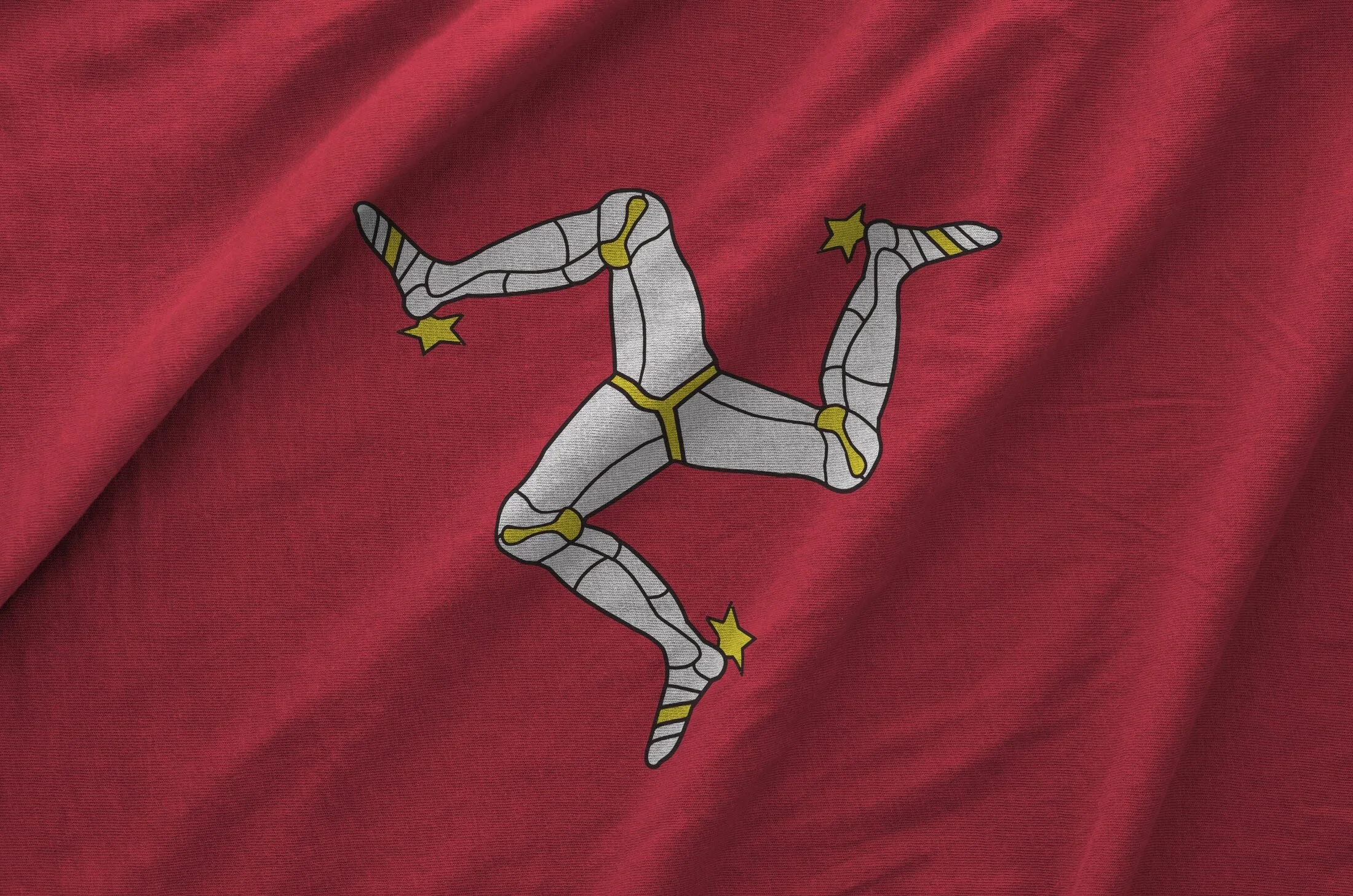
Isle of Man Country Profile:
The Crown Dependency With a GBP 220,000 Tax Cap and Britain's VAT
The Isle of Man combines a UK-style legal system and the UK's VAT area with its own tax law: 0% corporate tax, a 21% top personal rate capped at GBP 220,000 a year, no capital gains or inheritance tax, and deep pensions and life assurance industries. It suits British leavers who want the tax result without leaving British life, and very little else.
🇮🇲 Key Facts (2026):
Currency: Manx Pound (IMP), at par with GBP; approximately 1.35 to USD
Personal income tax: 10% on the first GBP 6,500 of taxable income, 21% above; personal allowance of around GBP 14,500, tapered to nil at GBP 134,000 of income
Personal tax cap: GBP 220,000 a year for elections commencing from 2026/27, on a binding five-year election; GBP 440,000 for a jointly assessed couple
Effective rates: roughly 21% at GBP 500,000 of income, where the cap does not bite; roughly 4.4% at GBP 5 million, where it does
National Insurance: UK-style, 11% employee between the thresholds and 1% above the upper limit; 12.8% employer
Corporate tax: 0% standard; 10% on banking and on retail businesses with Manx profits above GBP 500,000; 20% on income from Manx land and property; 15% minimum for multinational groups above EUR 750 million revenue from 2025 under Pillar Two
VAT: 20%, shared with the UK under the Customs and Excise Agreement; the island is inside the UK VAT area with a GBP 90,000 registration threshold
Capital gains tax: 0%
Wealth tax: 0%
Estate/inheritance tax: 0%; modest probate fees
Tax residency trigger: 183 days in a tax year; or visits averaging more than 90 days a year over four years; or arrival with the intention to reside, which makes the person resident from the day of arrival
Headline residency thresholds: British and Irish citizens may live on the island freely but need a work permit for most employment for their first five years; other nationals use the Worker Migrant, Business Migrant or Investor routes under Manx immigration rules, the investor route having historically required GBP 2 million invested locally
Relocation incentives: National Insurance Holiday Scheme refunding up to GBP 4,000 of first-year contributions; Key Employee Concession taxing certain new arrivals on Manx-source income only for up to three years
Corporate setup: GBP 1,500–3,500 (USD 2,000–4,700); annual maintenance GBP 2,500–7,000 (USD 3,400–9,450)
Personal bank account minimum: none for residents; GBP 5,000–25,000 for non-resident offshore accounts
Private banking threshold: GBP 500,000–1 million investable
Cost of living, comfortable professional household: GBP 4,500–6,500 monthly (USD 6,100–8,800)
CRS: participating, early adopter, first exchanges 2017
FATCA: Model 1 IGA with the US, signed December 2013
Treaties: around a dozen comprehensive double tax agreements, including the UK, Jersey, Guernsey, Luxembourg, Malta, Belgium, Estonia, Bahrain, Qatar, Seychelles and Singapore, plus around 40 tax information exchange agreements
Deposit protection: Depositors' Compensation Scheme, GBP 50,000 per person per bank; life policyholders protected to 90% of the insurer's liability
QROPS: a major jurisdiction for UK pension transfers, now sensible mainly for members who are themselves Manx resident; the UK's 25% overseas transfer charge applies to most other transfers
Life assurance: well-developed international industry issuing offshore bonds and private placement life insurance
Constitutional status: self-governing British Crown Dependency; Tynwald has sat continuously since 979; not part of the UK or the EU; inside the Common Travel Area and the UK VAT and customs area
Population: ~84,000 on 572 square kilometres
Time zone: GMT, UTC+0 (UTC+1 in summer)
Last edited: 15 July 2026 by Joe Martin Hanson (Director & Global Partner) with advice from FTR’s Isle of Man Tax Partners
Why the Isle of Man Matters
The Isle of Man is the one place a British leaver can move where nothing about daily life changes except the tax return. It shares the UK's VAT, currency, language, common law, National Health-style healthcare through Manx Care, a reciprocal health agreement with the UK, the English school curriculum and an hour's flight to London, while running its own income tax at 10% and 21%, a cap that fixes the bill at GBP 220,000 a year for the very wealthy, no capital gains tax, no inheritance tax and a 0% corporate rate. Since the UK abolished the non-dom regime in April 2025 and moved to residence-based inheritance tax, that combination has drawn a steady flow of business owners and retirees who found Dubai and Monaco too foreign.
It matters secondly as an industry. The island's international life assurance sector, with Utmost, RL360, Canada Life International, Zurich International, Friends Provident International and Hansard, issues the offshore bonds and private placement life policies that sit inside a great deal of cross-border estate planning, protected by a 90% policyholder compensation regime. Its pensions industry built itself on UK pension transfers and now runs domestic freedom schemes, and it hosts e-gaming, shipping and aircraft registries, and a corporate services profession that uses the UK VAT link for yacht, aircraft and e-commerce structures no Channel Island can replicate.
Against Jersey and Guernsey the trade is clear: the Channel Islands are stronger in trusts and priced accordingly, the Isle of Man is stronger in pensions and insurance, cheaper to live in and to run a company from, and has no housing register. Against the UK the tax cap and 0% corporate rate are material. Against everywhere warmer it loses on climate.
Visa and Residency Routes
The island applies British nationality and immigration law with its own rules, and sits in the Common Travel Area. British and Irish citizens may move to the island without any permission, register with the Income Tax Division on arrival, and are tax resident from that day if they intend to stay. The catch is the work permit regime under the Control of Employment Act 2014: anyone who has not lived on the island for five years, British citizens included, needs a permit for most employment and self-employment, granted by the Department for Enterprise where no suitable Manx worker is available and routinely for skilled roles, with a growing list of exempt occupations. A retiree, an investor or a company owner drawing dividends needs no permit.
Other nationals use the Isle of Man's Immigration Rules, which mirror the UK's: a Worker Migrant route sponsored by a Manx employer, a Business Migrant route for founders with an endorsed plan, and an Investor route that survived the UK's 2022 closure of its own investor visa and has historically required GBP 2 million invested in Manx businesses or government stock. Each leads to indefinite leave to remain after five years, and to British citizenship by naturalisation on the standard rules since residence in the Islands counts. Processing runs eight to twelve weeks; there is no minimum day count on the visas themselves, but settlement requires the usual absence limits.
Locate Isle of Man, the government's relocation agency, layers incentives on top: a refund of up to GBP 4,000 of first-year National Insurance for new residents taking employment, and the Key Employee Concession under which a new resident employed by a new or relocating Manx business is taxed on Manx-source income only for up to three years, which for a founder with a foreign investment portfolio is worth more than the headline rates suggest.
FTR would use the plain British-citizen move, with the tax cap election where income exceeds about GBP 1.05 million, for a UK-connected business owner or retiree; the Business Migrant or Investor route for a non-British founder who wants a British legal base with cheaper entry than Jersey's HVR. The route that looks good on paper and fails in practice is the assumption that a British passport means a job: the work permit still applies.
Tax Peculiarities and Traps
The cap is a commitment. The GBP 220,000 election runs for five consecutive years and is irrevocable; a person whose income falls in year three still pays the capped amount. It is only worth making where income will reliably exceed roughly GBP 1.05 million, the point at which 21% would otherwise produce more than the cap. Below that, the ordinary rates apply and the effective rate on GBP 500,000 is about 21%, not something lower; the cap's benefit is confined to the very wealthy, which is its design.
Residence from the day of arrival. Arriving with the intention to reside makes a person Manx resident immediately, and the four-year 90-day average catches regular visitors who keep a house here. The home country's exit, in particular the UK Statutory Residence Test and its split-year rules, must be sequenced with this.
QROPS after October 2024. The Isle of Man built a large business on UK pension transfers, and the UK's overseas transfer charge of 25% now applies to any transfer unless the member is resident in the same jurisdiction as the receiving scheme; the exemption for schemes in the EEA and Gibraltar was withdrawn on 30 October 2024. A Manx QROPS therefore makes sense for a person who is or will be Manx resident, and the transfer must fit within the UK overseas transfer allowance of GBP 1,073,100 to avoid a further 25% on the excess. Selling a Manx QROPS to someone retiring to Panama or Portugal is a 2015 product. The island's own section 50C pension freedom schemes, with a tax-free lump sum of up to 40% for Manx residents, are the domestic alternative.
UK inheritance tax follows you. From April 2025 the UK charges inheritance tax on worldwide assets by reference to long-term UK residence, with a tail of three to ten years after departure, and from April 2027 unused pension funds fall within the UK estate. A Manx move does not end UK inheritance tax on arrival, and an offshore bond issued in Douglas does not put UK-situs assets outside it.
VAT is real. The island's VAT is the UK's VAT: a Manx company selling into the UK is inside the system with the same 20% and the same GBP 90,000 registration threshold, and Manx VAT registration is a HMRC-visible fact. The advantage is access, not avoidance; the yacht and aircraft importation arrangements that made the island's name are heavily policed and have been the subject of EU and UK enquiries.
Economic substance and the 0% rate. Since 2019 a Manx-resident company carrying on a relevant activity must be directed and managed on the island with adequate people, premises and expenditure, and reports accordingly; a 0% company run from London or Dubai is penalised and reported. Groups above EUR 750 million pay 15% under Pillar Two from 2025.
Property income. Income from Manx land and property is taxed at 20% in a company, and there is no capital gains tax, so a landlord's numbers differ from a trader's.
The Structural Layer
For a client who lives elsewhere, the Isle of Man is a place to source a product, an offshore bond or a private placement life policy in particular, and occasionally a 2006 Act company that needs a UK VAT number, rather than a place to be resident. FTR's default of a Panamanian Private Interest Foundation owning a Panamanian SA, with a modest director's salary paid where the person lives, does the holding and succession job at a fraction of the Manx cost; a Manx company enters where the business needs the VAT link, a UK-facing e-commerce or gaming licence, or a shipping or aircraft registration. Home-country CFC and management-and-control rules apply to a Manx company as to a Panamanian one, and the substance regime adds a compliance layer.
For a client who lives on the island, the default needs adapting. The Isle of Man has no capital gains tax and no inheritance tax, and dividends from a foreign company are taxed as income at 21%, so the Panamanian foundation-and-SA is a succession and asset-protection vehicle rather than a tax shelter; where income is large enough to elect the cap, there is nothing left to shelter and the structure exists for the family. A Manx-issued life policy holding the portfolio, with gross roll-up and the 90% policyholder protection, is the local instrument that competes with the Panamanian layer, and for a client whose wealth is in a listed portfolio it is often the better fit. The default plainly does not fit a client still inside the UK Statutory Residence Test or the UK inheritance tax tail without that tail being priced in.
Info-Sharing Reality (CRS and FATCA)
The Isle of Man has exchanged under the Common Reporting Standard since 2017 with the UK, the EU, Switzerland, Australia, Canada, China, India, South Africa and the rest of the network, and reports US persons to the IRS under a Model 1 FATCA agreement. Manx life assurers are reporting financial institutions, so a policyholder's home tax authority receives the cash value and the surrender proceeds of an offshore bond; trustees and pension administrators report their beneficiaries and members. The Beneficial Ownership Act 2017 register is verified and available to tax and law enforcement authorities, and the island's Financial Intelligence Unit shares with the UK's routinely.
The island was never sold on secrecy in the way the Channel Islands once were, and today nothing about it is private. Its proposition is a clean regulatory record, a UK-linked legal system and a 0% corporate rate that survives because it is transparent. For a Chinese HNW family a Manx bond or company is reported to Beijing as a Panamanian foundation is; the reasons to choose the island are the products and the legal environment, and the reason to reject it is that it offers nothing a family outside the UK orbit cannot get more cheaply elsewhere.
Banking Reality
Residents open current accounts at Isle of Man Bank (the NatWest subsidiary), Barclays, Lloyds Bank International, HSBC and Santander International with no minimum, in person, within one to three weeks of showing a Manx address. Non-resident offshore accounts are a specialty: Standard Bank Isle of Man and the international arms of Lloyds and Santander take deposits from GBP 5,000–25,000 with four to ten weeks of source-of-wealth onboarding, and Conister Bank and Capital International serve corporate and treasury clients. Private banking through Nedbank Private Wealth and the wealth arms of the clearing banks starts at GBP 500,000–1 million investable. Nationality restrictions follow UK sanctions law; Russian and Belarusian nationals are effectively excluded and high-risk nationalities face enhanced checks or refusal. The island is on no blacklist or grey list, correspondent banking runs through the banks' London parents, sterling clearing is native and SWIFT access is unremarkable. Deposits are protected to GBP 50,000 per bank under the Depositors' Compensation Scheme.
Cost of Doing Business
A Manx 2006 Act company formed through a licensed corporate services provider costs GBP 1,500–3,500 (USD 2,000–4,700) to establish, including the registered agent every such company must have, and GBP 2,500–7,000 a year (USD 3,400–9,450) for the agent, registered office, annual return, accounts and substance compliance. A Manx trust or foundation with a licensed trustee is GBP 4,000–12,000 (USD 5,400–16,200) to establish and a similar amount a year. An offshore bond carries the insurer's establishment and annual charges rather than a formation fee.
Against the set: a Panamanian SA at USD 1,500–2,500 to establish and USD 1,000–1,800 a year is roughly one third of the Singapore equivalent, the anchor for the series, and the Isle of Man sits between the two, cheaper than Jersey and Guernsey by a third to a half for a comparable company and close to a UK Ltd in running cost with a 0% rate instead of 25%. The island earns its price where the VAT link, a UK-facing licence or a Manx-issued policy is the point; for a passive holding company Panama or the BVI do the job for less.
Cost of Living
Monthly, professional household, at GBP 1 to USD 1.35. Housing is the cheapest of the four British islands in this set: the average house is around GBP 320,000, a two-bedroom flat in Douglas rents at GBP 1,100–1,600 and a four-bedroom family house at GBP 2,000–3,500.
Lean: GBP 2,500–3,200 (USD 3,400–4,300): one-bedroom rental, Manx Care healthcare free at the point of use, bus and bicycle, groceries 10% to 15% above UK prices.
Comfortable: GBP 4,500–6,500 (USD 6,100–8,800): family house, a car, optional private health top-up, children in free state schools or at King William's College at around GBP 12,000–17,000 a year for day pupils.
HNW: GBP 10,000 and up (USD 13,500 and up): a coastal or rural house in the south or west, private healthcare with Liverpool or London referrals, school fees and frequent flights.
Healthcare through Manx Care is NHS-standard for primary and secondary care with specialist referrals to Liverpool; the reciprocal agreement with the UK covers visits in both directions. Flights serve London, Manchester, Liverpool and Birmingham in under an hour and a half; ferries run to Heysham and Liverpool.
Cultural and Practical Considerations
The Isle of Man is rural, windy and Manx before it is British: a place with its own parliament, language revival, flag and quiet insistence that it is not England. Islanders are friendly and direct, and integration for a British professional is easier here than on the Channel Islands, through work, schools, sailing and motorsport; the distinction between "Manxies" and "come-overs" is real but good-humoured. English is universal. For a non-British newcomer the professional community is small and welcoming, and the island's culture is more open than its size suggests.
The legal position of women and LGBT residents is that of England, with same-sex marriage since 2016 and liberal abortion law since 2019; the island's social attitudes moved later than the UK's but have moved. Personal security is excellent and crime is low. The bite is climate and scale: wet, grey, windy weather for much of the year, an island one can drive across in forty minutes, fog and gales that cancel flights and ferries, and a fortnight every June when the TT races close the roads and fill the island with 40,000 motorcyclists and their noise. Someone who needs sun, a city or a quiet June will struggle. Bureaucracy is small, accessible and generally efficient; the Income Tax Division answers the telephone. Schooling is free, follows the English curriculum and is adequate to good, with one fee-paying school of quality. Politically the island is stable and self-governing; its arguments are about work permits, housing supply, an ageing population and the cost of Manx Care, and House of Keys elections fall in 2026.
For Retirees
The plain British-citizen move above, with Manx Care, no inheritance tax and the UK pension question handled properly; a Manx QROPS or 50C scheme is a live option once the retiree is Manx resident.
For Digital Nomads and Remote Professionals
Unsuited; no permit, a work permit regime, and nothing to gain if resident elsewhere.
For Online Business Owners and Entrepreneurs
A Manx company earns its place where UK VAT registration or a UK-facing gaming licence is the point; otherwise the Panamanian default with the owner on the island paying 21% on a modest salary and dividends.
For Multinational Business Owners
Relevant for shipping, aircraft, e-gaming and captive-adjacent structures, and for a UK-connected founder taking the tax cap; substance must be real.
For High Net Worth (HNW) Families and Investors
A credible residence Plan-B for a UK-connected family that wants British life at Manx tax rates, and a source of the offshore bond and private placement life policy that FTR uses inside estates elsewhere. For a Chinese HNW family it offers British law and full CRS reporting rather than privacy, cheaper entry than Jersey, and citizenship through British naturalisation.
Common Traps
A Manx QROPS for someone retiring anywhere other than the Isle of Man. Electing the tax cap on income below about GBP 1.05 million, or on income that may fall during the five-year commitment. Treating the island as an escape from UK inheritance tax on the day of departure. Expecting to work on a British passport without a work permit. A 0% Manx company run from somewhere else. Anyone seeking privacy from their home tax authority, or a jurisdiction that does not report to Beijing. Anyone who needs sun, scale or a city. And anyone outside the UK orbit for whom the island's advantages, VAT access, Manx Care and an hour to London, mean nothing.
Next Steps
If a Manx move, a tax cap election, a pension transfer or a Manx-issued policy fits your planning, book a scoping call. FTR will sequence the UK exit and the inheritance tax tail before anything else.
Important note: General information. Not personal tax, legal, or financial advice. Speak to a qualified adviser at FTR or elsewhere before acting.
Continue reading
Suggested next, chosen by our partners.


