
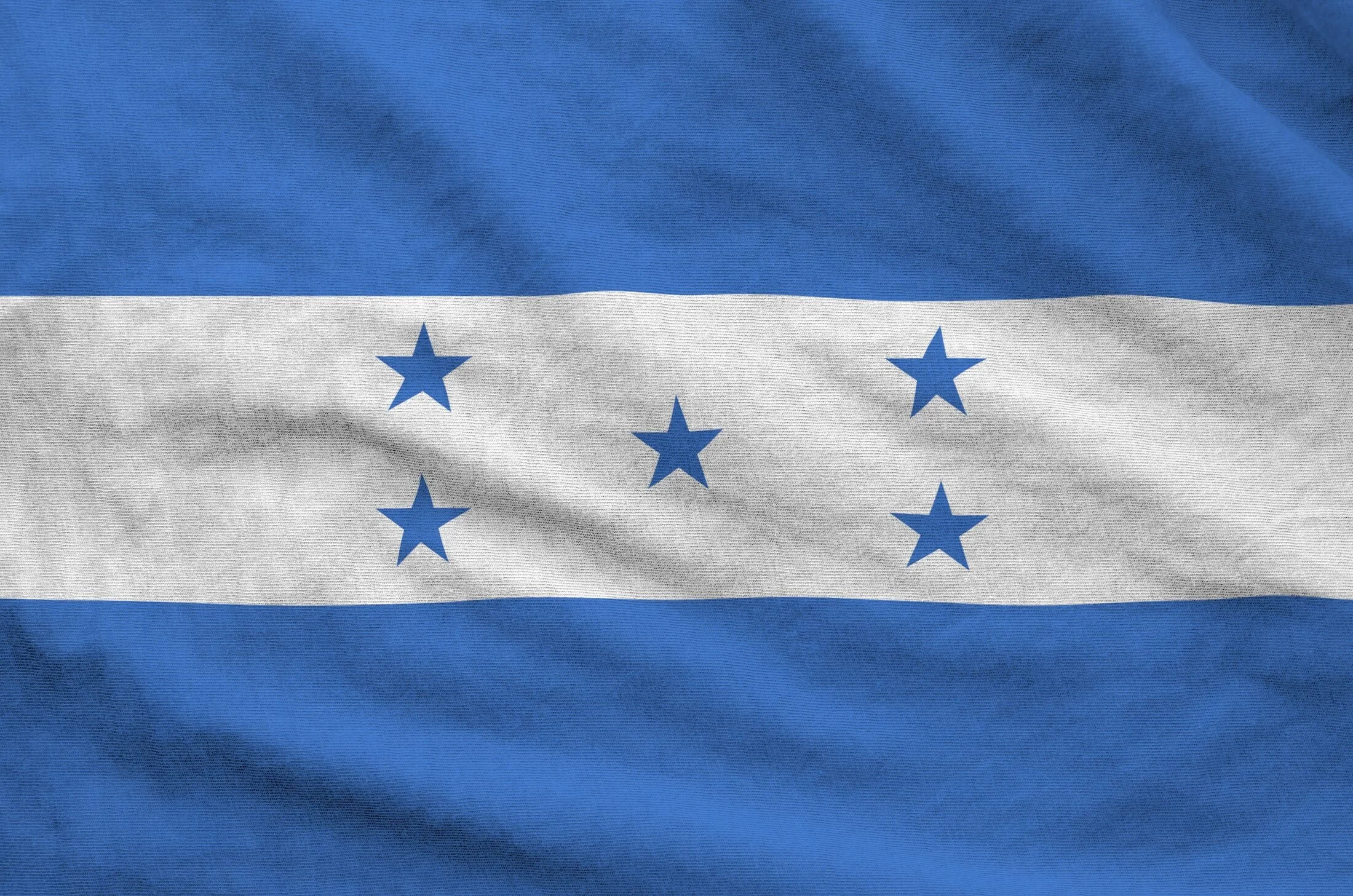
Honduras Country Profile:
Diaspora Source Country Where the Special Zones Were Struck Down
Honduras sends more of its people abroad than almost any country in the hemisphere, and its planning needs run through the diaspora. The ZEDE zones once marketed as a novel legal framework have been repealed, ruled unconstitutional and are the subject of a multibillion-dollar arbitration; they are not a structuring option.
🇭🇳 Key Facts (2026):
Currency: Honduran Lempira (HNL); ~26.8 to USD (mid-market, September 2026); a managed crawl that has weakened steadily against the dollar
Personal income tax: progressive 0%, 15%, 20% and 25%, with the exempt band a little above HNL 200,000 (~USD 7,500) and the 25% rate from roughly HNL 770,000 (~USD 28,700), thresholds indexed annually
Corporate tax: 25%, plus a 5% solidarity contribution on net taxable income above HNL 1 million (~USD 37,300), giving 30% for any company of size; an alternative minimum tax on gross income applies to larger businesses
VAT (ISV): 15%; 18% on alcohol, tobacco and premium airfares
Capital gains: 10% flat
Dividend withholding: 10%
Wealth tax: none
Estate/inheritance tax: progressive, at modest rates on Honduran-situs assets
Tax system: territorial; Honduran-source income only
Tax residency trigger: 183 days in a fiscal year
Treaties: no comprehensive double tax convention in force. Honduras–Colombia: no. Honduras–Panama: no
Residency thresholds: pensionado USD 1,500 per month; rentista USD 2,500 per month; investor USD 50,000; CA-4 tourist stay 90 days
Naturalisation: one year's residence for Central Americans by birth, two for Spaniards and Ibero-Americans, three for everyone else
ZEDE status: enabling law repealed by Congress April 2022; declared unconstitutional with retroactive effect by the Supreme Court September 2024; Honduras withdrew from ICSID August 2024; Próspera's ICSID claim of up to USD 10.7 billion pending
Corporate setup (S. de R.L. or S.A.): USD 1,500–3,000. Annual maintenance: USD 1,500–4,000
Personal bank account minimum: HNL 500–2,000 (~USD 20–75); USD accounts available to residents
Private banking threshold: ~USD 250,000 at Banco Atlántida, Ficohsa or BAC
Cost of living, comfortable household: USD 2,000–3,500 per month in Tegucigalpa or San Pedro Sula; USD 2,500–4,500 on Roatán
CRS: not participating; no automatic exchange in place
FATCA: Model 1 IGA signed 2014
Remittances: roughly a quarter of GDP
US travel advisory: Level 3, Reconsider Travel; Gracias a Dios department Level 4
Population: ~10.8 million
Time zone: UTC-6, no daylight saving
Last edited: 2 September 2026 by Joe Martin Hanson (Director & Global Partner) with advice from FTR’s Honduran Tax Partners
Why Honduras Matters
Honduras matters to FTR almost entirely through its diaspora. Well over a million Hondurans live in the United States, with smaller communities in Spain and Mexico, and remittances of around USD 10 billion a year are the largest item in the balance of payments. Honduran-Americans and their children have cross-border needs that recur in every file: property bought for or inherited from parents, remittance flows that need to be documented for both tax systems, family businesses in San Pedro Sula, and inheritance through a Honduran probate court that the heirs cannot easily attend.
It matters second as a small source of HNW outbound flow from the industrial families of the Sula valley and Tegucigalpa, who bank and structure in Panama and Miami for the same reasons their Guatemalan counterparts do: security and institutional risk, not tax.
It matters third, and only on the Bay Islands, as a destination. Roatán has an English-speaking Caribbean heritage, direct US flights, a diving economy and a real estate market built for North American buyers. The ZEDE story, which briefly made Roatán a talking point in the libertarian charter-city world, is now a cautionary tale about building on a legal framework a single election can remove.
Visa and Residency Routes
Residency is handled by the Instituto Nacional de Migración with apostilled, translated documents and a Honduran lawyer in practice required. Processing runs six to twelve months.
Pensionado. Proof of a lifetime pension of at least USD 1,500 a month from a government or private source. The retiree route, mostly used on Roatán.
Rentista. Proof of stable foreign income of at least USD 2,500 a month from investments or other non-employment sources. The route for a client living on investment income.
Inversionista. A minimum investment of USD 50,000 in a Honduran business or project, with a business plan approved by the authorities. Real estate qualifies in practice when it is part of a commercial project. This is the route for anyone opening a business on the islands.
All three are renewable residencies that permit ownership of property and, in the investor case, active management of the business. They require proof of continuing income at renewal and modest physical presence. Permanent residence is available after several years, and naturalisation after three years of residence for most nationalities, one for Central Americans and two for Spaniards and Ibero-Americans. Honduras tolerates dual nationality by treaty for Central Americans and Spaniards; other naturalised citizens face a renunciation expectation that few foreigners would accept, and the passport has no value to FTR's clients.
Tourists. Honduras is in the CA-4 zone: 90 days shared with Guatemala, El Salvador and Nicaragua, with one extension. Much of the Roatán foreign community lives this way, with border runs to Belize or Mexico. No digital nomad visa exists.
What fails in practice: anything that depends on a ZEDE for legal standing, and any timetable that assumes the migration institute will respond within a quarter.
Tax Peculiarities and Traps
Territoriality. Honduras taxes Honduran-source income only, for residents and non-residents alike. Foreign pensions, dividends and gains are outside the system, and there are no CFC rules. The trap is the reverse one: income from a Honduran business or property, including a Roatán rental, is Honduran-source and taxed whether the owner is resident or not, with 10% withholding on dividends and higher rates on services and rents paid to non-residents.
The corporate stack. The headline 25% becomes 30% once the 5% solidarity contribution applies above HNL 1 million of net income, and a larger business may instead pay an alternative minimum tax on gross income in a loss year. Municipal taxes on turnover sit on top. Model the all-in rate, not the headline.
The ZEDE regime. The Zones for Employment and Economic Development were created by constitutional amendment in 2013 and permitted private zones with their own civil and commercial law, courts and tax regimes; Próspera on Roatán, Ciudad Morazán near Choloma and Orquídea were established under it. In April 2022 Congress repealed the enabling constitutional amendments and the organic law. In September 2024 the Supreme Court declared the regime unconstitutional with retroactive effect. Honduras Próspera Inc. filed an ICSID claim for up to USD 10.7 billion, roughly a third of Honduran GDP, and Honduras gave notice of withdrawal from the ICSID Convention in August 2024. The zones continue to operate in a contested grey area under 50-year legal stability agreements whose enforceability is the subject of the arbitration. A change of government in January 2026 reopened political discussion of the zones, but nothing has restored the regime. Any entity, licence, title or tax position that depends on ZEDE law is exposed to that outcome and FTR will not structure on it.
Property and succession. Foreigners may own up to about 3,000 square metres of urban land for residential use directly; larger holdings and land within 40 kilometres of the coast or a border are constitutionally restricted and are held through Honduran companies, which is how essentially all Roatán property is owned. Inheritance passes through Honduran probate, which is slow and requires local representation; the inheritance tax is modest but the process is the cost. Bay Islands title has a history of overlapping claims, and title insurance is worth buying where available.
Exchange management. The central bank manages the lempira through a crawling band and a foreign-currency auction system. Residents can hold USD accounts, but large outward transfers draw documentation requirements, and the steady depreciation means lempira balances lose value against the dollar every year.
The Structural Layer
For a Honduran-resident client, FTR's default, a Panamanian Private Interest Foundation over a Panamanian SA with a modest salary paid in Honduras, works: no CFC rules, no attribution, no wealth tax, foreign dividends untaxed, and the salary taxed on the progressive scale, which at a modest level means 15% to 20%. The foundation earns its keep on succession, keeping the family's mobile assets out of Honduran probate and out of a public register in a country where visible wealth is a security risk.
Honduran-source business belongs in a Honduran S. de R.L. or S.A. held by the Panamanian layer, and Honduran real estate belongs in a Honduran company held the same way, so that succession is a share transfer in Panama rather than a probate in Tegucigalpa. Nothing is placed in a ZEDE.
For the US-based diaspora the design runs from the US side: inherited Honduran property and family company shares create Forms 3520, 5471 and FBAR exposure, remittances need clean documentation, and a Honduran company used to hold a parent's house is a controlled foreign corporation for a US child who inherits it. Honduran entities have no place in a structure for anyone without Honduran assets.
Info-Sharing Reality (CRS and FATCA)
Honduras does not participate in CRS. It is not a Global Forum automatic-exchange jurisdiction and Honduran banks send no bulk account data to Colombia, Panama, Spain or anywhere else. It has a Model 1 FATCA agreement with the United States, signed in 2014, so every US person's account at a Honduran bank is reported to the IRS via the Honduran authorities; that covers the entire diaspora and their families who hold accounts at home.
As with Guatemala, the absence of CRS is not an opportunity and FTR does not present it as one. Honduran HNW capital sits in Panama and Miami, where it is respectively reported and reportable, and a Honduran account held by a resident of a CRS country is an undeclared account, not a private one. Honduras is not marketed as a privacy jurisdiction by anyone serious, and it should not be.
Banking Reality
Banco Atlántida, BAC Credomatic, Banco Ficohsa, Banpaís, Banco de Occidente and Davivienda dominate. Honduras is not on the FATF grey list or the EU list; correspondent relationships through US banks are stable, helped by the remittance volume, and SWIFT works.
A foreigner with residency opens a personal account in person with passport, residency card, proof of address and income, in one to three weeks; without residency most banks decline or offer a restricted account. USD accounts are routine for residents. Business accounts require the company file, tax registration with the Servicio de Administración de Rentas and beneficial ownership declarations; banks are cautious about cash-heavy businesses and about anything on the islands connected to the ZEDE dispute. Private banking at Atlántida, Ficohsa and BAC begins around USD 250,000 and routes serious money to Panama and Miami affiliates. Roatán has branches of the main banks and ATMs that run out of cash at weekends.
Cost of Doing Business
A Honduran S. de R.L. or S.A. costs USD 1,500–3,000 to form through a notary, with minimum capital of HNL 5,000 for an S. de R.L. and HNL 25,000 for an S.A., registration at the Mercantile Registry through the Chamber of Commerce, and tax and municipal registrations; four to eight weeks is typical. Annual maintenance of USD 1,500–4,000 covers an accountant for monthly ISV and withholding returns, the annual income tax return, municipal filings and the solidarity contribution calculation.
Against the set: a Panamanian SA costs USD 1,500–2,500 to establish and USD 1,000–1,800 a year with a fraction of the filing. Singapore runs about three times Panama's setup, USD 4,500–7,500, with USD 4,000–8,000 annual compliance. Costa Rica sits between Panama and Honduras on cost with far better institutions. A Honduran company is justified only for a business or property that is physically in Honduras.
Cost of Living
Tegucigalpa's Lomas del Guijarro and Colonia Palmira, San Pedro Sula's Río de Piedras and Roatán's West End and West Bay are where foreigners actually live.
Lean, single or couple, mainland: USD 1,200–1,800: rent USD 400–700, groceries USD 300–450, local private clinic cover, a used vehicle or taxis.
Comfortable, couple or family: USD 2,000–3,500 mainland, USD 2,500–4,500 on Roatán: rent USD 800–1,500 for a good two- or three-bedroom in a secured development, international health and medevac insurance USD 250–500, a vehicle, private security or gated-community fees USD 100–250, generator and water costs on the islands.
HNW: USD 6,000–12,000 and up: a house in a guarded enclave or a West Bay villa at USD 400,000 upward, the American School of Tegucigalpa or Escuela Internacional Sampedrana at USD 8,000–14,000 per child per year, driver, staff and frequent Miami or Houston travel.
Healthcare: Honduras Medical Center in Tegucigalpa and CEMESA in San Pedro Sula are competent private hospitals; Roatán has clinics only, and anything serious means a flight to the mainland or, for anyone who can afford it, to the US. Medevac cover is not optional on the islands.
Cultural and Practical Considerations
Honduras is under a US Level 3 advisory, Reconsider Travel, with Gracias a Dios at Level 4, and the government has operated a state of exception since December 2022 that suspends certain constitutional guarantees in the name of fighting extortion and gang crime. The homicide rate has fallen by more than half from its 2011 peak but remains among the world's highest, and extortion of businesses by gangs is the defining daily-life risk in the two big cities. The Bay Islands are markedly safer, with property crime and occasional violent robbery rather than gang conflict. Mainland life for a foreigner of means is lived behind walls, with drivers and security; a client unwilling to live that way should confine any Honduran plan to Roatán or not come.
Language. Spanish is required for everything on the mainland. On Roatán and Utila an English-speaking Caribbean creole community and a large North American population mean English works for daily life, though banks and officials increasingly default to Spanish.
Women, LGBT residents and family law. There is no legal restriction on women living, owning property or running businesses alone. Honduras has one of the highest femicide rates in the world and impunity is near-total; single women on the mainland plan housing, transport and routine around that. Same-sex relations are legal, but the constitution was amended in 2005 to bar same-sex marriage and adoption, there is no partnership recognition, and violence against LGBT people is well documented, most visibly in the Inter-American Court's 2021 judgment against Honduras in the Vicky Hernández case. Roatán is tolerant by comparison; the mainland is not a place for an openly gay couple to build a visible life. Family law is civil-law community property with court-based probate.
Politics and institutions. Volatile. The 2009 coup, the 2017 disputed election, the extradition and 2024 US conviction of former president Juan Orlando Hernández, the contested November 2025 election and the January 2026 transfer of power are within the memory of any adult resident. Courts and regulators are politicised, the ZEDE reversal being the clearest example, and the rules a foreign investor relies on can change with the government. Bureaucracy is slow and personal.
Climate and infrastructure. Hot and humid in the lowlands and islands, cooler in Tegucigalpa at 1,000 metres. Hurricanes Eta and Iota flooded the Sula valley in 2020 and the risk recurs every season; dengue is endemic; power outages are frequent and island water and electricity are expensive. Roads outside the main corridors are poor and unsafe at night.
Integration and schooling. Honduran elite society is small and family-based; foreigners live alongside it rather than within it. The Roatán expat community is large enough to be self-sufficient. Bilingual schools in Tegucigalpa and San Pedro Sula are good; on Roatán the options are small private schools and home-schooling.
For Retirees
Roatán via the pensionado route above, foreign pension untaxed, medevac insurance mandatory, and a clear-eyed view of island healthcare and hurricane exposure before buying.
For Digital Nomads and Remote Professionals
Utila and Roatán on the CA-4 stamp for a diving season; no visa, no tax standing, no reason to establish residence when Panama does the same job with institutions.
For Online Business Owners and Entrepreneurs
Not a base. A Honduran-resident owner runs the Panamanian structure above.
For Multinational Business Owners
Manufacturing in the Sula valley and San Pedro Sula's maquila sector is real; hold the local operating company through Panama, keep the group's cash offshore, and treat the ZEDE history as the measure of regulatory risk.
For High Net Worth (HNW) Families and Investors
A source, not a Plan-B. The work is outbound structuring, Panamanian or US residency for the next generation, and succession of Honduran property and companies through a foundation. There is no Chinese HNW lens.
Common Traps
Anything built on a ZEDE. The regime is repealed, ruled unconstitutional and under arbitration; the surviving zones are a legal dispute, not a jurisdiction.
Coming to Honduras for tax, privacy or banking. The territorial system is real but Panama's is equal and comes with institutions; the absence of CRS is temporary and excludes Americans; the banks route serious money elsewhere anyway.
Mainland residence for any client who will not live behind security, and island residence for any client who needs a hospital within an hour.
Buying island property on an unsearched title, or in personal name where a company is required.
Next Steps
Honduran-American families dealing with property and inheritance at home, Honduran HNW families structuring outbound, and Roatán buyers who want the ownership and succession done properly: book a scoping call.
Important note: General information. Not personal tax, legal, or financial advice. Speak to a qualified adviser at FTR or elsewhere before acting.
Continue reading
Suggested next, chosen by our partners.


