
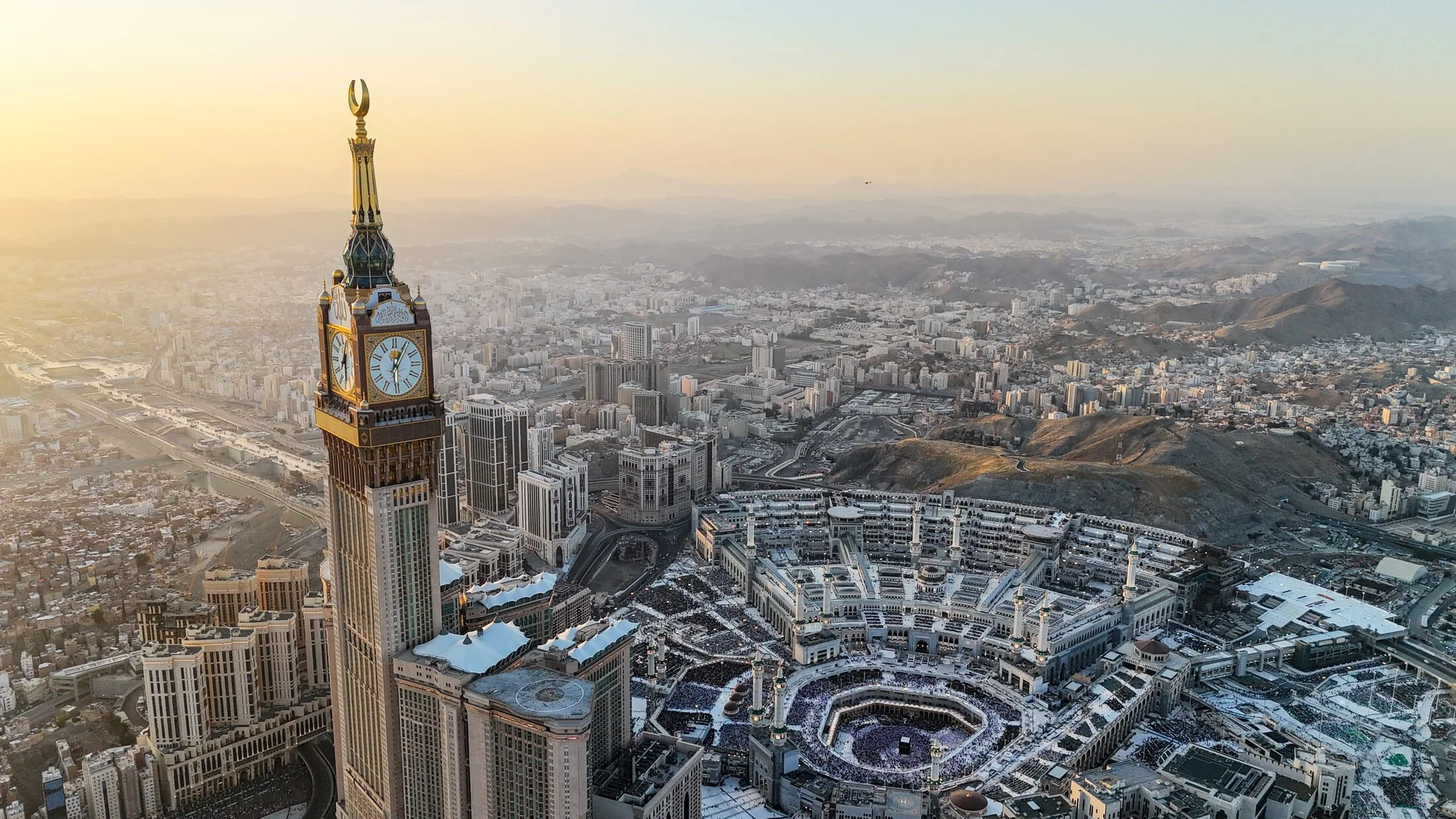
Saudi Arabia Country Profile:
Zero Income Tax, Premium Residency and a Hard Social Contract
The Gulf's largest economy now sells residence to foreigners, taxes no personal income and issues tax residency certificates. A serious base for professionals and business owners who accept its rules, a wealth source of the first order, and the wrong answer for anyone who wants Dubai's freedoms.
🇸🇦 Key Facts (2026):
Currency: Saudi Riyal (SAR); pegged at 3.75 to USD since 1986
Personal income tax: 0% for citizens and residents alike; no tax on salary, investment income or capital gains for individuals
Zakat: 2.5% a year on the zakat base of Saudi and GCC nationals and Saudi- or GCC-owned companies, in place of corporate income tax
Corporate tax: 20% on the share of profits attributable to non-Saudi, non-GCC ownership; mixed companies split between Zakat and income tax; 50%–85% on oil and hydrocarbon production; Regional Headquarters programme 0% for 30 years
Withholding tax: 5% on dividends and interest, 15% on royalties, 20% on management fees, 5% on technical and consulting fees paid abroad, subject to treaty
VAT: 15% since July 2020; registration threshold SAR 375,000
Real estate transaction tax: 5% on transfers
Capital gains: 0% for individuals; 20% for non-Saudi corporate shareholders on disposal of unlisted Saudi shares; Tadawul-listed shares exempt
Wealth tax: none, other than Zakat for Saudi and GCC nationals
Estate/inheritance tax: none; sharia inheritance rules apply to Saudi-situs assets and to Muslim decedents
Tax residency trigger: a permanent home in the Kingdom plus 30 days' presence, or 183 days' presence in the tax year; ZATCA issues tax residency certificates to individuals who qualify
Premium Residency: Unlimited SAR 800,000 (USD 213,333) one-off; Limited SAR 100,000 (USD 26,667) a year; Real Estate Owner from SAR 4 million (USD 1.07 million) of unmortgaged property; Investor SAR 7 million (USD 1.87 million) and ten jobs; Entrepreneur, Special Talent and Gifted categories by criteria; SAR 4,000 application fee on the newer categories
Standard residency: employer-sponsored Iqama; dependant levy SAR 400 a month per dependant
Corporate setup: USD 10,000–25,000 including Ministry of Investment registration, commercial registration and first-year office; annual maintenance: USD 10,000–25,000
Personal bank account minimum: nil with an Iqama or Premium Residency and Absher registration; no accounts for visitors
Private banking threshold: SAR 1–2 million (USD 267,000–533,000) for the priority tiers at SNB, SAB and Riyad Bank; SAR 5 million and above for private banking proper
Cost of living, comfortable professional household: SAR 30,000–45,000 a month in Riyadh (USD 8,000–12,000)
CRS: participating, first exchanges 2018
FATCA: Model 1 IGA in force
Treaties: about 57 comprehensive, including the UK, France, China, Japan, Singapore, Malaysia, Switzerland and the UAE; none with the USA, Canada, Australia, Panama or Colombia
FATF: full member since 2019; not grey-listed
Population: ~35 million, of whom roughly 40% are foreign nationals
Time zone: UTC+3, no daylight saving
Last edited: 20 September 2026 by Joe Martin Hanson (Director & Global Partner) with advice from FTR’s Saudi Tax Partners
Why Saudi Arabia Matters
Saudi Arabia matters as a source because it holds one of the world's densest concentrations of private wealth, family business groups now institutionalising and expanding abroad, and a generation of younger principals who want international structures that their fathers' Swiss accounts never provided. That demand runs through London, Geneva, Dubai and Bahrain, and increasingly through professional cross-border structuring.
It matters as a destination because since 2019 it has done three things it never did before: sold residence to foreigners without an employer, allowed 100% foreign ownership across most of the economy, and, through the Regional Headquarters programme and Vision 2030 spending, pulled a large cohort of professionals and business owners into Riyadh. It taxes none of their income and will issue a tax residency certificate to an individual who actually lives there. For a client leaving Canada, Australia or the UK for a Gulf base with a large contract, Riyadh is now on the list with Dubai and Abu Dhabi.
What it does not offer is a lifestyle. Alcohol is illegal, same-sex relations are criminal, the state tolerates no criticism, and Riyadh is a hot, sprawling, car-bound city. The economics are excellent and the social contract strict; a client needs to want the first enough to accept the second.
Visa and Residency Routes
Employer-sponsored Iqama. The route for the great majority of foreign residents: a work visa tied to a Saudi employer, renewable, with dependants sponsored at SAR 400 a month each. The 2021 labour reforms let most workers change employers and leave the country without the employer's permission, ending the worst of the kafala system for skilled staff. Processing runs four to eight weeks once the employer's quota is approved.
Premium Residency. Launched in 2019 with two products, an Unlimited residency for a one-off SAR 800,000 and a Limited residency renewable annually for SAR 100,000, both giving residence without a sponsor, the right to sponsor family, own property (outside Mecca and Medina), own businesses without a local partner, leave and return freely and work for any employer, with exemption from the expat levies. In 2024 the programme was restructured into wider tiers: Special Talent for professionals meeting salary and qualification criteria, Gifted for exceptional achievers, Investor for SAR 7 million invested with ten jobs created within two years, Entrepreneur in two tiers for founders with recognised backing, and Real Estate Owner for holders of SAR 4 million or more of completed, unmortgaged residential property, lasting as long as the property is held; the original Unlimited and Limited products continue, and newer categories carry a SAR 4,000 application fee. Processing runs from weeks to several months.
Premium Residency is a residence permit, not a route to citizenship, which is granted by royal decree to a few hundred people of exceptional standing and almost never to a Western business owner; Saudi law does not generally recognise dual nationality. Visit and tourist visas (a one-year multiple-entry tourist e-visa with 90-day stays, business and event visas) confer neither residence nor the right to open a bank account.
Which route. The Iqama for professionals arriving with a job; the Limited Premium Residency as the anchor for a business owner or consultant who genuinely relocates and needs a tax residency certificate without an employer; the Real Estate Owner tier for HNW families buying a Riyadh or Jeddah base; the Unlimited product for those who know they are staying. What fails: buying a Premium Residency and not living in the Kingdom. The certificate requires presence, the home country's residency test is unaffected by a Saudi card, and 0% gives no foreign tax credit to fall back on if the home country decides the client never left.
Tax Peculiarities and Traps
Zero is only zero if you actually left. With no personal income tax there is nothing on the Saudi side to plan; the entire exposure is the home country's continuing claim. Canada, Australia and the USA have no treaty with Saudi Arabia, so there is no tie-breaker and the departure stands or falls on domestic ties tests, exactly as with Panama. The ZATCA tax residency certificate, obtainable on 183 days' presence or a permanent home plus 30 days, is evidence, not a defence.
Central management makes a foreign company Saudi. Under Article 3 of the Income Tax Law a company is resident if incorporated in the Kingdom or if its central management is located there. A Panamanian SA whose sole director runs it from a Riyadh apartment is exposed to Saudi corporate income tax at 20% on its worldwide profits, plus permanent-establishment arguments for any Saudi-facing activity; ZATCA has grown considerably more capable and more interested in exactly this since 2020.
Zakat versus income tax. A company owned by Saudi or GCC nationals pays Zakat at 2.5% on a base approximating equity plus long-term funding less fixed assets, not on profit; a company with foreign owners pays 20% income tax on the foreign share; mixed companies compute both. GCC nationals sit inside the Zakat regime, not the income-tax regime, and bringing a foreign investor into a Saudi family business changes its tax character.
Withholding on payments abroad. Management fees to a foreign parent bear 20%, technical service fees 5%, dividends and interest 5%, royalties 15%; treaty rates need a residency certificate from a treaty partner, and Panama is not one. VAT at 15% applies from SAR 375,000 turnover and is enforced through mandatory e-invoicing (FATOORAH) with automatic penalties; real estate transaction tax at 5% is paid on every transfer.
Succession. No estate tax, but the courts apply sharia inheritance to assets in the Kingdom and to Muslim decedents wherever the assets sit. A non-Muslim foreigner's Saudi bank balance and property may be distributed under sharia shares in the absence of a registered will, and sometimes with one; a will drawn abroad is not reliably enforced. The standard advice is to hold nothing in the Kingdom beyond working balances and to take advice on title structure before any property purchase.
Levies and exit. The dependant levy of SAR 400 a month and the employer levy of SAR 800 a month per foreign worker are priced into every family budget and salary offer. Leaving on an Iqama requires the employer to cancel the residence and the bank accounts follow; the tax authority's interest in an individual is nil, which makes departure administratively simple and evidentially thin for a client who later needs to show a home country where they were.
The Structural Layer
For a foreign professional or business owner resident in the Kingdom, FTR's default of a Panamanian Private Interest Foundation owning a Panamanian SA, with a modest director's salary paid where the client lives, works as well as it does in the UAE, with one modification. There is no personal tax on the salary or the SA's dividends, no controlled foreign company rule for individuals, and no Zakat for non-GCC nationals. The modification is control: the SA must be managed from outside the Kingdom, through Panamanian directors and board meetings held elsewhere, with the Saudi resident documented as employee and beneficiary rather than mind and management. Done properly, the Saudi side is a salary into a Riyadh account and nothing else.
Where Saudi customers or contracts exist, a Saudi entity registered with the Ministry of Investment is needed and pays 20% on its foreign-owned profits; the offshore SA does not invoice into the Kingdom without withholding. The two sit side by side, the Saudi company paying dividends offshore at 5%.
For Saudi nationals the default is a succession and governance tool for assets outside the Kingdom. Zakat, not income tax, is their regime, and a foundation offers what sharia inheritance and the family business do not: a single holding vehicle, a governing charter across branches of a large family, and continuity for assets in London, Geneva or Singapore. It cannot override sharia distribution of Saudi-situs assets, and it is drafted with religious sensitivity, often with a sharia-compliant investment mandate. Saudi family wealth has used Cayman, Jersey and Swiss structures for decades; the Panamanian foundation competes on cost.
Where it plainly does not fit: a departing Canadian, Australian or American who has not actually severed home ties, for whom the Saudi 0% simply removes the foreign tax credit that would have softened the home bill.
Info-Sharing Reality (CRS and FATCA)
Saudi Arabia has exchanged under the CRS since 2018. Saudi banks report foreign tax residents' accounts to ZATCA for onward exchange with the UK, France, Germany, Switzerland, Singapore, India, Pakistan and the rest of the network; a British consultant in Riyadh who still counts as UK-resident will find his Al Rajhi balance in HMRC's data. In the other direction, Saudi nationals' Swiss, UK and Singapore accounts are reported to ZATCA, which has no income tax to apply to them but a Zakat base and an anti-money-laundering mandate. The FATCA Model 1 IGA is in force. Saudi Arabia has been a full FATF member since 2019 and its banks apply source-of-funds scrutiny with particular sensitivity to Iran, Syria and Yemen.
The Kingdom is not a privacy jurisdiction and does not market itself as one; its appeal is that it has nothing to tax, not that it has anything to hide. The Chinese Plan-B lens does not apply: Chinese HNW families do not move to Riyadh.
Banking Reality
Saudi National Bank, Al Rajhi (the world's largest Islamic bank), Riyad Bank, SAB (HSBC's affiliate), Alinma, Banque Saudi Fransi, Arab National Bank and Gulf International Bank cover the market; foreign banks run corporate branches. A personal account requires an Iqama or Premium Residency and registration on the Absher identity platform; visitors cannot open one. With those in hand, opening takes days, and conventional and sharia-compliant products are both available. International transfers are routine, the riyal is fully convertible and pegged, and SWIFT and correspondent access are complete. Priority banking starts around SAR 1–2 million; private banking proper at SAB, SNB Private and the Swiss and UK houses' Riyadh offices from SAR 5 million. Cash above SAR 60,000 is declared at the border. The friction is administrative: everything is keyed to a valid residence, and an expired Iqama freezes the account.
Cost of Doing Business
A foreign-owned limited liability company registers with the Ministry of Investment under the 2025 Investment Law, which replaced licensing with registration, then obtains commercial registration, chamber membership, GOSI, Muqeem and municipal permits. 100% foreign ownership is permitted in most sectors, with minimum capital set by activity and often nil for services. Setup costs USD 10,000–25,000 including the first year's mandatory office lease and takes six to twelve weeks; annual maintenance of USD 10,000–25,000 covers the Ministry of Investment renewal, Zakat and income-tax filings, VAT and e-invoicing, GOSI, the expat levy and the Saudisation (Nitaqat) quota, the cost line foreign owners underestimate most. The Regional Headquarters programme grants 30 years of 0% corporate tax and withholding on qualifying activity, and since 2024 government contracts require an RHQ in the Kingdom.
Against the set: a Panamanian SA costs USD 1,500–2,500 to establish and USD 1,000–1,800 a year; Singapore about three times the Panamanian setup at USD 4,500–7,500 with USD 4,000–8,000 annual compliance; a UAE free-zone company USD 4,000–10,000 to set up and USD 3,000–8,000 a year. Saudi Arabia is the most expensive entity in FTR's Gulf set to open and run, and it exists for Saudi contracts; the holding layer, and any business without Saudi customers, sits offshore.
Cost of Living
Figures for Riyadh, where rents rose sharply from 2023 with the Regional Headquarters influx; Jeddah runs 15–20% lower, Dammam and Khobar lower again.
Lean, single: SAR 10,000–14,000 a month (USD 2,700–3,700): one-bedroom apartment SAR 4,000–7,000, employer health insurance, a car at SAR 1,500–2,500 with cheap fuel, groceries SAR 1,500–2,000.
Comfortable, family of four: SAR 30,000–45,000 (USD 8,000–12,000): a compound villa at SAR 180,000–350,000 a year or a good non-compound house at SAR 100,000–180,000, two children at the American or British International School Riyadh at SAR 60,000–100,000 each a year, family health cover under the mandatory CCHI scheme, two cars, help.
HNW: SAR 80,000 and up (USD 21,000-plus): a large villa in Al Nakheel or a Diplomatic Quarter lease, top-tier schooling, staff, private care at King Faisal Specialist Hospital or Dr Sulaiman Al Habib, frequent travel to Dubai and London. Private healthcare is high quality, insurance is mandatory, and there is no public entitlement for foreigners.
Cultural and Practical Considerations
Saudi Arabia has changed more in seven years than in the preceding fifty, and remains an absolute monarchy applying sharia law, with no elections, no free press and no tolerance for dissent. Every practical consideration below sits inside that.
Women. The 2019 reforms ended most of the guardianship system for adult women: a woman over 21 obtains a passport, travels, lives alone, registers her children and drives without a male guardian's permission, and foreign women work, travel and run businesses without restriction; Saudi women still need a guardian's consent to marry. The abaya is no longer required for foreign women, but modest dress covering shoulders and knees is required under the Public Decorum regulations and enforced by fines. Mixed-gender restaurants, offices, concerts and sporting events are now normal in Riyadh and Jeddah. A single foreign woman can live and work here without legal obstacle and with less street harassment than in many European cities; what she cannot expect is the social freedom of Dubai.
LGBT residents. Same-sex sexual activity is a criminal offence under sharia, punishable by imprisonment, corporal punishment and deportation for foreigners, with no protection of any kind. Foreign LGBT residents exist, discreetly, in the large compounds, and every one carries a legal exposure that no employer or Premium Residency removes. FTR does not recommend the Kingdom to a client for whom this is relevant.
Family law. The 2022 Personal Status Law codified marriage, divorce and custody on sharia principles: custody of young children ordinarily follows the mother, guardianship the father, and a non-Muslim mother's position is weaker; a Muslim woman cannot marry a non-Muslim man. Foreign couples' disputes that reach a Saudi court are decided under Saudi law. Unmarried foreign couples have not been questioned in hotels since the 2019 tourism rules, but cohabitation has no legal status.
Religion, alcohol, conduct. Islam is the only religion practised publicly; private non-Muslim worship is tolerated in compounds and homes, and non-Muslims may not enter Mecca or central Medina. Alcohol is illegal for residents, with a single outlet for non-Muslim diplomats since 2024; possession and drunkenness are prosecuted and expatriates deported. Drug offences carry the death penalty. Eating and drinking in public in Ramadan daylight is an offence for everyone. Prayer-time shop closures were relaxed in 2023.
Speech. Criticism of the state, the royal family or religion, including on social media and including posts made years earlier, is prosecuted under the anti-terrorism and cybercrime laws with long sentences, and foreigners are not exempt. This is the most important behavioural rule for a resident and the one Western professionals most underestimate.
Language and integration. Arabic is official; English is the working language of business, banking and the government portals, and a professional can live in Riyadh for a decade without Arabic. Saudi society is hospitable and private: foreigners are entertained generously and rarely admitted to family life, and most expatriates live inside compound and professional circles that function as a complete world.
Bureaucracy. Surprisingly efficient: Absher, Qiwa, Muqeem and the Ministry of Investment platforms are digital, fast and in English. The friction is in Saudisation quotas, dependency on a valid residence for everything, and the pace of top-down regulatory change. Climate. Riyadh summers exceed 45°C for months, with dust storms; Jeddah adds humidity. Outdoor life happens from November to March, and people with respiratory conditions notice the dust.
Security, volatility, schooling. Crime is very low. Regional risk is real: Houthi missile and drone attacks reached Riyadh and the eastern oilfields in 2019–2022 and the 2025 Israel–Iran conflict closed Gulf airspace for days. Political volatility for a resident is low and regulatory volatility high; rules on residence, ownership and taxation have changed every year since 2018, usually in the foreigner's favour. Riyadh, Jeddah and the KAUST and Aramco communities have strong American and British-curriculum international schools with waiting lists; secure places before the move.
For Retirees
No retirement route, no public healthcare, and nothing to do; the Real Estate Owner or Limited Premium Residency can house a retired parent of a working family, and that is the only case. Digital nomads. No nomad visa, no bank account without residence, and no reason; the UAE serves this segment.
For Online Business Owners and Entrepreneurs
The Limited Premium Residency, the Structural Layer above with the SA managed offshore, a Riyadh salary account and a properly severed home-country residency; the case rests on 0% plus a genuine relocation, and is strongest with a Saudi contract driving the move.
For Multinational Business Owners
Ministry of Investment registration, 100% ownership, the RHQ programme for regional groups, Saudisation priced in, and a Singapore or Panamanian holding layer above the Saudi operating company.
For High Net Worth (HNW) Families and Investors
For Saudi families, foundation-based succession for assets outside the Kingdom, drafted with sharia sensitivity, alongside the London, Geneva and Dubai bases they already use; for foreign HNW, the Real Estate Owner tier; for Chinese HNW families, nothing.
Common Traps
Treating Saudi Arabia as Dubai. It is not, on alcohol, social life, speech or sexuality, and the tax outcome is the same. Any client for whom the LGBT position is relevant.
Buying a Premium Residency as a paper residence while living in Vancouver or Sydney; the home country still owns the file, and 0% here means no credit there.
Running the Panamanian SA from a Riyadh desk; central management makes it a Saudi taxpayer at 20%.
Holding significant assets in the Kingdom as a non-Muslim without succession advice. Anyone who needs alcohol, a walkable city, a temperate summer or the freedom to post an opinion. Retiring here, or coming without a Saudi contract in hand.
Next Steps
If you have a Saudi contract, a Saudi business or Saudi family wealth, book a scoping call. The tax side is simple; the home-country exit, the management-and-control design for the offshore company and the succession position are the work.
Important note: General information. Not personal tax, legal, or financial advice. Speak to a qualified adviser at FTR or elsewhere before acting.
Continue reading
Suggested next, chosen by our partners.


