
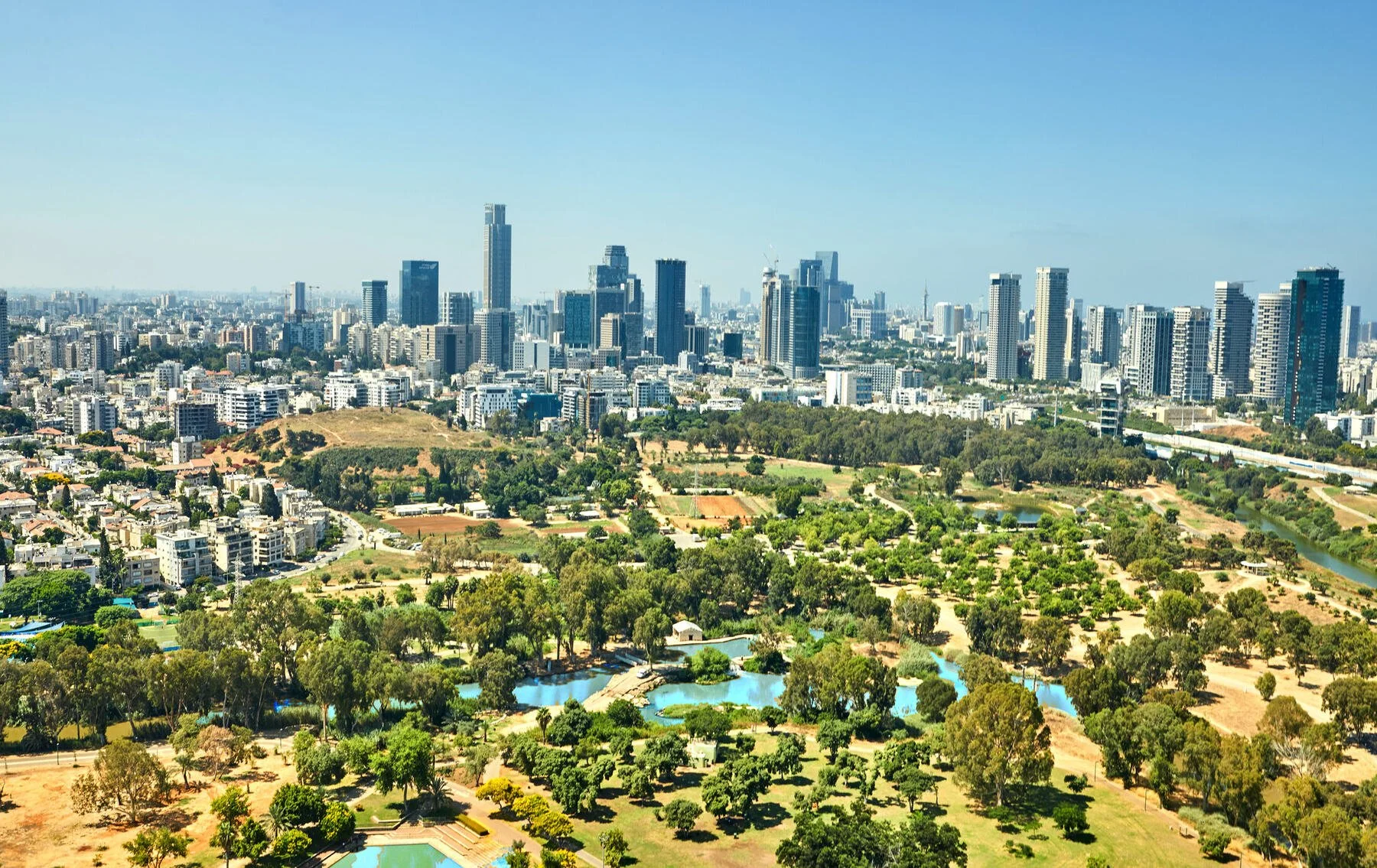
Israel Country Profile:
Ten Tax-Free Years for New Immigrants, and What Happens in Year Eleven
Israel offers eligible immigrants and long-absent returnees a decade without Israeli tax on foreign income and gains, inside a country that is expensive, loud, at war and, for those who belong there, home. It also exports HNW wealth to Portugal, the US, the UAE and Panama. Both flows need planning around the same rules.
🇮🇱 Key Facts (2026):
Currency: Israeli Shekel (ILS); ~3.03 to USD (mid-market, September 2026)
Personal income tax: progressive 10%, 14%, 20%, 31%, 35% and 47%, the top band from roughly ILS 720,000; 3% surtax above the same threshold, 50% top marginal on earned income; an additional 2% surtax on capital income above the threshold since 2025
National insurance and health levy: employees up to roughly 12% on income above the lower band, capped; self-employed roughly 17%
Corporate tax: 23%; preferred enterprise 16% (7.5% in development areas); preferred technology enterprise 12% (6%)
VAT: 18% (17% before January 2025); zero-rated in Eilat
Capital gains: 25% real gain; 30% for a substantial shareholder (10% or more); surtaxes on top above the threshold; dividends 25%/30%
Wealth tax: none
Estate/inheritance tax: none
Exit tax: Section 100A deemed disposal on ceasing residency, with an election to defer payment until actual sale
New immigrant (oleh chadash) and veteran returning resident (10 years abroad): 10-year exemption on foreign-source income and gains; residents arriving from 1 January 2026 must report that income even though it is exempt
Ordinary returning resident (6 years abroad): 5-year exemption on passive income and 10-year exemption on gains from assets acquired abroad
Tax residency trigger: centre of life on the facts; rebuttable presumption at 183 days in the year, or 30 days in the year plus 425 days over three years
Headline visa thresholds: Law of Return for Jews, their children, grandchildren and spouses, citizenship on arrival; A/1 temporary residence for eligibles deferring citizenship; B/1 work visa on employer sponsorship; investor visa for US citizens only; no golden visa, no retirement visa, no nomad visa
Corporate setup (Ltd): USD 1,500–3,000. Annual maintenance including mandatory audit: USD 5,000–10,000
Personal bank account minimum: none; monthly fees ILS 15–30
Private banking threshold: roughly USD 1 million (Leumi, Hapoalim, Mizrahi-Tefahot private arms)
Cost of living, comfortable professional household, Tel Aviv: ILS 35,000–50,000 monthly (USD 11,500–16,500)
CRS: participating; first exchanges 2019
FATCA: Model 1 IGA, signed 2014, in force 2016
Treaties: roughly 60, including the US, UK, Canada, Australia, most EU states, the UAE (in force 2022) and Panama (in force since 2015); none with Colombia
Population: ~10.1 million
Time zone: UTC+2 (UTC+3 summer)
Last edited: 2 September 2026 by Joe Martin Hanson (Director & Global Partner) with advice from FTR’s Israeli Tax Partners
Why Israel Matters
The new-immigrant exemption is the most generous tax welcome in the OECD and one of the few that is not a marketing product. An eligible person who becomes Israeli resident pays no Israeli tax for ten years on income and gains from outside Israel, whether salary from a foreign employer, dividends from a foreign company, rent from a foreign flat or the sale of a foreign portfolio, and for the same ten years a foreign company they manage from Tel Aviv is not deemed Israeli resident because of it. Wealth built abroad can be held abroad and consumed in Israel, with tax due only on what is earned inside the country.
For the Jewish diaspora that is both a real emigration destination and a tax planning opportunity, and the two cannot be separated: the exemption is available only to people who qualify under the Law of Return and actually move their centre of life. It is not a residency-for-sale scheme and there is no investor route for anyone else.
Israel matters the other way too. Israelis leave for Portugal, the UK (less so since the non-dom reform), the US, particularly Florida and New York, the UAE since the Abraham Accords, Cyprus and Greece, and increasingly Panama for Americas exposure and dollar-based structuring. The Israel Tax Authority defends its centre-of-life test aggressively, the Section 100A exit tax applies, and the same reporting machinery that catches the immigrant in year eleven catches the emigrant who did not leave cleanly.
Visa and Residency Routes
Aliyah under the Law of Return is the route that matters. Eligibility extends to anyone with at least one Jewish grandparent, converts, and their spouses; documentation is checked by the Jewish Agency or Nefesh B'Nefesh before arrival and the Ministry of Interior after. Processing runs three to six months. Citizenship is granted on arrival, with an option to take A/1 temporary residence instead for up to three years for those who need to defer citizenship for home-country reasons. There is no physical presence test for citizenship, but the tax exemption depends on becoming resident under the centre-of-life test, and an oleh who lands, takes the passport and lives elsewhere gets neither the exemption nor a defensible position. Olim receive an absorption grant, free Hebrew ulpan, customs and purchase-tax concessions, and, within 90 days of arrival, may elect an adjustment year during which they are treated as non-resident while deciding whether to stay; the year still counts toward the ten.
Veteran returning residents, Israelis who have been away ten years or more, get the same ten-year package; ordinary returning residents after six years get the narrower one. FTR's typical Israeli file is a returning family from London, New York or Toronto with a business and portfolio built abroad, and the question is not eligibility but sequencing: what to sell, restructure or leave alone before the residency date, and what the year-eleven picture looks like.
For non-Jews the routes are thin. A B/1 work visa requires an employer to justify hiring a foreigner and is renewable to about five years; B/5 investor visas exist only for US citizens under a bilateral arrangement; marriage to an Israeli citizen runs a graduated procedure of four and a half to seven years to citizenship. There is no golden visa, no retirement visa and no digital nomad visa. A non-Jewish HNW client cannot buy residence in Israel, and FTR does not pretend otherwise.
Military service follows aliyah: men arriving under 22 serve full terms, those 22–27 shortened ones, and those 28 or over are generally exempt, with women's obligations ending earlier; the children of olim serve in full, and reserve duty has been heavy since October 2023. This is not a tax consideration but it is the practical one families most often underweight.
Tax Peculiarities and Traps
The reporting change for the 2026 cohort. Until the end of 2025, new immigrants and veteran returning residents were exempt not only from tax on foreign income but from reporting it. That reporting exemption is gone for anyone becoming resident after 31 December 2025: exempt foreign income and foreign assets must now be disclosed on the annual return. The tax exemption itself is unchanged. For a 2026 oleh this means source-of-wealth documentation, foreign company accounts and portfolio statements must be in order from day one, and undisclosed structures that used to sit quietly for a decade no longer can.
Israeli-source income is not exempt. Work physically performed in Israel is Israeli-source even when the employer or company is foreign, and the Tax Authority apportions "mixed" income by workdays. A founder running a foreign company from Tel Aviv is taxed on the portion attributable to work done in Israel, which is most of it. The exemption protects wealth built abroad and income earned abroad, not a job done from an Israeli desk.
Centre of life and the emigrant. Israel's residency test is a facts-and-circumstances test with day-count presumptions, and the Tax Authority has litigated it aggressively against Israelis who claimed to have left while keeping a home, a spouse, a business or a bank relationship in Israel. Leaving requires evidence of a new centre of life and consistent filings, and the deemed disposal under Section 100A on the day residency ends, which can be deferred until the assets are actually sold, with tax then apportioned to the Israeli period.
Trusts and foundations. Israel taxes trusts under a dedicated chapter that classifies them by the residency of settlor and beneficiaries. A trust or foundation settled by an oleh over foreign assets shares the ten-year exemption; a trust settled by a foreign-resident relative for an Israeli beneficiary is taxed on distribution at 25% or annually at 30% on income under the relatives' trust rules. Panamanian foundations are trusts for these purposes.
CFC and the foreign professional company. Section 75B taxes an Israeli resident on undistributed passive profits of a controlled foreign company taxed abroad at 15% or less, as a deemed dividend. Section 75B1 does the same for a foreign company through which Israeli residents provide professional services. Neither applies during the exemption years; both apply from year eleven.
Surtaxes. The 3% surtax applies to total income above roughly ILS 720,000; since 2025 an additional 2% applies to capital-source income (gains, dividends, interest, rent) above the same threshold, taking substantial-shareholder dividends to 35% and ordinary gains to 30% at the top.
The Structural Layer
For an eligible immigrant, FTR's default of a Panamanian Private Interest Foundation over a Panamanian SA, with a modest director's salary paid in Israel, fits unusually well for ten years and then has to be re-examined. During the exemption the SA's foreign business and investment income is not Israeli-taxed, the SA is not deemed Israeli resident by virtue of the oleh managing it, the foundation shares the exemption, and the director's salary for work done in Israel is taxed at Israeli rates, which is the honest price of living there. The Israel–Panama treaty, in force since 2015, is a genuine advantage: it settles residency tie-breaks, caps withholding and gives the structure a treaty-partner footing that most of FTR's structuring seats lack in Israel's network.
Three adaptations. First, anything the client does from Israel for the SA is Israeli-source, so the operating substance, staff and decision-making that generate the SA's income should genuinely sit outside Israel, or the client should accept apportionment. Second, from 2026 the whole structure is reported annually even while exempt, so it must be built to be disclosed. Third, the year-eleven cliff is designed in from the start: gains on foreign assets sold after the exemption are apportioned linearly so that only the post-exemption portion is taxed, which favours holding through; but the SA becomes a CFC or a foreign professional company, the foundation becomes an Israeli-resident trust, and the choice between distributing, collapsing into an Israeli holding or leaving Israel is made in year eight, not year eleven.
For the Israeli leaving, the sequence reverses: Section 100A is triggered on departure, the Panamanian layer is built after residency ends, and the treaty with Panama is the tie-breaker of choice if Panama is the seat. For Israelis heading to Portugal, the US or the UAE, the operating company sits where the substance moves and the foundation above it serves succession across a family that typically stays partly in Israel.
Info-Sharing Reality (CRS and FATCA)
Israel has exchanged CRS data since 2019 and Israeli banks report non-resident account holders to the Tax Authority for exchange with the UK, the US (via FATCA), Canada, Australia, the EU, Switzerland, the UAE and Panama. The Model 1 FATCA IGA, in force since 2016, reports US persons' Israeli accounts to the IRS; with several hundred thousand US citizens in Israel, Israeli banks apply FATCA harder than almost any foreign banking system and will refuse a US person who cannot produce a W-9.
For the immigrant, the exemption never created privacy. Foreign banks reported the oleh's accounts to Israel throughout; what changed in 2026 is that the oleh now reports them too. For the emigrant, the new country's banks report back to Israel, and an Israeli who has not resolved centre of life is reported by both. Israel is transparent, its Tax Authority is well resourced and litigious, and nothing here should be planned on the assumption of not being seen.
Banking Reality
Bank Hapoalim, Bank Leumi, Mizrahi-Tefahot, Israel Discount and First International Bank hold the market; foreign retail banking has largely withdrawn. Accounts have no minimum and monthly fees of ILS 15–30, and olim open easily with a Teudat Zehut in person, usually within a week. Foreigners without residence status find it hard and often impossible. Private banking begins around USD 1 million and the wealthier Israeli families bank in Zurich, London and New York as well.
The friction is compliance. Israeli banks are among the most conservative in the OECD about inbound foreign funds: transfers of any size from abroad prompt source-of-funds requests, and a first transfer of investment or property proceeds from a foreign company can take weeks and a lawyer's letter to release. US persons face FATCA questionnaires on every product. Israel is on no FATF grey or black list, has been a full FATF member since 2018, and SWIFT and correspondent access are complete. Fees for currency conversion and securities are high by international standards and worth negotiating.
Cost of Doing Business
An Israeli Ltd costs USD 1,500–3,000 to form including the registration fee and legal work, and USD 5,000–10,000 a year to run because every company, however small, must file audited accounts. Against the set, a Panamanian SA costs USD 1,500–2,500 to establish and USD 1,000–1,800 a year, and Singapore USD 4,500–7,500 to establish and USD 4,000–8,000 annually; Israel sits with Singapore on running cost and above both on friction. Preferred technology enterprise rates of 12% and 6% are real for qualifying R&D companies and are why the operating company for a technology business often belongs in Israel regardless of where the owner lives.
Cost of Living
Monthly, Tel Aviv; Jerusalem 15%–25% lower on rent, Haifa and Beersheba 30%–40% lower.
Lean, single or couple: ILS 12,000–16,000 (USD 4,000–5,300): one-bedroom in the centre ILS 6,500–9,000, groceries ILS 2,500–3,500, national health cover through the health levy plus supplementary insurance ILS 100–250 per person, public transport and shared scooters.
Comfortable, family of four: ILS 35,000–50,000 (USD 11,500–16,500): three-bedroom in Tel Aviv or the Sharon suburbs ILS 12,000–20,000, supplementary and private health ILS 800–1,500, one car with purchase tax near 83% of its price and insurance and parking ILS 2,000–3,000, Israeli private school or international school at ILS 80,000–150,000 a year each.
HNW: ILS 100,000 and up (USD 33,000 plus): a house in Herzliya Pituach, Savyon or the Tel Aviv marina towers, two cars, help, a safe room that is a real design criterion, and international schooling.
Cultural and Practical Considerations
Israel is a country at war, and has been since 7 October 2023. Rocket alerts from Gaza, Lebanon and Yemen and the missile exchanges with Iran in 2025 reached Tel Aviv and Jerusalem; every home built since 1992 has a reinforced safe room and residents use them. Reserve call-ups have been long and repeated for men and some women into their forties, including recent olim within the age bands above. Someone who cannot function with intermittent sirens and a family member in uniform will not settle here whatever the exemption is worth.
Religion and family law. There is no civil marriage. Marriage and divorce for Jews run through the Rabbinate and rabbinical courts, which apply Orthodox law: a divorce requires the husband's consent to the get, and a spouse who is not halachically Jewish, which includes many olim from the former Soviet Union and children of Jewish fathers only, cannot marry a Jew in Israel at all. Civil marriages performed abroad, including online Utah marriages, are registered and recognised. Property division follows civil law and is broadly equal; custody disputes can land in either court system. Shabbat closes public transport from Friday afternoon to Saturday night outside Tel Aviv and Haifa, most shops with it, and kosher dietary constraints govern institutions rather than individuals. Haredi neighbourhoods have dress expectations that are enforced socially and occasionally physically; the rest of the country has none.
Women. Full legal and commercial equality, women in senior business, legal and military roles, and no guardianship rules. The exposure is the religious court system above, which bears on women disproportionately in divorce.
LGBT residents. Tel Aviv is among the most openly gay-friendly cities in the world; same-sex marriages performed abroad are registered, joint adoption and surrogacy access exist, and there is no criminal exposure. Same-sex marriage cannot be performed in Israel because there is no civil marriage for anyone, and religious and political hostility is loud in some sectors. Risk is social and regional, not legal.
Language and bureaucracy. English is enough for business, banking and medicine in Tel Aviv and adequate in Jerusalem and Haifa; it is not enough for the Ministry of Interior, National Insurance, the municipality or the tax return, all of which run in Hebrew and reward a local accountant. Ulpan is free and worth taking. Bureaucracy is slow, contradictory and improvisational; connections and persistence work where forms do not.
Pace, integration and politics. Israelis are direct to the point of bluntness, loud, warm and intrusive; an introverted or formal person from northern Europe or East Asia finds the first year exhausting. Integration for Jewish immigrants is real because the state is built to absorb them; for non-Jewish spouses and foreign professionals it is harder, and the anglophone bubble in Ra'anana or Modi'in substitutes for it only partly. Politics are volatile and consequential: the 2023 judicial overhaul protests, coalition instability, the Haredi conscription fight and elections due by late October 2026 are argued about daily and affect policy on tax, religion and the courts. Summers are hot and humid on the coast and extreme in the south; winters are mild.
Schooling. State schools are good and free but Hebrew-medium; state-religious and independent streams exist; international schools are few, expensive and mostly in the Sharon area.
For Retirees
Eligible retirees with foreign pensions and portfolios get ten years untaxed, national health cover and a large anglophone community; the cost of living and the security environment are the real questions, and the visa route is aliyah, not a retirement visa.
For Digital Nomads and Remote Professionals
No nomad visa; eligible nomads who make aliyah are taxed on work done in Israel from day one under the source rules above.
For Online Business Owners and Entrepreneurs
The Structural Layer applies: the exemption covers the foreign company's foreign income, not the founder's Israeli workdays, so substance abroad and a realistic salary in Israel are the design.
For Multinational Business Owners
Israel is a competitive seat for a technology operating company at preferred enterprise rates and an expensive one for a personal holding after year ten; plan the holding layer around the year-eleven cliff.
For High Net Worth (HNW) Families and Investors
For eligible families, Israel is the Plan-B with a passport on arrival, no estate tax and a decade's tax holiday, priced in security risk and Israeli living costs. For non-Jewish HNW families there is no route.
Common Traps
Making aliyah for the passport and living elsewhere: no centre of life, no exemption, and a residency dispute with the Tax Authority when it notices. Running the business from an Israeli desk and assuming the exemption covers the salary; it does not. Arriving in 2026 with structures nobody can document, now that the reporting exemption is gone. Ignoring year eleven until year ten. Leaving Israel for Portugal or the UAE while keeping the Tel Aviv flat, the family and the company, and expecting the Tax Authority to accept the day-count. Trying to buy residence without eligibility under the Law of Return; there is nothing to buy. And moving to Israel for the cost of living, the pace or the quiet; it is expensive, loud and at war.
Next Steps
If you are eligible for aliyah or have been away from Israel ten years and are considering returning, book a scoping call at least a year before the move; the sequencing of what to sell, restructure and disclose before the residency date sets the outcome for a decade. Israelis planning to leave should book before the departure year begins.
Important note: General information. Not personal tax, legal, or financial advice. Speak to a qualified adviser at FTR or elsewhere before acting.
Continue reading
Suggested next, chosen by our partners.


