
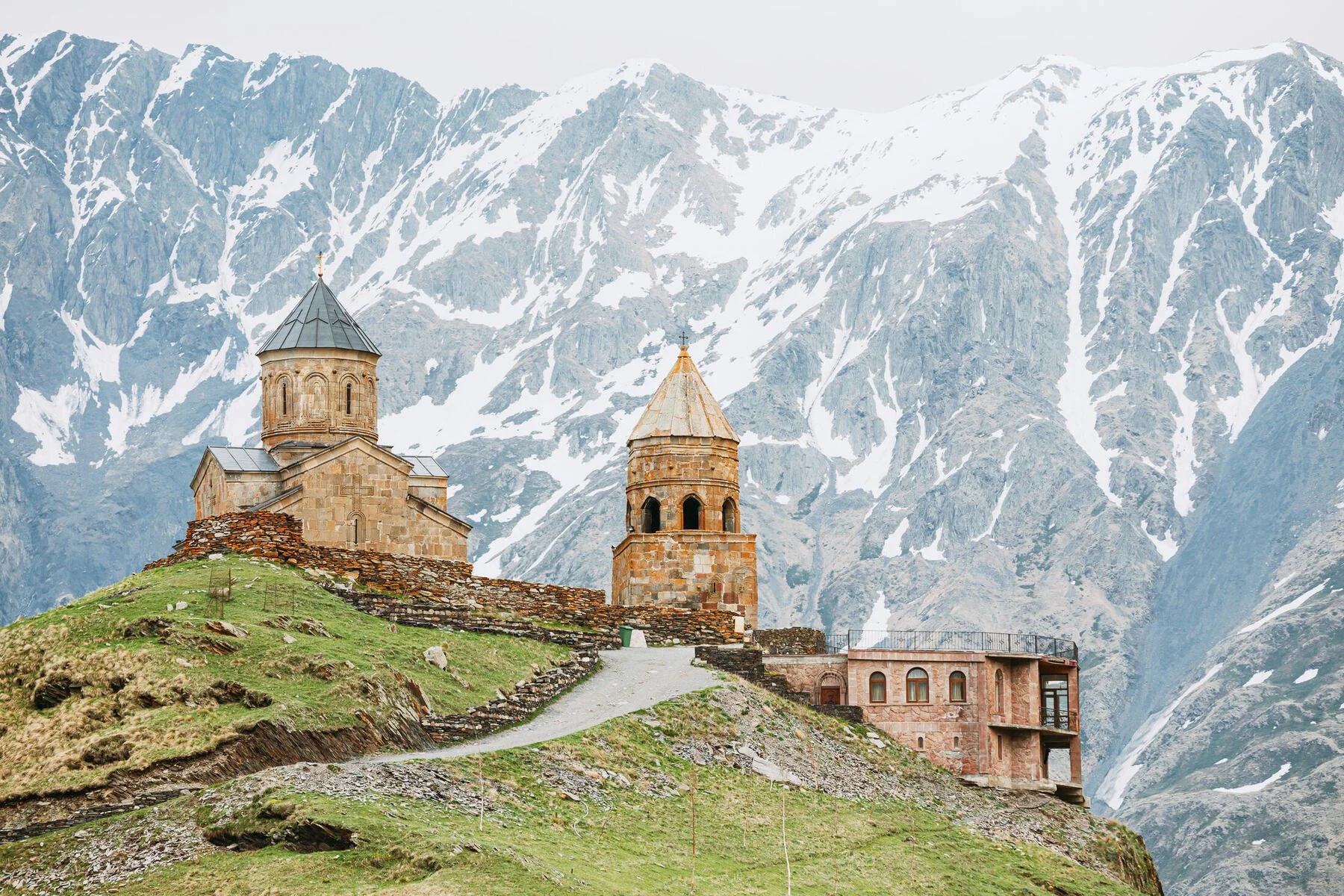
Georgia Country Profile:
A Territorial Tax System, a 1% Regime With Small Print, and a Political Climate That Has Changed
Georgia offers a flat 20% territorial system, a 1% turnover regime for small businesses, one-year visa-free entry and a wealth-based tax residency for people who do not live there. The 1% regime excludes more activities than the marketing admits, CRS has arrived, and the politics since 2024 are no longer a footnote.
🇬🇪 Key Facts (2026):
Currency: Georgian Lari (GEL); ~2.7 to USD
Personal income tax: 20% flat on Georgian-source income; foreign-source income of resident individuals is exempt
Georgian-source dividends and interest: 5% withholding, final
Small Business Status (individual entrepreneur): 1% on turnover up to GEL 500,000 (~USD 185,000); 3% on the excess in the year it is breached
Corporate tax: 15%, charged only on distributed profits (Estonian model); 0% on retained earnings
Virtual Zone and International Company status: 0% and 5% corporate tax respectively for qualifying IT and maritime businesses
VAT: 18%; registration threshold GEL 100,000
Capital gains: Georgian-source gains taxed as income at 20%, with 5% on residential property and vehicles; a dwelling held more than two years and securities held more than two years are exempt; foreign-source gains are outside the tax base
Wealth tax: none; a modest property tax applies to households with income above GEL 40,000
Estate/inheritance tax: none for first- and second-degree relatives; 20% income tax on gifts and inheritances from others above a threshold
Standard tax residency: 183 or more days in any continuous 12-month period ending in the tax year
HNW tax residency: worldwide assets above GEL 3 million (~USD 1.1 million) or annual income above GEL 200,000 in each of the last three years, plus either a Georgian residence permit or Georgian-source income of at least GEL 25,000 in the year
Visa-free entry: 365 days for nationals of roughly 95 countries
Property-based residence permit: real estate worth at least USD 150,000
Investment residence permit: USD 300,000 or more, leading to permanent residence after five years
Corporate setup: LLC in one to two days, USD 300 to 1,000. Annual maintenance: USD 1,500 to 4,000
Personal bank account minimum: nil; non-residents face enhanced questionnaires and fees
Private banking threshold: roughly USD 100,000 to 250,000 at Bank of Georgia Solo and TBC Status
Cost of living, comfortable professional household, Tbilisi: USD 2,800 to 4,200 monthly
CRS: committed; MCAA signed 2022, first exchanges from 2024–2025; banks have collected self-certifications since 2023
FATCA: Model 1 IGA, signed 2015
Treaties: roughly 57 comprehensive; none with the US, Panama or Colombia; treaties with the UK, Germany, most of the EU, Turkey, the UAE and Israel
Population: ~3.7 million
Time zone: UTC+4, no daylight saving
Last edited: 8 September 2026 by Joe Martin Hanson (Director & Global Partner) with advice from FTR’s Georgian Tax Partners
Why Georgia Matters
Georgia is the cheapest credible tax residency in FTR's set for a person who actually wants to live somewhere. The system is territorial: a Georgian resident pays 20% on Georgian-source income and nothing on foreign-source income, so a resident with a foreign company, foreign dividends and a foreign portfolio has a small Georgian tax bill and no wealth, estate or exit tax around it. Entry is visa-free for a year for most Western nationals, an individual entrepreneur registers in a day, and a company in two.
The headline regime, 1% on turnover up to GEL 500,000 for a registered individual entrepreneur with Small Business Status, is genuinely lower than anything comparable in Europe, and it is the reason Tbilisi filled with freelancers after 2020. It comes with two pieces of small print the marketing omits: a government decree excludes consulting, legal, audit, medical, architectural, gambling, currency-exchange and other licensed activities from the regime, and the Revenue Service's working position is that services performed physically in Georgia are Georgian-source whoever the client is, so the 1% applies to foreign-client income rather than the foreign-source exemption. Both are addressed below.
Georgia matters to HNW clients for a different reason: it grants tax residency on the basis of wealth or income without physical presence, which makes it one of the few places a genuinely mobile person can obtain a tax residency certificate from a jurisdiction with treaties, at trivial cost, without moving there. Since 2018 that status needs a residence permit or GEL 25,000 of Georgian-source income to go with it, which is easily arranged and often forgotten.
Set against that, three things have changed since V1 was written. Georgia is now inside CRS. The residence-permit rules have been tightened. And since the disputed election of October 2024 the country has had continuous protest, a suspended EU accession path, a foreign-agents law and US sanctions on senior officials; a resident feels that, and a Plan-B client should weigh it.
Visa and Residency Routes
Visa-free entry and the 365-day rule. Nationals of roughly 95 countries, including the EU, UK, US, Canada, Australia, Gulf states and most of Latin America, may enter without a visa and stay for a full year, leaving and re-entering to reset. It is the route nearly every nomad uses, and it is not residence: it gives no permit, no path to permanence and, on its own, no ID document a bank will accept as proof of address.
Temporary residence on the basis of work or entrepreneurship. A registered individual entrepreneur or an LLC with real turnover, historically GEL 50,000 a year for a foreigner's own business, supports a one-year permit renewable up to six years. This is the route FTR would use for a nomad or online business owner who intends to stay: it converts the 365-day tourist status into residence, unlocks the HNW status's permit condition and gives a bank a Georgian address. Approval rates fell after 2022 and refusals without detailed reasons are common; file cleanly and early.
Property-based residence permit. Ownership of real estate worth at least USD 150,000, up from USD 100,000, supports a short-term residence permit for the owner and family. Agricultural land cannot be bought by foreigners, so this means an apartment or house in Tbilisi or Batumi, appraised by a licensed valuer.
Investment residence permit. An investment of USD 300,000 or more in a Georgian business or real estate supports a five-year permit and then permanent residence, subject to demonstrating turnover thresholds in later years. Little used by FTR clients because the property and entrepreneur routes are cheaper.
Permanent residence and citizenship. Permanent residence after a period of continuous temporary permits that was lengthened in the late 2010s, in practice around a decade. Citizenship needs ten years' residence, Georgian language and history tests, and dual citizenship only by presidential exception. Nobody comes to Georgia for the passport.
Digital nomad visa. The 2020 "Remotely from Georgia" programme lapsed once borders reopened; the 365-day rule does the job and there is no current dedicated visa.
What looks good on paper and fails: relying on visa-free status as if it were residence for banking and HNW-status purposes; and the entrepreneur permit with a company that has no turnover, which is now refused.
Tax Peculiarities and Traps
Small Business Status exclusions. Government Decree No. 415 lists the activities that cannot use the 1% regime: activities requiring a licence or permit, currency exchange, medical, architectural, legal, notarial, audit and consulting services, gambling, staffing and a handful of others. "Consulting" is the one that catches FTR's clients, because most freelancers describe what they do as consulting. The label on the invoice matters less than the substance, but a client whose work is advisory should not assume the 1% rate; the alternative is ordinary individual entrepreneur status at 20% on net Georgian-source income, or an LLC with distributed profits taxed at 15% plus 5% dividend withholding.
Source of freelance income. Georgia's exemption for foreign-source income leads many to assume a Georgian resident invoicing foreign clients pays nothing. The Revenue Service's position is that income from services performed in Georgia is Georgian-source regardless of where the client sits, so a resident freelancer working from Tbilisi is taxed here: at 1% under Small Business Status if eligible, otherwise at 20% on net income. The foreign-source exemption is for income earned elsewhere: dividends from a foreign company, gains on a foreign portfolio, rent on a foreign property, salary for work physically performed abroad. That distinction is the whole design of the structural layer below.
The 3% cliff and loss of status. Turnover above GEL 500,000 is taxed at 3% from the month the threshold is crossed, and exceeding it in two consecutive years cancels the status. Businesses growing past the cap should move to an LLC before, not after.
HNW status conditions. The wealth and income tests are only half the rule. Since 2018 the applicant must also hold a Georgian residence permit or show at least GEL 25,000 of Georgian-source income in the year, and the status is granted for one tax year at a time on application to the Revenue Service, with a residency certificate that treaty partners are entitled to test on substance. A certificate from a country the client has never visited will not, on its own, defeat a home-country residency claim built on a house, a spouse and a hundred days' presence.
Capital gains. Georgian-source gains are income at 20%. The Tax Code exempts gains on a residential property with its land held more than two years and on securities held more than two years, and taxes gains on residential property and vehicles at 5% where the exemption does not apply. Gains on foreign securities are foreign-source and outside the base altogether, which is the exemption that matters for an HNW resident.
Corporate distributions. The Estonian model taxes profit at 15% only on distribution, on the grossed-up amount, then 5% dividend withholding to individuals. Deemed distributions catch non-business expenses, related-party loans and gratuitous transfers, so an owner who draws living costs through the company is distributing.
Inheritance and gifts. Nothing between spouses, parents, children, grandparents, grandchildren and siblings; gifts and inheritances from others are income at 20% above a small threshold.
The Structural Layer
Georgia is one of the few places in the set where FTR's default fits with almost no adaptation. A Panamanian Private Interest Foundation owning a Panamanian SA, with the client resident in Tbilisi and drawing a modest director's salary for work done in Georgia, produces: 20% on the salary, which is Georgian-source; nothing on the SA's retained profit or the dividends that flow up to the foundation, which are foreign-source; no wealth tax; no estate tax on the succession the foundation exists to manage. Georgia has no controlled foreign company regime for individuals and no attribution rules for foundations, so there is no home-country layer to fight.
Two adaptations. First, the SA must not be managed from Georgia in a way that makes it Georgian resident, because a Georgian resident company is taxed here on distribution; keep board decisions and administration in Panama. Second, where the client's own work is the business, the Georgian layer is an individual entrepreneur or Georgian LLC billing the SA at arm's length for services performed in Georgia, taxed at 1%, 3% or 15% as applicable, with the rest of the margin sitting offshore. For IT businesses serving foreign clients, a Georgian Virtual Zone company at 0% corporate tax with 5% on dividends is a legitimate alternative to an offshore operating company and reads better to a foreign bank.
For the HNW client using Georgia as a residency certificate without living there, the structure is identical; the exposure is not Georgian tax but the home country's willingness to accept that residence has moved, which no certificate settles.
Info-Sharing Reality (CRS and FATCA)
V2 was right that Georgia's status has evolved and right to warn that it was evolving. The position now: Georgia committed to the Common Reporting Standard, signed the multilateral competent authority agreement in 2022, and its banks have collected tax-residency self-certifications from account holders since 2023, with first exchanges scheduled from 2024 and 2025. Georgia is no longer the non-CRS bolthole it was between 2017 and 2022, and any HNW appeal that rested on that has expired. Chinese, Russian, Turkish and EU-resident account holders in Georgian banks should assume their balances and income are or shortly will be reported to their home tax authorities.
Under the FATCA Model 1 agreement, Bank of Georgia, TBC and the others report US persons to the Georgian authorities for onward transmission to the IRS; the two large banks are London-listed and treat FATCA compliance as a listing matter.
The candid summary: Georgia offers a low tax bill because its system is territorial, not because anyone is hidden. A client who wants the first is well served. A client who wants the second is two years late.
Banking Reality
Bank of Georgia and TBC Bank hold most of the market, with Basisbank, Liberty and a handful of others behind them. Both large banks are well run, app-first, offer multi-currency accounts in lari, dollars and euros, and pay real interest on lari deposits. Onboarding for a foreigner with a residence permit or an entrepreneur registration is a day. Onboarding for a non-resident on a tourist entry became markedly harder after the 2022 influx from Russia: branches now run enhanced questionnaires on tax residency, source of funds, and links to sanctioned countries, charge non-residents a one-off fee that has run to several hundred dollars, and refuse without explanation. In-person presence is required to open; there is no remote onboarding for individuals.
Georgia is on no FATF list. Correspondent banking through European and US banks is functional, with more friction on dollar wires than euro, and both large banks have been careful since 2022 to demonstrate sanctions compliance, which is why Russian nationals and anyone with Russian-source funds face the hardest onboarding. Private banking at Bank of Georgia Solo and TBC Status starts around USD 100,000 to 250,000 and is competent for a small market; anyone with real money keeps the bulk of it in Switzerland or Singapore and uses Georgia for operating cash.
Cost of Doing Business
An LLC registers at the Public Service Hall in one to two days for a filing fee under USD 100 and, with a lawyer and translation, USD 300 to 1,000 all-in; no minimum capital. Annual accounting and filing for a small company runs USD 1,500 to 4,000. Individual entrepreneur registration is a same-day exercise costing a few tens of dollars, with Small Business Status applied for at the Revenue Service.
Against the set: Panama's SA at USD 1,500 to 2,500 setup and USD 1,000 to 1,800 annually, Singapore at roughly three times Panama on setup and USD 4,000 to 8,000 a year. Georgia is cheaper than both on setup and comparable to Panama on maintenance, with the added advantage that a Georgian company's 0% on retained earnings makes it a genuine operating vehicle rather than only a cost line. The trade-off is that a Georgian company on a European or American counterparty's invoice attracts questions a Singaporean one does not.
Cost of Living
Tbilisi, monthly. Rents rose sharply in 2022 and 2023 with the Russian influx and eased through 2024 and 2025; Batumi is cheaper for housing and more seasonal.
Lean, single or couple: USD 1,200 to 1,800: one-bedroom in Vake, Vera or Saburtalo USD 500 to 900, private health insurance USD 40 to 100, metro and taxis USD 50, groceries USD 300 to 450.
Comfortable, family of four: USD 2,800 to 4,200: three-bedroom in Vake or a new development USD 1,200 to 2,000, comprehensive private health cover USD 200 to 400, a car USD 300 to 500, international schooling at QSI or the British-Georgian Academy USD 10,000 to 25,000 per child per year on top.
HNW: USD 8,000 and up: a villa in Tskneti or a top-floor Vake apartment USD 3,000 to 6,000, two international school places, help, a driver, and frequent flights out because the domestic offer thins quickly.
Public healthcare is basic; the private hospitals in Tbilisi are adequate for routine care and anything serious is treated in Istanbul, Vienna or Tel Aviv.
Cultural and Practical Considerations
Tbilisi is beautiful, small, cheap and easy to like, and the people who thrive in it are self-sufficient, tolerant of improvisation and not in a hurry. It is not a place for someone who needs institutions to be predictable.
Politics. The October 2024 election was disputed, the ruling party has since paused EU accession, passed a foreign-agents law and laws restricting protest, the US and several European states have sanctioned Georgian officials, and demonstrations in central Tbilisi have run for months at a stretch. Foreign residents are not targeted, but a client whose Plan-B is about escaping political uncertainty should notice that Georgia now supplies its own, with Russia next door and 20% of the country under occupation since 2008.
Women. Legal equality is complete: no guardianship, no restrictions on travel, residence, property or business. Culture is patriarchal and Orthodox outside the capital's educated centre, and a foreign woman living alone in Tbilisi will find it safe and unremarkable while noticing that the local expectations for Georgian women are not hers. Domestic violence enforcement has improved but remains uneven; family-law exposure for a foreigner married to a Georgian is modest.
LGBT residents. Legal since 2000 and formally protected against discrimination, but a 2024 law bans "LGBT propaganda", same-sex marriage recognition and gender-affirming treatment, Pride has been violently attacked and cancelled, and the Church's influence is strong. Private life in Tbilisi is manageable; public life is not, and a same-sex couple should assume no recognition of their relationship for any purpose and a hostile official climate.
Language. Georgian is the official language and has its own alphabet; Russian is widely understood by anyone over 40 and English by anyone under 30 in Tbilisi. Banks and the Public Service Hall function in English; the Revenue Service, courts and most landlords do not. Daily life in Tbilisi is workable in English; anywhere else is not.
Integration and pace. Georgians are hospitable to a fault and foreigners are welcomed; deep integration without Georgian is rare and the expat community, now largely nomads and Russians, substitutes for it well enough for a year or two and poorly after that. Tbilisi is noisy, air quality is poor in winter, driving standards are among the worst in Europe and pedestrians are not a priority. Food and wine are excellent and vegetarian-friendly; there are no religious or dietary constraints on visitors.
Bureaucracy. The Public Service Hall is a model: company registration, property transfer and ID in a day, in English. Residence permits and the Revenue Service are slower and less consistent. Corruption at the retail level was eliminated in the 2000s and has not come back.
Climate and schooling. Continental: hot summers, cold damp winters, mild spring and autumn. International schools in Tbilisi are few and adequate rather than excellent; Georgian state schools are not an option for non-speakers.
For Digital Nomads and Remote Professionals
The 365-day entry plus individual entrepreneur registration above; check the decree's exclusion list before assuming 1%, and expect to be taxed here on work done here.
For Online Business Owners and Entrepreneurs
The Structural Layer above: a Georgian service entity at 1% to 15% under an offshore holding, or a Virtual Zone company for IT, with retained profits untaxed.
For High Net Worth (HNW) Families and Investors
The wealth-based residency above, with the permit or GEL 25,000 condition met, for a genuinely mobile family wanting a treaty residency at low cost; weigh the post-2024 politics and accept that CRS reporting now applies, including to China.
For Retirees
Rarely a fit: healthcare is thin, winters are cold and there is no pension route, though a retiree with foreign pension income pays nothing on it here.
For Multinational Business Owners
A place for a low-cost back office or IT team, not a holding jurisdiction.
Common Traps
Assuming the 1% regime covers consulting or any licensed profession; the decree excludes them. Assuming foreign-client freelance income is foreign-source while sitting in Tbilisi; it is not. Using an HNW residency certificate as a shield against a home country where the house, spouse and children remain. Coming for privacy, which ended with CRS. Opening a bank account on a tourist entry with Russian-source funds. Treating the entrepreneur permit as automatic. Anyone who needs order, predictable institutions and a stable political backdrop, or a serious hospital within an hour, or who cannot live without English at the tax office. And anyone who confuses cheap with easy: Georgia is very cheap and moderately easy, and the gap between the two is where clients get into trouble.
Next Steps
If a Georgian tax residency, Small Business Status or a Georgian operating entity fits your planning, book a scoping call. The first job is establishing which regime your activity actually qualifies for and where your income is sourced; the second is checking whether the home country will let you go.
Important note: General information. Not personal tax, legal, or financial advice. Speak to a qualified adviser at FTR or elsewhere before acting.
Continue reading
Suggested next, chosen by our partners.


