
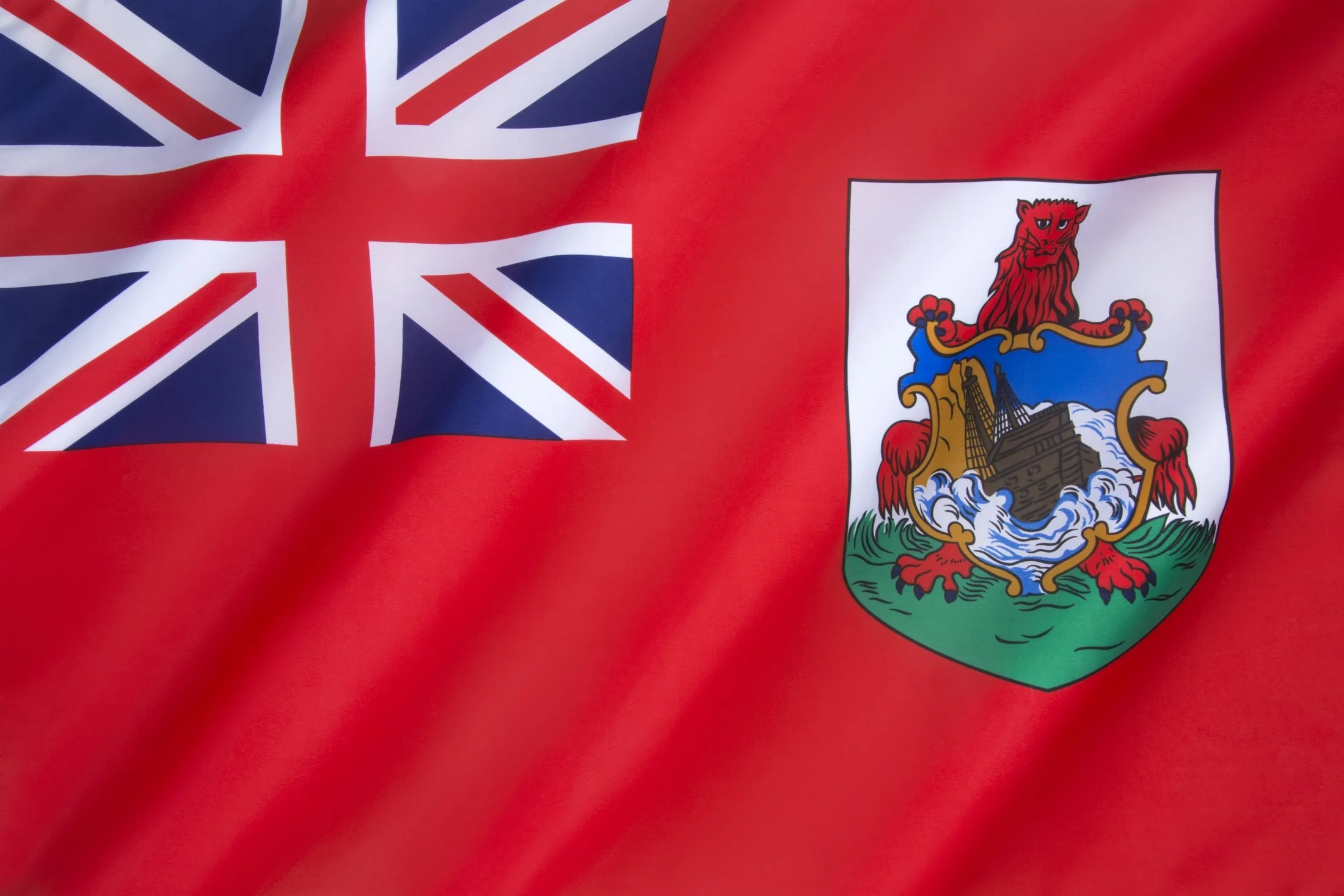
Bermuda Country Profile:
Zero Tax, Full Transparency and the Most Expensive Address in the Set
Bermuda is the world's insurance and reinsurance capital and a genuine zero-income-tax residence for the few who can afford it. It is a specialist structuring jurisdiction and a premium HNW address, not a general-purpose destination.
🇧🇲 Key Facts (2026):
Currency: Bermudian Dollar (BMD), pegged 1:1 to USD; USD circulates freely. A 1.25% foreign currency purchase tax applies when residents buy foreign currency
Personal income tax: 0%
Payroll tax: tiered on both sides for the April 2026 to March 2027 year; employer rates 0% to 9.75% by classification and payroll size, employee rates 0.25% to 12.5% across five income bands, capped at BMD 1,000,000 of remuneration per person; rates were reduced again in March 2026
Corporate income tax: 0% for most companies; 15% from 1 January 2025 on Bermuda entities of multinational groups with annual revenue of €750 million or more, under the Corporate Income Tax Act 2023 aligned with OECD Pillar Two
VAT/GST: none
Customs duty: significant, commonly 25% to 35% on general goods and far higher on vehicles; nearly everything is imported
Capital gains tax: 0%
Wealth tax: 0%
Estate/inheritance tax: 0%; stamp duty applies to Bermuda estates of deceased persons on a sliding scale, with primary family homestead relief
Land tax: annual, progressive on the assessed annual rental value of the property
Foreign property acquisition: non-Bermudians may buy only houses and condominiums above a high annual-rental-value threshold, need a licence, and pay a licence fee of 12.5% of the purchase price for houses and 8% for condominiums, on top of stamp duty
Tax residency trigger: none for income tax purposes; immigration status, not tax status, governs the right to be there
Economic Investment Certificate: BMD 2.5 million qualifying investment; five-year certificate, then an indefinite residential certificate
Work permits: employer-sponsored, one to five years
Work From Bermuda Certificate: twelve-month residence for remote workers, fee about USD 263
Corporate setup (exempted company): roughly USD 5,000 to 10,000 including BMA vetting; annual maintenance USD 7,000 to 15,000 including the government fee, registered office and secretary
Personal bank account minimum: nil formally, but residence or a work permit is a practical precondition; USD 10,000 to 25,000 is the working expectation for a comfortable relationship
Private banking threshold: roughly USD 1 million investable at Butterfield or HSBC Bermuda
Cost of living, comfortable professional household: USD 12,000 to 18,000 per month
CRS: participating, early adopter; first exchanges 2017 on 2016 data
FATCA: Model 2 IGA, signed December 2013
Treaties: no comprehensive double tax treaties (a limited 1986 convention with the United States covers insurance enterprises and mutual assistance); roughly 40 tax information exchange agreements
Population: about 64,000
Time zone: UTC-4, observing daylight saving with the US east coast
Last edited: 25 August 2026 by Joe Martin Hanson (Director & Global Partner) with advice from FTR’s Bermuda Tax Partners
Why Bermuda Matters
Bermuda dominates the global captive insurance, reinsurance and insurance-linked securities market. If a client's need is insurance-shaped, whether a family-office captive, a reinsurance vehicle, a segregated accounts company or a private placement life insurance policy issued by a Bermuda long-term insurer, Bermuda is where the counterparties, the regulator and the expertise sit. The Bermuda Monetary Authority is respected by the EU and the US in a way that Caribbean regulators are not, and Solvency II equivalence is the practical reason large insurers are here rather than in Cayman.
It also has one of the oldest and best-drafted trust laws in the common-law world, with statutory firewall provisions, purpose trusts and a mature private trust company regime. For a HNW family that needs a trust rather than a Panamanian foundation, Bermuda competes with Jersey, Guernsey and Cayman on quality and loses only on cost.
As a residence, Bermuda is a genuine zero-income-tax address ninety minutes from New York, with first-world infrastructure, English law and personal safety. That combination has a very small buyer: the family that already has the money, the professional whose employer holds the work permit, and the insurance or funds executive whose career is here. For anyone else, Cayman or Panama delivers the tax outcome at a fraction of the cost.
Bermuda is not a privacy jurisdiction and has not been one since 2017. It is a high-compliance, high-cost jurisdiction that does a few things extremely well.
Visa and Residency Routes
Work permits. The realistic route for professionals. The employer applies; standard permits run one to five years, processing is typically four to eight weeks, and a New Business Work Permit lets a newly established company bring in staff in its first months without the usual advertising requirement. Permits carry no term limit since 2013, but they are tied to the employer and confer no independent right to stay. Spouses of permit holders need their own permit to work.
Economic Investment Certificate (EIC). Introduced in March 2021 for HNW individuals. A qualifying investment of at least BMD 2.5 million, held for five years, in one or more approved categories: residential or commercial property available to non-Bermudians, a Bermuda business, government bonds, a Bermuda charity, or a social or infrastructure development. The EIC grants five years' residence with the right to work in one's own investment; after five years the holder may apply for an Economic Investment Residential Certificate, which allows indefinite residence. Processing is measured in weeks rather than months. It does not lead to Bermudian status or a Bermuda-issued British passport. This is the route FTR would use for a self-funded HNW client who is not being sponsored by an employer, with the property component usually doing the heavy lifting because the qualifying investment and the home are the same purchase.
Residential Certificate. For financially independent persons who own or hold a long lease on qualifying Bermuda property; it confers the right to reside indefinitely without the right to work. It has historically been the retiree route and is what V1 called long-term residency.
Work From Bermuda Certificate. A twelve-month, renewable residence for remote workers and students employed or enrolled abroad, launched in August 2020. Proof of foreign employment, health insurance and a clean record, no minimum income published, fee about USD 263. It confers no right to work for a Bermuda employer and no path to anything else. It suits a nomad on a US-linked salary who wants a year in a safe, zero-tax, same-time-zone place and can pay Bermuda rents.
Permanent Resident's Certificate and Bermudian status. The PRC is available to long-term residents, most importantly those ordinarily resident for twenty years and those who qualify through mixed-status family provisions. Bermudian status is essentially unavailable to newcomers except through ten years' marriage to a Bermudian with continuous residence. The premium or fast-track PRC route that V1 referred to is discretionary and politically contested; nobody should plan on it.
There is no citizenship by investment, no residency by bank deposit and no retirement visa in the Panamanian sense. What looks good on paper but fails in practice is the assumption that a large investment buys a passport; it buys a right to live on the island, nothing more.
Tax Peculiarities and Traps
Payroll tax is the income tax. Bermuda has no income tax, but payroll tax is levied on employers on total remuneration and is partly recoverable from employees under a tiered employee schedule. For the April 2026 tax year the employer side runs from 0% for exempt and small employers to 9.75% for the largest, and the employee side runs across five bands from 0.25% to 12.5%, capped at BMD 1,000,000 per person. Self-employed persons and deemed employees (including owner-directors of exempted companies who actually work in Bermuda) are within it. An executive paying themselves BMD 400,000 through a Bermuda entity is not paying zero; they are paying a blended payroll charge in the high single digits to low teens, and the structure needs to model it.
The Corporate Income Tax Act 2023. From 1 January 2025 Bermuda constituent entities of multinational groups with consolidated revenue of €750 million or more pay a 15% corporate income tax. It was designed so that the tax is paid in Bermuda rather than as a top-up somewhere else. Groups below the threshold are outside it entirely. A family holding company or a captive owned by a private family is not in scope; a captive owned by an in-scope multinational is.
Customs duty and the foreign currency purchase tax. Duty is the real consumption tax and it is high; the effective rate on a household's goods runs well above 25%, and vehicles attract duty that can exceed the landed price. The 1.25% foreign currency purchase tax applies each time a resident buys foreign currency with Bermuda dollars, which is a small but real cost on everything routed offshore.
Property acquisition. Non-Bermudians can only buy from a short list of high-value houses and condominiums, need a licence from the Department of Immigration, and pay a licence fee of 12.5% (houses) or 8% (condominiums) on top of stamp duty. Qualifying houses start in the low millions and the licence fee alone on a BMD 4 million house is BMD 500,000. Rentals are unrestricted, which is why most work-permit holders rent.
Economic Substance Act 2018. Every Bermuda entity carrying on a relevant activity, including holding, finance, insurance, headquarters, intellectual property, shipping and fund management, must demonstrate substance in Bermuda proportionate to the activity: directed and managed in Bermuda, adequate people, premises and expenditure. A pure equity holding entity has a reduced test. A Bermuda exempted company run from a laptop in Lisbon fails it and the Registrar reports the failure to the home tax authority.
Home-country taxation follows you. Bermuda's zero rate is only the Bermuda leg. A US citizen is taxed on worldwide income regardless; a Canadian who has not severed ties, or a UK resident who has not left properly, is taxed at home on the Bermuda salary. Bermuda has no treaties to relieve any of it.
The Structural Layer
FTR's default, a Panamanian Private Interest Foundation over a Panamanian SA with a modest director's salary paid where the client lives, fits Bermuda in a particular way: a Bermuda resident pays no income tax, so the salary is not a tax lever at all; it is a payroll tax and immigration item. The foundation still earns its place for succession and control, and the Panamanian operating company is fine for a business that is genuinely run elsewhere.
Where the default needs adapting is where Bermuda is the point of the structure. A captive or reinsurance vehicle has to be a Bermuda company, registered under the Insurance Act 1978 in the appropriate class, with a Bermuda insurance manager and BMA supervision. A PPLI policy sits with a Bermuda long-term insurer and the foundation or trust owns the policy. A family trust with US or UK beneficiaries is often better as a Bermuda trust with a licensed or private trust company than as a Panamanian foundation, because US and UK advisers recognise it and the case law is settled.
Where it plainly does not fit is a Bermuda exempted company as a personal holding vehicle for an ordinary HNW client with no insurance or trust rationale. It costs five to ten times a Panamanian SA, carries economic substance reporting and BMA share-vetting on every ownership change, and delivers nothing the Panama entity does not, because both are zero-tax and both are reported under CRS.
Home-country CFC rules apply in full. A Bermuda entity owned by a UK, US, Canadian, Australian or Chinese resident is attributed under their CFC or foreign fund rules, and Bermuda's registers and CRS reporting make the ownership visible. Bermuda structures are for people who are already resident in a zero- or territorial-tax jurisdiction or who are using them for a regulated purpose their home country accepts.
Info-Sharing Reality (CRS and FATCA)
Bermuda was one of the early adopters of the Common Reporting Standard, committed under the 2014 OECD framework with first exchanges in 2017 on 2016 data. Every Bermuda bank, trust company, insurer with cash-value products and investment entity reports non-resident account holders and controlling persons to the Bermuda Ministry of Finance, which exchanges automatically with the full CRS partner set: the UK, Canada, Australia, the EU including Ireland, Malta and Cyprus, Switzerland, Singapore, Hong Kong, Mexico, Colombia, Panama and China. A Chinese HNW family holding a Bermuda trust or insurance policy is reported to Beijing on the controlling-person basis. A Canadian who has not properly emigrated and holds Bermuda accounts is reported to the CRA.
Under the FATCA Model 2 IGA signed in December 2013, Bermuda financial institutions report US account holders directly to the IRS under FFI agreements, with the Bermuda government handling group requests for recalcitrant accounts. Bermuda has a beneficial ownership register held by the BMA and accessible to law enforcement and regulators, and a long list of tax information exchange agreements including with the US, UK, Canada, Australia and the EU states.
Bermuda is marketed by some intermediaries as private. It is not. It is one of the most thoroughly reported jurisdictions in the world, which is precisely why the EU, the OECD and the US insurance regulators accept Bermuda vehicles that they would not accept from elsewhere. Anyone who wants a Bermuda structure for confidentiality has misunderstood what Bermuda is for.
Banking Reality
Four banks: HSBC Bermuda, Butterfield (Bank of N.T. Butterfield & Son), Clarien Bank and Bermuda Commercial Bank. All are supervised by the BMA, all have direct USD correspondent access and full SWIFT connectivity, and since the local currency is USD in all but name there is no currency friction. Bermuda is on no FATF grey list and, apart from a brief listing in early 2019 that was reversed within weeks, has not been on the EU list of non-cooperative jurisdictions.
Personal accounts are for residents. A work permit, an EIC, a Residential Certificate or a Work From Bermuda Certificate, plus a Bermuda address, employer letter or investment evidence, is the practical entry ticket; opening takes two to six weeks and an in-person visit is normal. Non-resident personal accounts exist at the private banking level, typically USD 1 million investable at Butterfield or HSBC, and are opened only after full source-of-wealth review. There are no nationality restrictions in law, but nationals of sanctioned countries and politically exposed persons face extended review and frequent refusal.
Corporate accounts for exempted companies are opened routinely for insurance, fund and trust structures with a Bermuda service provider behind them, and reluctantly for a bare holding company with no Bermuda substance; expect four to twelve weeks and a request for the business rationale. Cards, mortgages and everyday banking are expensive by international standards and fees are high across the board.
Cost of Doing Business
A Bermuda exempted company costs roughly USD 5,000 to 10,000 to establish through a law firm, including BMA vetting of the proposed shareholders, and USD 7,000 to 15,000 a year to maintain: an annual government fee that starts at a little over USD 2,000 and scales with assessable capital, registered office and corporate secretary from a licensed provider, economic substance filing and, where applicable, audit. An insurance vehicle adds licensing, an insurance manager and actuarial reporting, and a Class 1 or Class 3A captive is realistically USD 50,000 to 150,000 a year to run.
Against the set: a Panamanian SA is USD 1,500 to 2,500 to establish and USD 1,000 to 1,800 a year; Singapore runs about three times Panama, USD 4,500 to 7,500 to set up and USD 4,000 to 8,000 a year; Cayman is USD 4,000 to 8,000 to set up and USD 4,000 to 9,000 a year, with cheaper fees than Bermuda but a less prestigious regulator. Bermuda is the most expensive corporate address in the set, which is justified only where the BMA's reputation is what the client is buying.
Cost of Living
Bermuda is consistently ranked among the two or three most expensive places in the world to live; imported food, electricity, insurance and rent are all a multiple of US prices. Monthly, for Hamilton and the surrounding parishes.
Lean, single professional on a work permit: USD 7,000 to 9,000: one-bedroom rental USD 3,000 to 4,500, groceries USD 800 to 1,200, mandatory health insurance USD 500 to 1,000 (usually employer-subsidised), scooter or bus, electricity USD 250 to 400.
Comfortable, family of four: USD 12,000 to 18,000: three-bedroom house USD 6,000 to 10,000, family health cover USD 1,500 to 2,500, one car (one per household by law, bought at punitive duty) USD 800 to 1,200 all-in, two private school places at USD 20,000 to 30,000 each per year, groceries and utilities USD 2,500 to 3,500.
HNW: USD 30,000 to 60,000 and up: a waterfront house owned under licence or rented at USD 15,000 to 30,000, domestic help on work permits, boat, travel, and the land tax on a high annual rental value.
Health insurance is compulsory for every resident under the Health Insurance Act, and employers must cover employees; the standard hospital benefit is basic and serious care is routinely flown to the US east coast, so insurance with overseas cover is essential. Private schooling (Saltus, Warwick Academy, Bermuda High School, Somersfield, Mount Saint Agnes) is the norm for expatriate children; the public system is not where clients send them.
Cultural and Practical Considerations
Bermuda is small, orderly, safe and slow, and its social contract is built around protecting Bermudians in a labour market and housing market that foreigners would otherwise dominate. Understanding that is the whole of the cultural briefing.
Status and belonging. The dividing line in daily life is Bermudian status, not race or wealth, though the two overlap with a history that is visible and discussed. Foreigners on work permits are guests, and everyone knows it: jobs must be advertised to Bermudians first, property ownership is restricted, the one-car rule applies, and long-term residence rights for non-Bermudians are the most contested subject in local politics. Immigration reform proposals routinely bring protesters to Parliament. A client who wants to belong rather than reside will find the ceiling low.
Women, LGBT residents and family law. Women face no legal or practical constraint on travelling, residing, holding property or doing business alone; Bermuda has had women in senior public and financial roles for decades. Same-sex marriage is not available: it was granted by the courts in 2017, replaced by the Domestic Partnership Act 2018, and the Privy Council upheld that Act in March 2022, so domestic partnerships are recognised but marriage is not. Anti-discrimination protection on sexual orientation exists and Hamilton's financial community is cosmopolitan, but the island is church-going and socially conservative and a same-sex couple should expect politeness rather than warmth outside professional circles.
Language and integration. English throughout. Integration is easier than in most small islands because the international business community is large relative to the population, and harder than it looks because that community is transient and Bermudian society is not open to it. The expat circle substitutes for integration; it does not deliver it.
Pace, noise and security. Quiet, low-crime and law-abiding, with occasional gang-related violence that stays within its own circle. Speed limits are 35 km/h, there is nothing to do after ten at night, and the island can be crossed in forty minutes. Someone who needs a city will be climbing the walls within a year; someone who wants to see the same faces every day and be left alone will be content.
Bureaucracy and time. Government works, in an unhurried way. Work permit renewals, property licences and immigration decisions take the time they take, and the Department of Immigration does not respond to pressure. Nothing is chaotic; everything is slow.
Climate and health. Humid subtropical, mild winters, hot wet summers, a hurricane season from June to November that produces a serious storm every few years, and pervasive mould that affects asthmatics and anyone with a respiratory condition. Serious illness means a flight to Boston or New York; clients with ongoing medical needs should price that in.
Schooling and politics. Private schools are good and expensive; the public system is not an option most clients will take. Politics is stable, democratic and dominated by the Progressive Labour Party, with immigration, cost of living and the island's relationship with the international business sector as the live issues. There is no volatility a resident would feel beyond the immigration debate, which a foreigner feels acutely.
For Retirees
The Residential Certificate above for those who can buy qualifying property, and only for retirees who are already wealthy and value proximity to the US east coast; the cost of living removes Bermuda from consideration for the typical FTR retiree, who is better served by Panama, Portugal or Malta.
For Digital Nomads and Remote Professionals
The Work From Bermuda Certificate for a year on a US salary, with the payroll tax irrelevant because the employer is abroad; the rent will consume most of the saving.
For Online Business Owners and Entrepreneurs
Only where the client is already resident in a zero-tax jurisdiction and needs a BMA-regulated wrapper; otherwise the Panama default does the job at a tenth of the cost.
For Multinational Business Owners
Captives, reinsurance and ILS vehicles: this is Bermuda's core and the reason the profile exists. The Corporate Income Tax Act applies only above €750 million of group revenue.
For High Net Worth (HNW) Families and Investors
Bermuda trusts, private trust companies and PPLI for succession, with the EIC as the residence wrapper for a family that wants an English-law, USD, zero-tax base within reach of New York. For Chinese HNW families the reporting to China is complete and immediate under CRS; Bermuda is a rule-of-law Plan-B, not a quiet one.
Common Traps
Coming for cheap zero tax. Bermuda's cost of living, property licence fees, customs duties and payroll tax eat most of the income tax saving for anyone earning under USD 500,000, and Cayman or Panama gives the same headline rate for less.
Buying residence and expecting a passport. The EIC leads to indefinite residence, not Bermudian status and not a British passport.
Using a Bermuda exempted company as a personal holding vehicle with no Bermuda substance. It fails the Economic Substance Act, is reported to the home country, and costs more than any alternative in the set.
Expecting privacy. Bermuda reports everything to everyone under CRS, FATCA and forty TIEAs.
Moving with a family that needs a city, a same-sex marriage recognised in law, or a public school system, or moving with a chronic respiratory condition into a humid, mould-prone climate two hours' flight from a tertiary hospital.
Next Steps
If your need is insurance-shaped, trust-shaped or a HNW residence within reach of New York at full cost, book a scoping call and we will tell you whether Bermuda earns its premium over Cayman and Panama for your facts.
Important note: General information. Not personal tax, legal, or financial advice. Speak to a qualified adviser at FTR or elsewhere before acting.
Continue reading
Suggested next, chosen by our partners.


