
Anguilla Country Profile:
A Zero-Tax British Territory of 15,000 People, Bought Residency and the .ai Domain
Anguilla has no income, corporate, capital gains or inheritance tax, a residency-by-investment programme with a genuine tax-residency option, and one of the cheapest company registries in the world. It also has one hospital, one main road and a banking system that collapsed a decade ago. A structural jurisdiction for specific uses; a home for very few.
🇦🇮 Key Facts (2026):
Currency: Eastern Caribbean Dollar (XCD); pegged since 1976 at XCD 2.70 = USD 1. USD accepted everywhere
Personal income tax: 0%. An Interim Stabilisation Levy of 3% on employment income, matched by a 3% employer contribution, has applied since 2011 and functions as a payroll tax
Corporate tax: 0%
VAT/GST: Goods and Services Tax of 13% introduced 1 July 2022, replacing the accommodation tax and several smaller levies
Capital gains tax: 0%
Wealth tax: 0%
Estate/inheritance tax: 0%
Property: annual property tax of about 0.75% of assessed value; stamp duty of 5% on transfers; Alien Land Holding Licence fee of 12.5% of value for non-Belongers
Other taxes: customs duties on nearly everything imported, embarkation tax, business licence fees
Tax residency trigger: none by statute; the Tax Residency Programme confers it by contract for 45 days' presence
Anguilla Select, Residence by Investment: USD 750,000 or more in approved real estate, or a USD 150,000 contribution to the Capital Development Fund, for a family of up to four; additional dependants USD 50,000–100,000 each
Anguilla Select, Tax Residency Programme: USD 75,000 a year in flat tax, property of USD 400,000 or more, 45 days' presence a year
Work from Anguilla (digital nomad): twelve months; USD 2,000 individual, USD 3,000 family of four
International company setup: USD 1,200–2,500. Annual maintenance: USD 800–1,500
Personal bank account minimum: USD 500–2,000 for residents; non-resident accounts rarely opened
Private banking threshold: none available locally
Cost of living, comfortable professional household: USD 7,000–10,000 a month
CRS: participating; first exchanges 2017
FATCA: Model 1 IGA, extended through the UK; in force since 2017
Treaties: no comprehensive double tax treaties; around 20 tax information exchange agreements
EU and FATF lists: on neither
Population: roughly 15,000–16,000
Time zone: UTC-4, no daylight saving
Last edited: 14 September 2026 by Joe Martin Hanson (Director & Global Partner) with advice from FTR’s Anguilla Tax Partners
Why Anguilla Matters
Anguilla is a British Overseas Territory with the same constitutional standing as the BVI and Cayman, the same English common law, and the same absence of direct tax, at a fraction of the size and cost. Its online company registry, ACORN, lets a licensed agent incorporate an international business company in minutes for a government fee of a few hundred dollars, and its statute book includes IBCs, LLCs, foundations and trusts drafted along BVI lines. For a client who wants a British-territory holding entity without Cayman's price, Anguilla is the cheapest credible option.
The residency programme, Anguilla Select, is unusual in offering not just a residence permit but a contractual tax residency: pay a flat USD 75,000 a year, buy a home, spend 45 days on the island, and receive a tax residency certificate. That is a product few zero-tax jurisdictions sell explicitly, and it has a narrow but real use for a client who has genuinely left a high-tax country and needs a defensible answer to "where are you resident now".
Anguilla also owns the .ai top-level domain, which since the generative-AI boom has become one of the largest sources of government revenue, tens of millions of US dollars a year for a territory of 15,000 people. It has made the government solvent in a way the 2013–2016 banking collapse had not left it, and it is why the territory could afford to introduce GST without an income tax.
Visa and Residency Routes
Anguilla Select: Residence by Investment. Permanent residence in exchange for either USD 750,000 or more in approved real estate, held for five years, or a non-refundable USD 150,000 contribution to the Capital Development Fund, each covering a family of up to four, with additional dependants at USD 50,000–100,000. Due diligence fees and government processing are extra. Processing is three to four months. Residence is permanent and carries no minimum presence, but it is not citizenship: British Overseas Territories citizenship and Belonger status require long residence and are not for sale.
Anguilla Select: Tax Residency Programme. A flat annual tax of USD 75,000, a home purchased at USD 400,000 or more, at least 45 days a year on the island, and a genuine-link declaration in exchange for a residence permit and a tax residency certificate. The client remains tax resident wherever else the facts place them; the certificate helps only when the departure from the old country is real.
Work from Anguilla. A twelve-month remote-work permit at USD 2,000 for an individual and USD 3,000 for a family of four, with proof of employment or business outside Anguilla and health insurance. No path to permanence, no local tax.
Ordinary residence. Work permits are employer-sponsored, annual and protective of Belongers. Permanent residence by long stay takes many years and is discretionary.
FTR would use the Residence by Investment contribution route for an HNW client wanting a British-territory permanent residence as a fallback, and the Tax Residency Programme only for a client who has genuinely severed home-country residence and will spend the time. The real estate route is a poor purchase: the market is thin and illiquid, and the Alien Land Holding Licence adds 12.5% to the price.
Tax Peculiarities and Traps
Zero is not quite zero. The Interim Stabilisation Levy, introduced in 2011 as a temporary measure, has never been repealed: 3% of employment income from the employee and 3% from the employer. A resident who takes a local salary pays it. GST at 13% since July 2022 and customs duties on almost every imported good mean consumption is taxed heavily even though income is not.
The 45-day certificate is not a shield. A Tax Residency Programme certificate says Anguilla treats the holder as resident. It says nothing about whether Australia, the UK, Canada or Germany still do, and with no treaty network there is no tie-breaker. A client who spends 45 days in Anguilla and 200 in London is UK resident under the statutory residence test, and the certificate is irrelevant.
Land. Non-Belongers need an Alien Land Holding Licence to buy property, costing 12.5% of the purchase price, with a requirement to build or develop within a stated period on undeveloped land. Stamp duty of 5% is on top. A property bought for the residency programme costs about 18% more than its price before a foreigner owns it.
UK exposure. Anguilla is a British territory. Its beneficial ownership register is available to UK law enforcement on request and the territory has committed to a register accessible to those with a legitimate interest. A UK-resident client using an Anguilla entity gains no privacy from HMRC and must contend with the UK's transfer-of-assets-abroad and CFC rules in full.
The Structural Layer
FTR's default is a Panamanian Private Interest Foundation owning a Panamanian SA, with a modest director's salary paid where the client lives. Anguilla can substitute for the SA where a client specifically wants a British-territory entity, for reputational or counterparty reasons, and wants it cheaper than the BVI: an Anguilla IBC or LLC beneath the Panamanian foundation, with the operating substance wherever the client works. The Anguilla foundation statute is a workable alternative to the Panamanian foundation for a client already committed to the territory, but it has less case law and fewer administrators.
For a client genuinely resident in Anguilla under the Select programme, the default works without adaptation: there is no income tax, no CFC regime and no inheritance tax, and the director's salary lands in a jurisdiction that only levies 3% on employment income if paid through a local employer, which it need not be.
Where the default plainly does not fit: a client resident in a high-tax country who thinks an Anguilla entity reduces tax at home. It does not; home-country CFC rules attribute the income, and the entity is reported under CRS. And an Anguilla entity that needs a substantial bank relationship should expect to bank in Panama, Puerto Rico or Switzerland, because Anguilla cannot provide one.
Info-Sharing Reality (CRS and FATCA)
Anguilla was an early CRS adopter and has exchanged since 2017. The Inland Revenue Department collects reports from the territory's banks and trust and corporate service providers on the accounts of foreign tax residents and the controlling persons of Anguilla entities, and exchanges them with the account holder's home country. The FATCA Model 1 IGA, extended through the UK, sends US persons' accounts to the IRS. As a British territory Anguilla also shares beneficial ownership information with UK authorities on request.
An Anguilla IBC owned by a Canadian resident is reported to Ottawa by whichever bank holds its account, and that bank will look through the company to its controlling persons wherever it sits. An Anguilla trust with a licensed local trustee reports its settlor, beneficiaries and controllers. Anguilla is not on the EU or FATF lists and is not marketed as private by serious agents; where it is, the claim is wrong. Chinese HNW clients occasionally acquire Anguilla residence as a British-territory fallback; it changes nothing about CRS reporting to Beijing while their life remains in China.
Banking Reality
Domestic banking nearly ceased to exist between 2013 and 2016, when the Eastern Caribbean Central Bank took over Anguilla's two indigenous banks, National Bank of Anguilla and Caribbean Commercial Bank, and resolved them into the new National Commercial Bank of Anguilla. NCBA and Republic Bank, which acquired Scotiabank's Anguilla branch in 2019, are the retail banks; there are a few licensed offshore banks with no retail presence. A permit holder can open a resident account in two to six weeks with a modest deposit, proof of address and references. Non-residents are seldom accepted, and there is no private banking.
Correspondent banking is fragile, as everywhere in the Eastern Caribbean; USD wires route through US correspondents that have de-risked the region, and transfers can be slow or queried. Cards and online banking are functional. An Anguilla entity that needs a real operating or investment account will bank abroad, and the foreign bank will ask why Anguilla was chosen; "cost" is an acceptable answer, "privacy" is not.
Cost of Doing Business
An Anguilla IBC costs USD 1,200–2,500 to establish through a licensed agent and USD 800–1,500 a year, the government fees being among the lowest in any British territory. A BVI business company is USD 1,000–3,000 and USD 1,000–2,500 a year with far greater bank and counterparty recognition. A Cayman exempted company is USD 5,000–8,000 and USD 3,000–5,000 a year. A Panamanian SA is USD 1,500–2,500 and USD 1,000–1,800 a year, roughly one third of the Singapore equivalent, and is accepted by banks everywhere Panama's reputation permits.
Anguilla is therefore the cheapest British-territory entity and priced level with Panama. The saving over the BVI is a few hundred dollars a year; the cost is that fewer banks and counterparties have heard of the registry.
Cost of Living
The Valley and the west end (Meads Bay, West End) monthly. Everything arrives by boat from St Maarten or Puerto Rico and is priced accordingly.
Lean, single: USD 3,500–4,500: one-bedroom apartment USD 1,200–1,800, private health cover with evacuation USD 250–400, groceries USD 800–1,000, a used car and fuel USD 400–500.
Comfortable, family of four: USD 7,000–10,000: a three-bedroom house or villa USD 3,000–5,000, family cover with air evacuation USD 700–1,200, private school places at USD 400–800 a child a month, two cars, electricity USD 400–600.
HNW: USD 20,000 and up: a beachfront villa in the west end at USD 10,000–30,000 a month or USD 3–15 million to buy, staff, a boat, and flights via St Maarten or San Juan to Miami for anything medical.
Healthcare is minimal: Princess Alexandra Hospital handles emergencies and routine care, and anything else is flown to St Maarten, Puerto Rico or Miami. Evacuation cover is mandatory in practice.
Cultural and Practical Considerations
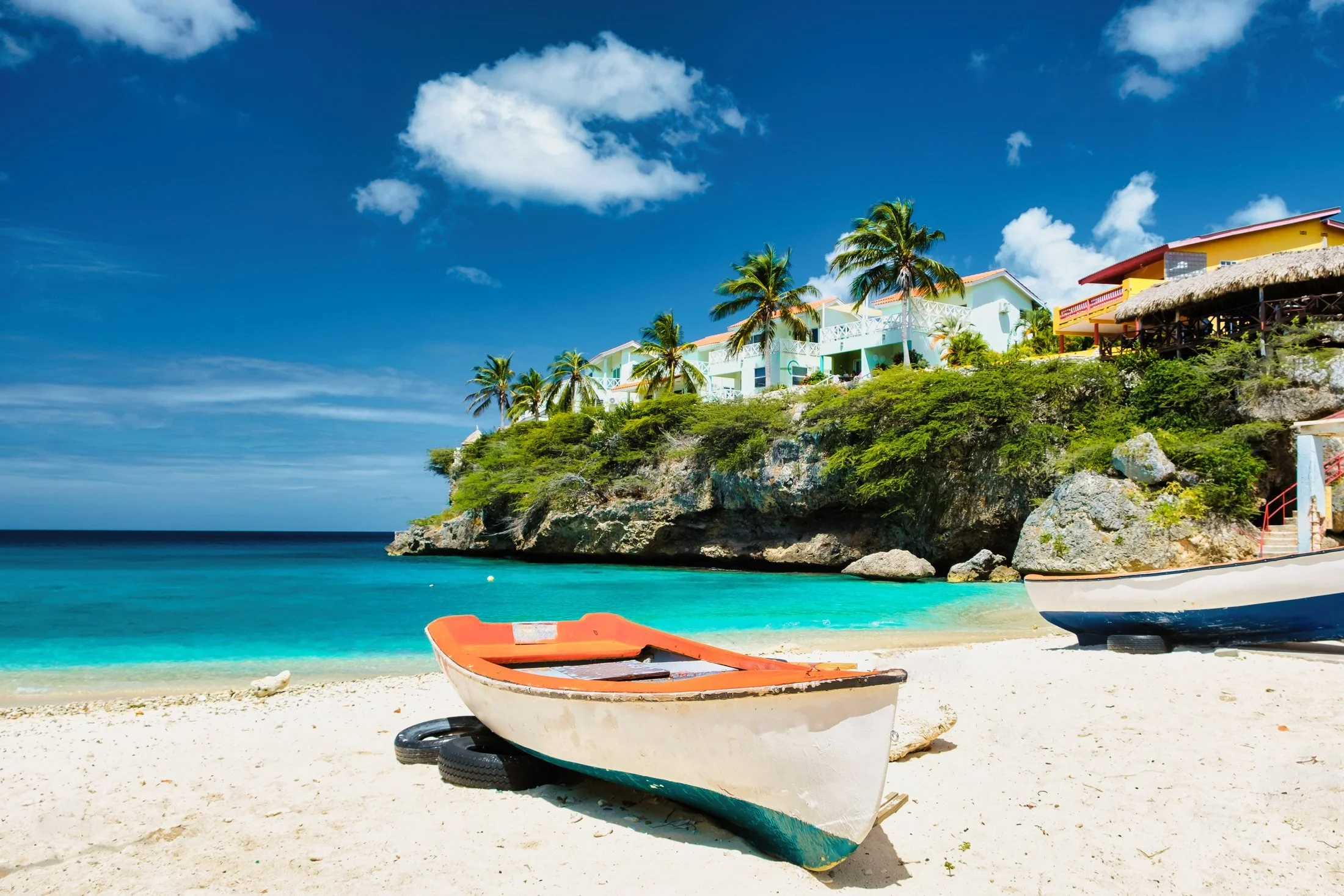
Anguilla is a flat, dry, coral island of 15,000 people with some of the best beaches in the Caribbean, a small upmarket tourist economy and the calm of a place where everyone knows everyone. It suits a very particular resident: wealthy, self-sufficient, medically uncomplicated, and content with quiet.
Women. No legal or practical constraint on women travelling, residing, owning property or doing business alone. The society is safe, small and observant.
LGBT residents. Same-sex conduct has been legal since the UK's 2001 Order in Council for the Caribbean territories. There is no recognition of same-sex relationships, churches are influential, and discretion is expected outside the resort enclaves.
Language and integration. English throughout. Integration is warm but the island is small enough that a foreign resident is known within a fortnight; the expat community is a few hundred villa owners, hoteliers and professionals, many seasonal.
Pace, security and bureaucracy. Crime is among the lowest in the Caribbean. Government is small and slow; licences, permits and land transactions take months. Access is by ferry or small aircraft through St Maarten, which adds a day to every journey.
Climate and health. Hot, dry, hurricane-exposed: Irma in September 2017 devastated the island and rebuilding took years. Water is scarce and desalinated; electricity is expensive.
Schooling. One public comprehensive school and a few small private primaries; no international school. Families with secondary-age children board abroad.
Politics. A British territory with a Governor, a locally elected government and periodic friction with London over finances and oversight, sharpened by the bank collapse. The .ai revenue has changed the fiscal picture but the territory remains dependent on tourism and vulnerable to a single storm.
For Retirees
Only the wealthy and healthy: the Select programme above, with evacuation cover and a tolerance for a small island.
For Digital Nomads and Remote Professionals
The Work from Anguilla permit above, for a year of quiet; nothing changes at home.
For Online Business Owners and Entrepreneurs
The Anguilla IBC as a cheaper British-territory alternative to the SA in the Structural Layer, if a British entity matters; otherwise the Panamanian default.
For Multinational Business Owners
Nothing; no treaties, no substance ecosystem.
For High Net Worth (HNW) Families and Investors
A British-territory permanent residence at USD 150,000 is a legitimate fallback document; the Tax Residency Programme is a legitimate answer for a client who has truly left home. Chinese families occasionally use it for the former; it does nothing for CRS.
Common Traps
Buying the tax residency certificate to keep living somewhere else: home-country residence tests decide, and there is no treaty. Buying real estate for the programme as an investment: an 18% entry cost into a thin market. Expecting privacy from a British territory that exchanges under CRS and shares ownership data with the UK.
Living here with a medical condition, school-age children or a need for anything to happen quickly. Anguilla is a superb place to visit and a difficult place to depend on.
Next Steps
If you want the cheapest British-territory entity, or a genuine zero-tax residence for a family that has already left a high-tax country and can live on a small island, book a scoping call. Bring the home-country departure position; it decides whether the tax residency certificate is worth anything.
Important note: General information. Not personal tax, legal, or financial advice. Speak to a qualified adviser at FTR or elsewhere before acting.
Continue reading
Suggested next, chosen by our partners.


