
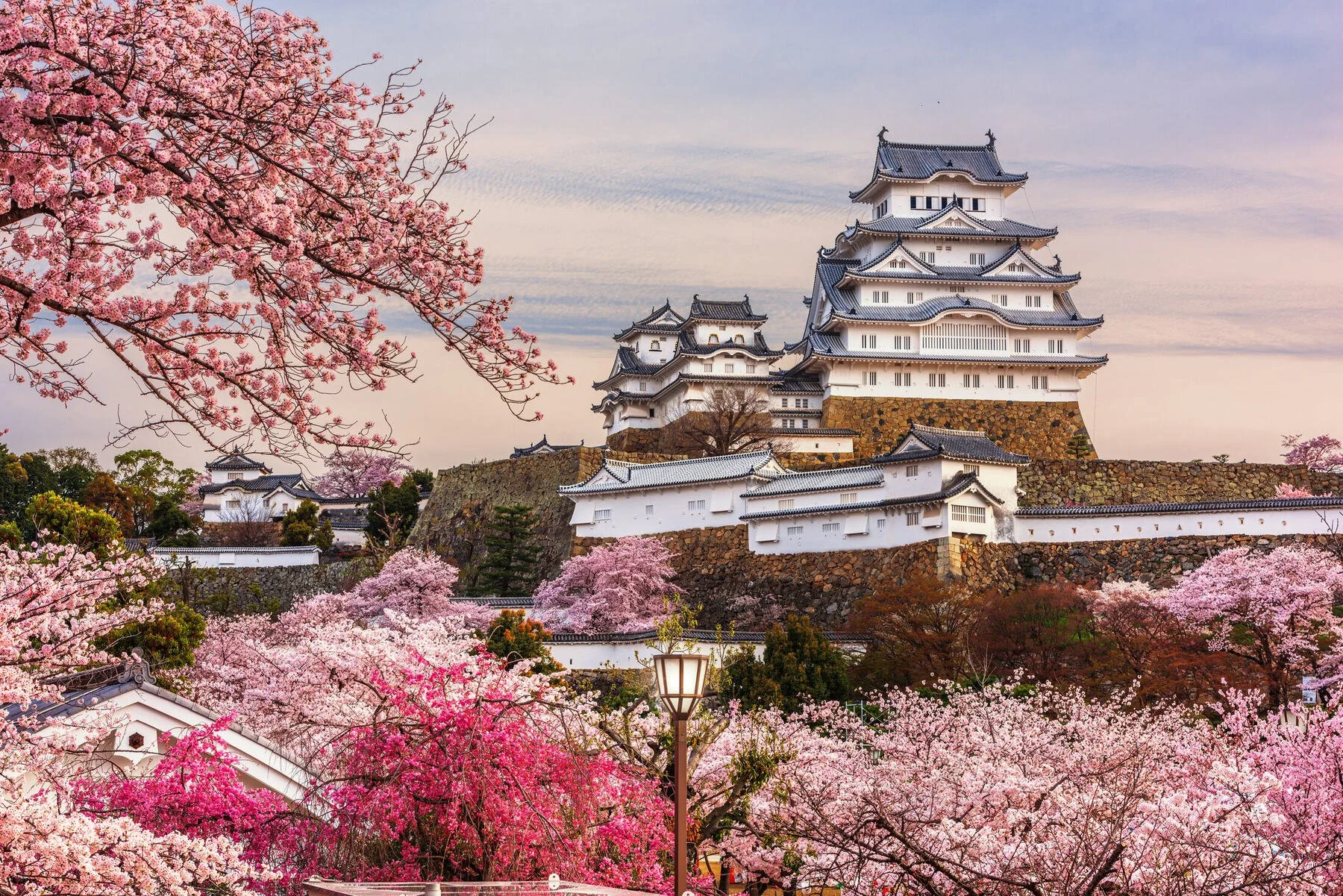
Japan Country Profile:
A 55% Inheritance Tax, a Ten-Year Tail and an Exit That Has to Be Planned Years Ahead
Japan combines the highest inheritance tax rate in the developed world with an ageing HNW population and a next generation already moving to Singapore, the US and the UAE. Leaving is possible; leaving cleanly takes a decade of planning, because Japanese gift and inheritance tax follows its nationals for ten years after they go.
🇯🇵 Key Facts (2026):
Currency: Japanese Yen (JPY); ~154 to USD (153.58 on 11 September 2026)
Personal income tax: national 5% to 45% (45% above JPY 40 million, ~USD 260,000), plus a 2.1% reconstruction surtax on the national tax through 2037, plus 10% local inhabitant tax; combined top marginal rate 55.945%
Corporate tax, fiscal years from 1 April 2026: national 23.2% plus local corporate tax, enterprise tax, inhabitants' tax and the new 4% defence surtax; effective combined rate about 31.5% for large enterprises (paid-in capital above JPY 100 million) and about 35.4% for SMEs on income above the reduced-rate band; SMEs pay 15% on the first JPY 8 million
Consumption tax: 10%; 8% on food and subscription newspapers
Capital gains: 20.315% flat on listed and unlisted shares; real estate 39.63% if held five years or less, 20.315% if longer
Wealth tax: none
Inheritance tax: 10% to 55% progressive; basic exemption JPY 30 million plus JPY 6 million per statutory heir; spouse exemption the greater of JPY 160 million or the statutory share
Gift tax: 10% to 55% progressive; annual exemption JPY 1.1 million; gifts within seven years of death are added back to the estate (phasing in from 2024)
Exit tax: deemed disposition of financial assets of JPY 100 million or more (~USD 650,000) on departure by anyone resident more than five of the last ten years, at 15.315%; foreign nationals on work-category visas are excluded
Ten-year tail: Japanese nationals who leave remain within worldwide gift and inheritance tax for ten years, as donor, decedent, donee or heir
Tax residency trigger: domicile (jusho) or one year's continuous residence; there is no simple day count
Non-permanent resident rule: non-Japanese nationals resident five years or less in the past ten are taxed on Japan-source income and on foreign-source income paid in Japan or remitted to Japan
CFC rules: apply to residents holding 10% or more of a foreign company more than 50% Japanese-owned, with full inclusion for paper companies taxed below 27%
Headline visa thresholds: Highly Skilled Professional 70 points (permanent residence after three years, one year at 80 points); J-Skip JPY 20 million annual income with a master's degree or ten years' experience; Business Manager JPY 30 million capital and one full-time employee since October 2025; digital nomad six months on JPY 10 million income
Corporate setup (KK): JPY 250,000–400,000 (~USD 1,600–2,600); GK JPY 100,000–200,000 (~USD 650–1,300). Annual maintenance: JPY 500,000–1,200,000 (~USD 3,200–7,800)
Personal bank account minimum: none, but generally six months' residence and a residence card
Private banking threshold: JPY 100–500 million (~USD 650,000–3.2 million) at UBS SuMi TRUST, Nomura, Daiwa, MUFG Morgan Stanley
Cost of living, comfortable professional household, Tokyo: JPY 900,000–1,300,000 per month (~USD 5,800–8,400)
CRS: participating; first exchanges September 2018
FATCA: Model 2 IGA, 2013
Treaties: roughly 85 conventions and agreements covering about 155 jurisdictions, of which about 70 are comprehensive income tax conventions; Colombia yes; Panama a tax information exchange agreement only, not a double tax treaty; US, UK, Australia, Canada and Singapore yes
Population: ~123 million, falling by around half a million a year
Time zone: UTC+9, no daylight saving
Last edited: 19 September 2026 by Joe Martin Hanson (Director & Global Partner) with advice from FTR’s Japanese Tax Partners
Why Japan Matters
Japan matters to FTR as the source of the most technically demanding succession work in the book. The inheritance tax reaches 55% on the largest estates, applies to worldwide assets of a Japanese-domiciled decedent and to worldwide assets received by a Japan-resident heir, and is backed by a gift tax at the same rates with a seven-year clawback. Hundreds of trillions of yen will pass from the post-war generation to its children over the coming decade, and the tax authority is well resourced and precise. That is the common driver of pre-death planning, corporate restructuring and, less often but increasingly, family emigration.
It matters second because the next generation is already leaving. Singapore is the first choice for anyone with an Asian regional focus; the United States for families whose relocation is tied to education; the UAE is growing; Australia, the Gold Coast and Melbourne in particular, for retirement; Malaysia through MM2H in earlier years. The move is rational but the tax consequence is not what clients expect. Japanese nationality carries the gift and inheritance tax for ten years after departure, the exit tax bites on financial assets above JPY 100 million, and Japan does not permit dual nationality, so a family cannot simply naturalise elsewhere and be done.
It matters third, and separately, as a destination for foreign professionals. The non-permanent resident regime means a foreign national's first five years are taxed on a remittance basis for foreign income, and foreign nationals on work visas are outside both the exit tax and, for foreign assets, the inheritance tax. For the right person that is a genuinely favourable window; it is also a window with a closing date.
Visa and Residency Routes
Highly Skilled Professional (HSP). A points test on education, experience, salary, age and Japanese ability; 70 points qualifies and gives permanent residence eligibility after three years, 80 points after one. It brings a five-year visa, a work permit for the spouse, parents and a domestic worker under conditions, and is the route FTR would use for a senior professional or executive relocating to Tokyo. Processing is one to three months.
J-Skip and J-Find. Since 2023, J-Skip grants HSP status without the points test to anyone with a master's degree or ten years' experience earning JPY 20 million or more, or a business manager with five years' experience earning JPY 40 million; J-Find is a two-year job-search visa for graduates of top-ranked universities. J-Skip is the fastest route for a well-paid arrival.
Business Manager. Tightened from 16 October 2025: JPY 30 million of capital or investment, at least one full-time employee, three years' management experience or a relevant degree, a business plan reviewed by a professional, and Japanese language ability at roughly JLPT N2 held by the applicant or a full-time employee. Previously the JPY 5 million route was the standard entry for entrepreneurs and small investors; it is now a genuine business visa, and the clients who used it as a residence-by-small-investment route no longer qualify.
Digital nomad. Since April 2024: six months, non-renewable, for nationals of visa-waiver countries with tax treaties earning JPY 10 million a year, with private medical insurance. No residence card, no path to anything, and a six-month gap before re-applying. Useful for exactly what it says.
Start-up, spouse and long-term resident. The start-up visa is a one-year runway under municipal sponsorship to meet the Business Manager conditions. Spouses of Japanese nationals and permanent residents get an unrestricted work status. Long-term resident status covers descendants and certain family cases.
Permanent residence and citizenship. Permanent residence normally needs ten years' continuous residence, five on a work status, with clean tax and pension contribution records; HSP shortens that to three years or one. Naturalisation needs five years' residence, Japanese language ability and, in practice, renunciation of other nationalities. Permanent residence is the target for almost every foreign client; citizenship is chosen only by those prepared to give up the passport they arrived with.
What fails in practice: the old JPY 5 million Business Manager plan, which no longer exists; any plan that treats the digital nomad visa as a foothold; and any plan for a Japanese national to naturalise abroad without first confronting the ten-year tail.
Tax Peculiarities and Traps
Residence and the non-permanent resident rule. Residence turns on domicile, the centre of one's life, or one year's continuous residence, not on a day count. A resident who is not a Japanese national and has lived in Japan for five years or less within the past ten is a non-permanent resident, taxed on Japan-source income and on foreign-source income that is paid in Japan or remitted to Japan. Foreign income kept abroad and not remitted is untaxed; money brought in is taxed to the extent of the year's foreign-source income, with ordering rules that deem remittances to come first from taxable foreign income. The rule is a remittance basis, not an exemption, and a foreign executive who funds a Tokyo apartment purchase from an overseas dividend account has just remitted taxable income. After five years the resident is a permanent resident for tax and worldwide taxation applies.
The inheritance and gift tax scope rules. Worldwide assets are taxed where the decedent or the heir is domiciled in Japan; the tax attaches to the heir, not the estate, and is computed on the statutory-share method. Foreign nationals on work-category (Table 1) visas are, since the 2021 reform, taxed only on Japan-situs assets however long they have lived in Japan, and their foreign heirs likewise. Foreign nationals on Table 2 status (spouse, permanent resident, long-term resident) are inside the worldwide net. A Japanese national who leaves remains inside it for ten years, as does anyone receiving from them. A Singapore-resident Japanese family whose parents remain in Tokyo is fully exposed on every gift and every inheritance, wherever the assets sit, and remains so for a decade after the parents follow.
The exit tax. Since 2015, a resident with financial assets (securities, unlisted shares, derivatives, but not real estate or cash) of JPY 100 million or more who has lived in Japan for more than five of the last ten years is deemed to dispose of them on departure and pays 15.315% on the unrealised gain. Deferral for five years, extendable to ten, is available against security and a tax representative. Foreign nationals on Table 1 visas are outside it; Japanese nationals and permanent residents are not. The tax is the second reason the departure date is a planning variable.
Reporting. A permanent resident for tax with foreign assets above JPY 50 million at 31 December files the Report of Foreign Assets (kokugai zaisan chosho), with penalties for omission and a penalty premium on tax later assessed on unreported assets. The Statement of Assets and Liabilities is required at JPY 20 million of income with JPY 300 million of assets, or JPY 1 billion of assets regardless.
The seven-year gift clawback and the annual exemption. Gifts within seven years of death are added back to the estate, up from three years, phasing in from 2024. The JPY 1.1 million annual exemption is small but compounding across children and grandchildren over twenty years remains the most-used technique in the country. The alternative "settlement at inheritance" election (JPY 25 million lifetime, with a JPY 1.1 million annual allowance since 2024) shifts gifts into the estate at their gift-date value.
Treaty position. Japan's network is broad but Panama is not in it: a tax information exchange agreement only, no double tax relief and no reduced withholding. Colombia, Singapore, the US, the UK and Australia have full conventions. Japan withholds 20.42% on most payments to non-residents absent treaty relief, and 15.315% on listed dividends.
The Structural Layer
FTR's default, a Panamanian Private Interest Foundation over a Panamanian SA with a modest salary paid where the client lives, plainly does not fit a Japanese resident, and the reasons are instructive.
The SA fails on the CFC rules. A Japanese resident holding 10% or more of a foreign company that is more than 50% owned by Japanese residents is taxed currently on its income; a Panamanian SA paying no tax is a paper company below the 27% threshold, its entire income is attributed to the individual as miscellaneous income at progressive rates to 55.945%, and there is no deferral. The foundation fails on the inheritance and gift tax. Under Article 66 of the Inheritance Tax Act, a transfer to an entity that would reduce the transferor's family's inheritance or gift tax is taxed as if the entity were an individual, and a transfer to a foreign trust or foundation for the benefit of Japanese-resident family members triggers gift tax on the beneficiaries under Article 9-2. Funding the foundation is a 55% event, not a succession plan.
What works for a Japanese resident is domestic: a family holding company (shisan kanri gaisha) whose share value is managed through the valuation rules, staged gifts within the exemptions and the seven-year window, life insurance within its own exemption, real estate held through the company for valuation discount, and the business succession tax deferral for qualifying operating companies. That is Japanese tax counsel's territory, and FTR's role is to plan the exit around it.
The default starts to fit once the family is properly out. For a Japanese national who has been non-resident for ten years, or for a foreign national who was never inside the worldwide net, the foundation and the SA do their normal job. Between departure and year ten the structure must be built so that nothing is gifted into it by, or received from it by, anyone still inside the tail. In practice the sequence is: exit tax modelled and deferred where useful; residency established in Singapore or the UAE with the family's centre of life visibly moved; assets held personally through the ten years; foundation funded afterwards. Where the family cannot wait, the alternative is to pay the gift tax deliberately on a chosen base rather than have it imposed later.
For a foreign professional on a Table 1 visa the position is different again: no exit tax, no worldwide inheritance tax on foreign assets, and a five-year remittance window. The structure is kept entirely offshore, nothing is remitted from taxable foreign income, and the client leaves before the five-year point or accepts worldwide taxation with open eyes.
Info-Sharing Reality (CRS and FATCA)
Japan is a founding CRS participant and has exchanged since September 2018. Japanese banks and brokers report non-resident account holders to the National Tax Agency, which exchanges with Singapore, Australia, the UK, Colombia, Panama, the UAE, Hong Kong, Switzerland and the rest of the network; Japanese residents' accounts in those countries come back the other way. Under the Model 2 FATCA agreement Japanese institutions report US persons directly to the IRS, with Japan providing supplementary exchange on request.
The National Tax Agency uses the data. CRS receipts are matched against the Report of Foreign Assets and against income returns, and the well-publicised audits of undeclared Singapore and Hong Kong accounts since 2019 came from exactly that matching. A Japanese family that has moved to Singapore and keeps a Tokyo brokerage account is reported to Singapore; one that has kept its Japanese domicile and holds assets in Singapore is reported to Japan. Neither jurisdiction is private, and neither pretends to be. The ten-year tail means the NTA retains an interest in a departed national's worldwide assets long after the residency ends, and the exchange network is how it exercises that interest. Japan is a place to be taxed openly and comprehensively; that is the premise from which every plan starts.
Banking Reality
Opening an account is straightforward for a resident and nearly impossible for a non-resident. Under the Foreign Exchange and Foreign Trade Act a foreign national is treated as a non-resident for the first six months, and most banks, including Japan Post Bank, MUFG, SMBC and Mizuho, decline to open a full account before then. SMBC Trust Bank's Prestia (the former Citibank retail business), Sony Bank and SBI Shinsei will open earlier for a residence-card holder with an employer letter and are the practical choice for English-speaking arrivals. Everything requires in-person attendance, a residence card, a Japanese phone number and, at the traditional banks, a registered seal.
Departure is the harder problem. Most banks require closure when residence ends; Prestia and a few others permit a non-resident to maintain an account with a Japanese tax representative and restricted services. Brokerage accounts are closed or frozen on departure at nearly every firm. A departing client should decide where the portfolio will live before updating any address.
Private banking runs through UBS SuMi TRUST, Nomura, Daiwa, MUFG Morgan Stanley and Mizuho, with entry from about JPY 100 million and serious attention from JPY 500 million; the offering is domestic and conservative, and most Japanese HNW families keep their international assets in Singapore. Japan is on no list, correspondent access is total, and cash and paper remain surprisingly central to daily banking.
Cost of Doing Business
A kabushiki kaisha costs JPY 250,000–400,000 (USD 1,600–2,600) to form through a judicial scrivener, including the JPY 150,000 minimum registration tax; a godo kaisha costs JPY 100,000–200,000 (USD 650–1,300) and is now the usual vehicle for foreign-owned small businesses. Annual maintenance runs JPY 500,000–1,200,000 (USD 3,200–7,800) for a tax accountant, the minimum inhabitants' tax of JPY 70,000 payable even in loss, social insurance administration and the annual filings; audit is not required below JPY 500 million of capital.
Against the set: a Panamanian SA runs USD 1,500–2,500 to establish and USD 1,000–1,800 a year. Singapore is about three times Panama's setup at USD 4,500–7,500, with USD 4,000–8,000 annual compliance. Japan is cheaper than Singapore to form and comparable to maintain, with a corporate rate ten points higher and a compliance culture that expects a domestic accountant, monthly payroll withholding and consumption tax registration from JPY 10 million of turnover. A Japanese company is for a business that operates in Japan; nobody incorporates here for the holding layer.
Cost of Living
Tokyo, central wards (Minato, Shibuya, Chiyoda, Meguro); Osaka and Fukuoka run 25%–40% below on housing.
Lean, single: JPY 300,000–420,000 (USD 1,950–2,700): one-room or 1LDK at JPY 120,000–200,000, groceries JPY 50,000–70,000, National Health Insurance at income-based premiums, a commuter pass JPY 10,000–20,000.
Comfortable, family of four: JPY 900,000–1,300,000 (USD 5,800–8,400): a 3LDK at JPY 400,000–700,000, National Health Insurance or employee cover, one international school place at JPY 2.5–3.5 million a year (USD 16,000–23,000), no car, activities and domestic help.
HNW: JPY 2.5 million and up (USD 16,000+): a house or large apartment in Minato or Shibuya at JPY 1–2 million, two international school places, a car and driver, and the Karuizawa or Hakone weekend property.
Healthcare is excellent and cheap at the point of use, with 30% co-payments capped monthly and premiums capped near JPY 1.1 million a year; English-speaking care clusters in central Tokyo. International schools (ASIJ, British School in Tokyo, Tokyo International School, Nishimachi) are expensive, waitlisted and the single largest line for families; public schools are very good and entirely in Japanese.
Cultural and Practical Considerations
Japan is the safest, most orderly and most punctual large country a client will ever live in, and one of the hardest to belong to. Those two facts are the whole story.
Language. The floor is high. Central Tokyo is navigable in English; the ward office, the tax office, the bank, the landlord, the doctor outside a handful of clinics and every contract are in Japanese, the annual tax return is filed in Japanese, and the National Tax Agency corresponds in Japanese. A foreign resident without at least intermediate Japanese lives through an interpreter, a bilingual spouse or a relocation firm. That is workable for a three-year assignment and wearing for a life.
Integration. A foreigner in Japan remains a foreigner, courteously and permanently. Friendships form through work and children's schools and are real but bounded. Renting is the practical face of this: many landlords refuse foreign tenants outright, and a guarantor company is required at nearly every lease. The expat community in Tokyo is large and comfortable and, for most, substitutes for integration rather than leading to it. Long-term foreign residents who thrive are those who accept the terms.
Women and family law. No legal constraint on women residing, owning property or doing business alone, and Japan is exceptionally safe for solo women, with groping on crowded trains the recognised exception. The corporate world is still male at the top and the gender pay gap is the widest in the G7. Family law is the trap: married couples must share a surname, and until April 2026 divorce meant sole custody, with the parent without custody, usually the father and often the foreign parent, losing effective contact. The joint custody amendment in force from April 2026 is new and untested, and Japan's record under the Hague Convention on child abduction remains the reason foreign spouses are advised to take custody arrangements seriously before they are needed.
LGBT residents. Same-sex relations are legal and social hostility is low. There is no national recognition of same-sex marriage or partnership; Tokyo and most large municipalities issue partnership certificates with limited practical effect, several high courts have found the marriage ban unconstitutional and the Supreme Court has yet to rule, and a foreign same-sex spouse of a Japanese national has no spouse visa. The 2023 LGBT understanding promotion law created no rights. Life is safe and private; it is not equal.
Order, bureaucracy and time. Everything works and everything is on paper: the residence card, the seal, the My Number card, in-person visits to the ward office for every change of address, and a tax and pension system that assumes a compliant salaried life. People who need quiet, predictability and rules are happy here; people who need spontaneity, informality or leniency are not.
Climate, environment and health. Summers are hot and humid with heatstroke a public health issue; cedar pollen from February to April disables a substantial fraction of the population; earthquakes are constant and a major Nankai Trough or Tokyo event is officially expected; typhoons hit the south and the Kanto plain every autumn. Winters in Tokyo are dry and mild.
Schooling and politics. Public schools are excellent and Japanese-medium; international schools are the only realistic option for most expatriate children and cost accordingly. Politics is stable and a resident feels little of it, though the July 2025 upper house election marked the arrival of an explicit "Japanese first" party and immigration has become a live public issue for the first time. A foreign resident will notice the tone rather than any change in law.
For Retirees
Japanese retirees leaving for the Gold Coast or Melbourne, or for Malaysia in earlier years, need the exit tax and the ten-year tail modelled before the departure date; foreign retirees rarely come, because there is no retirement visa and the inheritance tax net closes once residence becomes long-term.
For Digital Nomads and Remote Professionals
Six months on the nomad visa, no tax standing, then leave; Japan is a place to visit at length, not to base.
For Online Business Owners and Entrepreneurs
Foreign owners on Table 1 visas keep the business offshore and unremitted for five years, then decide; Japanese owners face the CFC rules on any foreign company from day one and structure domestically until they leave.
For Multinational Business Owners
A Japanese subsidiary for Japanese operations, at the rates above, under a holding company that is not Japanese-resident and not majority Japanese-owned if the CFC rules are to be avoided.
For High Net Worth (HNW) Families and Investors
The core segment: succession planning under the 55% regime, the staged exit to Singapore, the US or the UAE around the exit tax and the ten-year tail, and the impossibility of dual nationality. For Chinese HNW families, Japan is a destination rather than a source: the Business Manager route was the standard entry until October 2025 and is now materially harder, Japanese banks and the NTA report to China under CRS, and a Chinese national who becomes a Japanese permanent resident is fully inside the inheritance tax net on worldwide assets.
Common Traps
Leaving Japan on a date chosen for lifestyle. The exit tax on JPY 100 million of financial assets and the ten-year gift and inheritance tail turn the departure date into the single most consequential planning decision a Japanese HNW family makes, and it needs two to three years of preparation.
Naturalising in Singapore or Australia to escape the tail. Japan does not recognise dual nationality; a Japanese national who naturalises elsewhere loses Japanese nationality, and the ten-year clock still runs from the loss of domicile, not from the change of passport.
Funding a foreign trust or foundation from Japan. Gift tax at up to 55% on the transfer, and CFC attribution on any company beneath it.
Treating the non-permanent resident rule as an exemption. It is a remittance basis; remitting foreign income is a taxable event.
Coming to Japan as a foreign HNW family for a long-term base with worldwide assets. Once residence is on Table 2 status the inheritance tax applies to everything, everywhere.
Any client without Japanese and without the patience for paper.
Next Steps
Japanese HNW families planning succession or a move abroad, and foreign executives arriving on a fixed-term assignment who want the five-year window used properly: book a scoping call. The work always starts with the calendar.
Important note: General information. Not personal tax, legal, or financial advice. Speak to a qualified adviser at FTR or elsewhere before acting.
Continue reading
Suggested next, chosen by our partners.


