
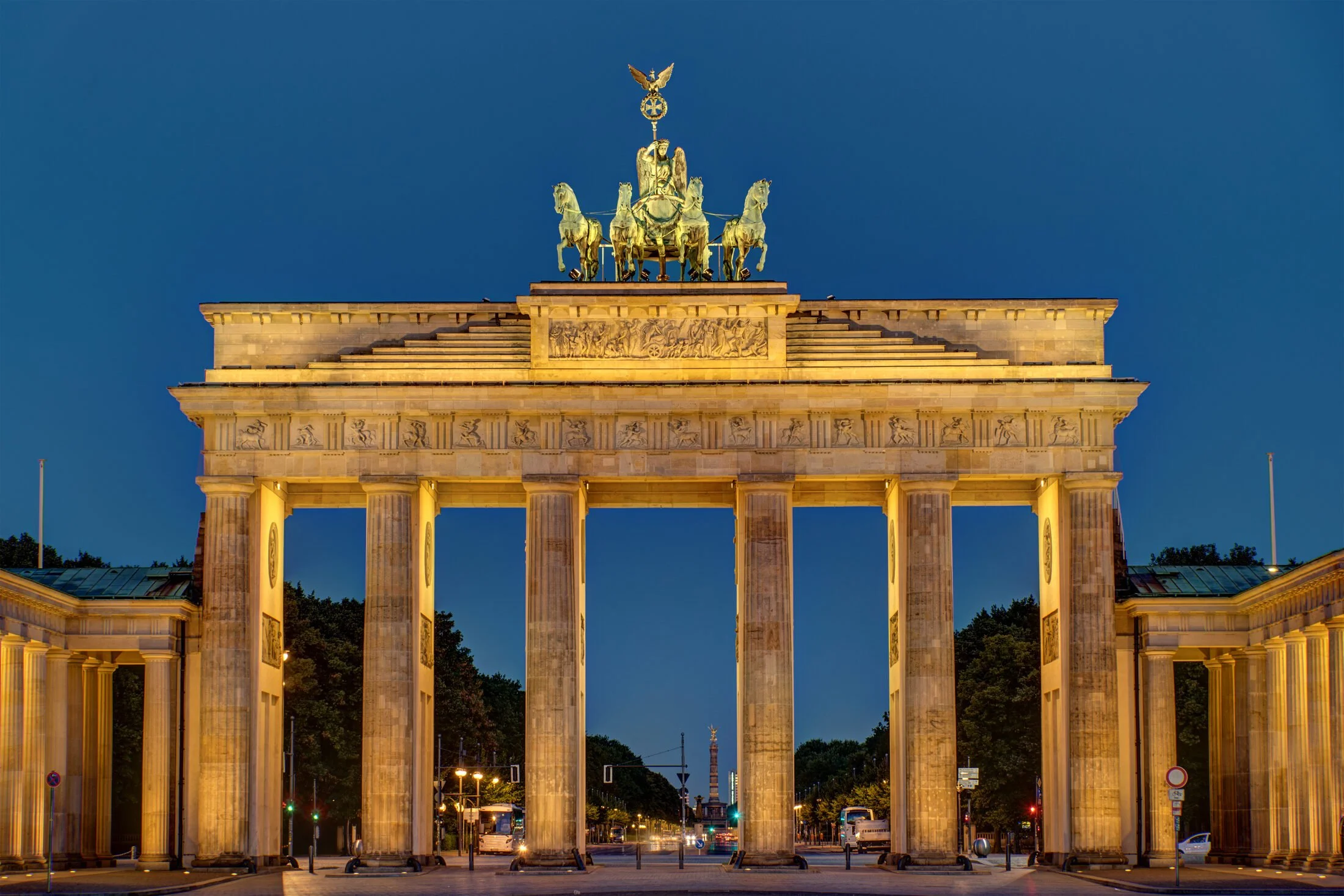
Germany Country Profile:
A Major Source Country Whose Exit Rules Follow You Out
Germany produces a steady outbound flow of high earners and business owners, and it keeps taxing its nationals for years after they leave. The Wegzugsteuer, the extended limited liability rule and the foreign-foundation attribution rule decide whether a German exit works, and they have to be handled in that order.
🇩🇪 Key Facts (2026):
Currency: Euro (EUR); ~1.16 USD per EUR (mid-market, September 2026)
Personal income tax: 0% to the basic allowance of €12,348, then 14% rising to 42% from about €69,900, and 45% above €277,826 (thresholds double for joint filers)
Top marginal rate: 45% is the ordinary top bracket on the slice above €277,826, three points above the 42% band, not a separate surcharge
Solidarity surcharge: 5.5% of income tax, payable only above an exemption threshold that spares roughly nine-tenths of taxpayers
Church tax: 8% (Bavaria, Baden-Württemberg) or 9% of income tax for registered church members
Combined top marginal rate: ~47.5% before church tax; ~49–50% with it
Corporate tax: 15% plus solidarity surcharge (15.825%) plus municipal trade tax of roughly 7% to 20%; about 30% typical, 33% in Munich; the federal rate is legislated to fall one point a year from 2028 to 10% by 2032
VAT: 19% standard, 7% reduced
Capital gains and investment income: Abgeltungsteuer 25% plus solidarity surcharge (26.375%), plus church tax; €1,000 saver's allowance (€2,000 joint)
Private real estate gains: tax-free after ten years' holding, or earlier if owner-occupied
Wealth tax: 0% (suspended since 1997)
Inheritance and gift tax: 7%–30% spouses and descendants (class I), 15%–43% class II, 30%–50% everyone else (class III); allowances €500,000 spouse, €400,000 per child, €200,000 per grandchild, €20,000 unrelated persons
Tax residency trigger: a dwelling at your disposal (Wohnsitz, §8 AO) or habitual abode over six months (§9 AO); no day count needed for the dwelling test
Wegzugsteuer (§6 AStG): deemed disposal of shareholdings of 1% or more on emigration after seven of the last twelve years' residence; seven annual instalments on application
Extended limited tax liability (§2 AStG): German nationals moving to a low-tax jurisdiction with substantial German interests stay taxable on non-foreign income for ten years
Extended inheritance tax liability: five years worldwide for German nationals (§2 ErbStG); ten years on non-foreign assets after a low-tax move (§4 AStG)
CFC low-tax threshold: 15%
Headline visa thresholds: EU Blue Card about €50,700 for 2026, about €45,900 in shortage occupations; self-employed permit (§21 AufenthG) has no fixed capital figure; no golden visa; no retirement visa
Corporate setup: GmbH share capital €25,000 (half paid in), formation €1,000–3,000 (~USD 1,200–3,500); UG from €1. Annual maintenance: €3,000–10,000 (~USD 3,500–11,600) before payroll
Personal bank account minimum: nil; statutory right to a basic account for every legal EU resident
Private banking threshold: about €1 million at the universal banks; €2–3 million at Berenberg, Metzler and the private houses
Cost of living, comfortable professional household: €5,500–8,000 per month in Munich (~USD 6,400–9,300); €4,500–6,500 in Berlin
CRS: participating; early adopter, first exchanges 2017 on 2016 data
FATCA: Model 1 IGA, signed 2013
Treaties: about 96 comprehensive, including the US, UK, Australia and Canada; none with Panama or Colombia
Population: ~83.5 million
Time zone: CET, UTC+1 (UTC+2 in summer)
Last edited: 17 September 2026 by Joe Martin Hanson (Director & Global Partner) with advice from FTR’s German Tax Partners
Why Germany Matters
Germany matters to FTR as a source country. A combined marginal rate near 48% that starts at a modest income, church tax on top for many, inheritance tax that treats anyone outside the immediate family harshly, a stagnant economy since 2023 and a political tone that many business owners find hostile have produced a steady outbound flow. Switzerland and Austria take those who want proximity and a familiar culture; Portugal and Italy take those who want weather and a preferential regime; Dubai takes those who want zero tax; and Panama increasingly takes those who want Americas exposure and USD structuring without a Gulf lifestyle.
It matters second because Germany is unusually good at following its citizens out. The Wegzugsteuer taxes unrealised gains on company shares at the moment of departure, the extended limited liability rule keeps German nationals who move to low-tax countries in the net for ten years, and the foreign-foundation attribution rule reaches any structure built before departure. A German exit not sequenced around those three rules is not an exit.
It matters third because inheritance tax drives restructuring during life. Class III rates of 30% to 50% with a €20,000 allowance make an unplanned estate expensive for anyone whose heirs are not a spouse or children, and the five-year and ten-year tails mean that dying abroad soon after leaving does not solve it.
As a destination, Germany is a Blue Card country for salaried professionals and nothing more. Nobody moves here for the tax.
Visa and Residency Routes
EU, EEA and Swiss nationals need only registration. Everyone else uses the residence titles under the Aufenthaltsgesetz.
EU Blue Card (§18g). A recognised degree and a job offer at or above about €50,700 for 2026, or about €45,900 in shortage occupations and for recent graduates. Four to twelve weeks, faster if the employer requests the accelerated procedure. Permanent settlement after 27 months, or 21 with B1 German. This is the route for the salaried professional and it works.
Skilled worker permits (§18a and §18b). Recognised vocational or academic qualification plus a job offer, settlement after four years. Opportunity Card (Chancenkarte): a points-based job-seeker permit for up to a year with part-time work allowed, a bridge rather than a route.
Self-employed and freelance permits (§21). Business founders need an economic interest, a viable plan and secured financing; liberal professions under §21(5) need evidence of clients and income. No fixed capital figure; approval turns on a chamber-of-commerce opinion and the local office's view. Settlement after three years if the business has succeeded. Berlin's freelance permit is the de facto digital-nomad route, but it wants German clients or German economic benefit on paper, which most remote workers cannot show.
No investor or golden visa, no retirement visa. A residence permit for other purposes (§7) is occasionally granted to the financially independent, but it is discretionary and inconsistent between offices; FTR does not plan a retirement around it.
Settlement (§9) normally takes five years, secured livelihood, pension contributions and B1 German. Citizenship takes five years' residence, B1 German and a test; dual citizenship has been allowed since June 2024, which is why a German passport is now worth keeping on emigration. The three-year fast track introduced in 2024 was withdrawn in 2025. Joining spouses generally need A1 German before entry, which catches families more often than the salary floor does.
Ceasing residence is the route FTR's clients actually use. German residency is not a day count: a dwelling kept available for your use is a Wohnsitz whether or not you sleep in it. The sequence is to give up or let the German home, deregister at the Bürgeramt (Abmeldung), evidence a permanent home abroad, notify the Finanzamt, and settle the Wegzugsteuer and extended-liability positions before any structure is created.
Tax Peculiarities and Traps
The Wohnsitz trap. A flat kept for visits, a room in a parent's house, a holiday home used a few weeks a year: any can be a dwelling at your disposal under §8 AO, and unlimited liability on worldwide income continues for as long as it exists. The fix is to sell, to let at arm's length, or to make the property demonstrably unavailable.
Wegzugsteuer (§6 AStG). Anyone unlimited tax liable for seven of the last twelve years who holds 1% or more of a corporation, German or foreign, is treated as having sold those shares at market value on the day residence ends. Under the partial-income method roughly 60% of the gain enters the progressive scale, an effective rate near 27% to 28%. Since the 2022 reform there is no indefinite interest-free deferral for EU or EEA moves: the tax is due, and on application may be paid in seven equal annual instalments, generally against security. It reverses on return within seven years, extendable to twelve, and since 2025 substantial investment-fund holdings are also caught. For a founder with a GmbH built from nothing this is usually the largest tax event of their life; the departure date, the valuation and the instalment application are planning variables to be worked before the flight is booked. Converting the GmbH into a partnership with a German permanent establishment is a route counsel sometimes uses to take the shares outside §6, at the price of continuing German tax on a later sale.
Extended limited tax liability (§2 AStG). A German national who was unlimited tax liable for five of the ten years before departure, moves somewhere with materially lower income tax or a preferential regime for incomers, and keeps substantial economic interests in Germany, stays taxable for the ten years after the year of departure on all income that is not clearly foreign-source. Substantial interests include a German business or partnership stake, a 1% holding in a German corporation, and German-source income or German assets above roughly 30% of the total or a fixed euro threshold. Panama's territorial system, Dubai, the Swiss forfait and Italy's flat tax all count as low-tax or preferential. Retaining a rental portfolio or a stake in the family firm is what keeps people inside the rule.
Inheritance and gift tax tails. German nationals stay within unlimited inheritance and gift tax on worldwide assets for five years after leaving (§2 ErbStG); a low-tax move adds ten years of extended limited liability on non-foreign assets (§4 AStG). Class III treatment, 30% from €20,000, makes a gift to an unmarried partner, a nephew or a foreign foundation a serious event. Business assets qualify for 85% or 100% relief on strict conditions, and the family home passes tax-free to a spouse or child who occupies it for ten years.
Foreign family foundation attribution (§15 AStG). The income of a foreign family foundation is attributed to a German-resident founder, or failing that to German-resident beneficiaries, unless the foundation is in the EU or EEA and demonstrably outside the founder's control. Funding it from Germany is also a class III gift. This is what makes a Panamanian foundation useless while the client is still resident.
CFC rules (§§7–13 AStG). Passive income of a foreign company controlled by German residents and taxed below 15% is attributed to them. A Panamanian SA holding investments for a German resident is caught.
German pensions after departure. Statutory and most occupational pensions stay German-source under limited liability, handled by a single Finanzamt in Neubrandenburg. A treaty usually gives the destination the taxing right; with no treaty, as in Panama and Colombia, Germany taxes the pension without the basic allowance.
Registration-form traps. Ticking a religion box on the Anmeldung form puts you into church tax at 8% or 9% of income tax until a formal, fee-paying exit is filed; the broadcasting levy is charged per household regardless of use; and a Schufa credit record follows every financial decision.
The Structural Layer
FTR's default, a Panamanian Private Interest Foundation owning a Panamanian SA with a modest director's salary paid where the client lives, does not work while the client is German-resident, for statutory reasons. Funding the foundation is a class III gift at 30% to 50%; its income is attributed under §15 AStG; the SA's passive income is attributed under the CFC rules; and an SA managed from Germany is a German-resident company paying corporation and trade tax. Germany treats any foreign structure controlled from Germany as if it did not exist.
The default works once residence has genuinely ceased, with three adaptations. The departure comes before the structure: no foundation is settled and no SA capitalised until Abmeldung is complete, the German home has gone and the Wegzugsteuer position is agreed with the Finanzamt. A German national heading to Panama, Dubai or a preferential regime either sheds substantial German interests before leaving or accepts ten years of extended limited liability on the German-source part, in which case the Panamanian structure holds only non-German assets. And nothing German goes into the foundation for five years, because the gift-tax tail reaches worldwide transfers for that period.
Where the client keeps a German operating company, the usual pattern is a German holding GmbH above it, taking the 95% exemption on dividends and share gains under §8b KStG, with the personal exit handled by instalment payment of the Wegzugsteuer or partnership conversion on counsel's advice; the Panamanian layer sits above the non-German wealth only. For moves to a treaty country such as Switzerland, Austria or Italy the treaty allocates taxing rights and the extended liability rule loses most of its force; for Panama, with no treaty, every German-source item stays taxable at ordinary rates.
Succession is where the foundation earns its place: once the tails have run, German inheritance tax is confined to German-situs assets and a Panamanian foundation can pass non-German wealth without forced heirship or class III rates.
Info-Sharing Reality (CRS and FATCA)
Germany was an early CRS adopter and has exchanged data since 2017. German banks report accounts of non-German tax residents to the holder's country of residence, Panama, Colombia, the UK, Australia, Canada and every other participating jurisdiction included, and report US persons to the IRS under the 2013 Model 1 agreement. The Federal Central Tax Office receives inbound CRS data on residents' foreign accounts from more than a hundred jurisdictions and matches it to returns; there is a beneficial-ownership transparency register; and the tax authority is modern, well resourced and aggressive on cross-border cases. Germany is not a privacy jurisdiction and has not been one for a generation.
For an emigrant, any German account left open is reported to the new country of residence, and any foreign account is reported back to Germany until both banks hold an updated self-certification; clients who never update their banks are the ones who get letters from two tax authorities. For a Chinese or other Plan-B family, Germany offers rule of law and no privacy: German accounts are reported to Beijing like everyone else's.
Banking Reality
The system is deep and dull in the right way. Deutsche Bank and Commerzbank are the universal banks; DZ Bank sits above the cooperative Volksbanken; the Sparkassen serve most of the population; ING Deutschland, DKB and N26 are the digital alternatives most newcomers use, opening online with video identification. A resident's current account is easy and carries no minimum once the Anmeldung certificate exists. Non-residents find it harder: the traditional banks generally decline, some products are resident-only, and a Schufa history is needed for anything beyond a debit card. Private banking begins around €1 million at Deutsche Bank Wealth Management and Commerzbank and from €2–3 million at Berenberg, Metzler and Hauck Aufhäuser Lampe; onboarding takes two to six weeks with full source-of-wealth documentation. Correspondent banking and SWIFT access are complete; Germany is a FATF founding member and on no blacklist or grey list. Cash is still more common than in the UK or Scandinavia and some smaller businesses refuse cards.
Cost of Doing Business
A GmbH needs €25,000 of share capital, half paid in, plus notary and register fees bringing formation to €1,000–3,000 (~USD 1,200–3,500); a UG can start with €1 but must retain a quarter of profits until it reaches €25,000. Annual maintenance, meaning bookkeeping, accounts, corporation and trade tax returns, chamber fees and transparency-register filings, runs €3,000–10,000 (~USD 3,500–11,600) before payroll, and one employee adds employer social insurance of roughly 20% up to the ceilings.
Against the set: Panama corporate formation runs roughly one third of the Singapore equivalent, about USD 1,500–2,500 to form and USD 1,500–3,000 a year with a registered agent; Singapore about USD 3,000–6,000 and USD 4,000–8,000 a year; the UK is cheaper than Germany to form at under USD 500 and comparable to maintain at modest scale. Germany's formation cost is middling; its running cost and compliance burden are among the highest in the set, and the municipal trade tax makes location inside Germany a tax decision.
Cost of Living
Figures are for Munich, where international employers cluster, with Berlin in brackets.
Lean: a single professional in a one-bedroom flat at €1,300–1,700 (€1,000–1,400) cold rent, public health insurance through payroll, Deutschlandticket: €3,000–3,800 all-in.
Comfortable: a family in a three-bedroom flat at €2,400–3,200 (€1,800–2,500) cold rent plus €300–450 utilities, health cover of roughly €1,000 a month for a family on higher earnings, state schooling free, one car: €5,500–8,000 (€4,500–6,500).
HNW: a house in Grünwald or Bogenhausen at €5,000–9,000, private health insurance €1,500–2,500, international school fees of €18,000–28,000 a year per child, domestic help, two cars: €12,000–20,000 and up.
Health insurance is compulsory. Public cover takes about 17.5% of gross salary including the supplementary contribution, split with the employer, up to a ceiling near €69,750 a year, plus long-term care insurance; private cover runs €400–900 a month per adult and returning to the public system after 55 is nearly impossible. State schools are free and good, with tracking into Gymnasium at ten; city Kita places are scarce. The Deutschlandticket at €63 a month covers local and regional public transport nationwide.
Cultural and Practical Considerations
German is the language of every official interaction. Berlin's start-up scene runs in English and a professional can work there for years without German, but the Ausländerbehörde, the Finanzamt, the Bürgeramt, the landlord, the health insurer and the school all correspond in German and expect German answers. Bureaucracy is thorough, paper-based, slow and unforgiving of missed deadlines; appointments at Berlin's citizen offices take weeks and a fax is still an accepted channel in some offices. Things do eventually happen exactly as the rules say, which people from chaotic jurisdictions find reassuring and people from fast ones find maddening. The trains no longer run on time.
Social integration is slow. Germans separate work from private life, friendships form through clubs, sport and long acquaintance rather than at the office, and the directness newcomers read as rudeness is simply the local register. The expatriate community in Berlin, Munich and Frankfurt is large enough to live inside, and most foreigners do, which suits a three-year posting and isolates a permanent move. Anyone who wants warmth, spontaneity and noise will find German cities quiet, ordered and closed on Sundays; quiet hours are enforced and neighbours complain.
Women face no legal or practical restriction on travelling, living, contracting or running a business alone, and personal security is high by any standard. Same-sex marriage has been law since 2017, the 2024 self-determination act simplified legal gender change, and Berlin is among the most open cities in Europe; the risk for LGBT residents is social, and mostly in rural or eastern areas. There are no religious or dietary constraints, though the food culture is pork- and beer-heavy outside the cities.
Climate is the honest health issue: November to February is grey, short and wet across most of the country, and seasonal low mood among people from sunnier places is common enough that FTR mentions it before the tax numbers.
Political volatility has become real. The far-right AfD is the strongest party in much of the east and polls first or second nationally, migration dominates politics, and industrial employers are cutting. A foreign resident feels this as a harder tone toward immigration rather than any change in legal position, but families choosing between cities should weigh it. Schooling for accompanying children is good and free, with the caveat that a child arriving without German after about ten struggles to reach Gymnasium.
For Retirees
A source, not a destination; no retirement visa and no reason to want one. Leaving retirees need the pension-taxation point above and the Wohnsitz trap handled before the first winter abroad.
For Digital Nomads and Remote Professionals
The Berlin freelance permit is the only realistic route, it wants German economic benefit, and there is no preferential regime. Most pass through.
For Online Business Owners and Entrepreneurs
Resident owners face CFC attribution, foundation attribution and church tax on top of 48%; the structure follows the person out, never the reverse.
For Multinational Business Owners
The Wegzugsteuer on GmbH shares, the holding-GmbH pattern and partnership conversion are the whole conversation; the destination is chosen after those numbers are known.
For High Net Worth (HNW) Families and Investors
For German families the inheritance tails and the five-year gift rule set the timetable. For foreign families Germany offers rule of law, a passport now compatible with dual citizenship, and no tax advantage; a Chinese family choosing it as a stability play accepts full CRS visibility to Beijing and a 45% top rate as the price.
Common Traps
Anyone expecting a tax advantage of any kind from moving to Germany. Anyone who wants to leave while keeping a flat, a family-firm stake or a rental portfolio and assumes a change of address ends German tax; the tails exist precisely for them. Founders who settle a Panamanian foundation while still resident, because §15 AStG and class III gift tax make it the most expensive structure available. German nationals moving to Panama, Dubai or a lump-sum canton without first testing themselves against §2 AStG. Remote workers hoping for a nomad visa, retirees looking for a residence route, families who need sun in winter, and people who need to shop on a Sunday or get an appointment this week.
Next Steps
For a German resident planning to leave, the sequence is Wegzugsteuer valuation and instalment application, a §2 AStG test on retained German interests, Abmeldung and the end of every German dwelling, and only then structure. For a former resident with German-connected wealth or heirs, the inheritance-tax tails set the timetable. Book a scoping call.
Important note: General information. Not personal tax, legal, or financial advice. Speak to a qualified adviser at FTR or elsewhere before acting.
Continue reading
Suggested next, chosen by our partners.


