
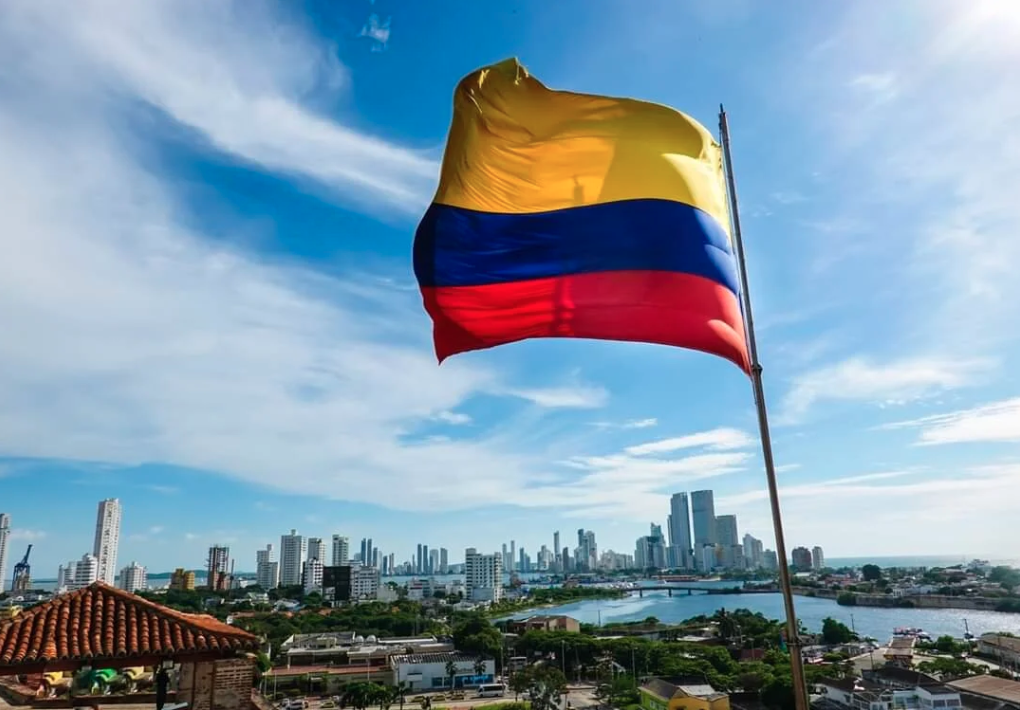
Colombia Country Profile:
Nomad Hub, Retiree Haven, and Latin American Base
Colombia combines one of the world’s most generous foreign pension exemptions with a formal Digital Nomad Visa, growing High Net Worth (HNW) investor infrastructure, and increasingly family-friendly urban environments in Medellín, Bogotá, and the coffee region.
🇨🇴 Key Facts (2026):
Currency: Colombian Peso (COP); approximately 4,100 to USD$1.
Personal income tax: progressive to 39%.
Foreign pension exemption: 1,000 UVT (Unidad de Valor Tributario) per month (approximately USD$12,000-15,000 per month depending on exchange rate, or USD$144,000-180,000 per year exempted.
Capital gains: 15% flat rate.
Corporate tax: 35% plus 4% surcharge for financial sector.
VAT: 19%.
Wealth tax (impuesto al patrimonio): reintroduced 2023 for higher net worth; progressive from 0.5% on net worth above approximately USD$735,000 to 1.5% at the highest bands.
Tax residency threshold: 183 days in any rolling 365-day period.
CRS participation: yes (since 2017).
FATCA Model 1: yes.
Growing treaty network including Spain, Portugal, France, UK, Canada, Chile.
Population: approximately 52 million.
Weather: highly varied by altitude. Bogotá (2,600m altitude) mild year-round at 8-20°C, roughly comparable to San Francisco. Medellín (1,500m) “eternal spring” at 16-27°C, comparable to Los Angeles without extremes. Cartagena and coastal areas tropical at 24-34°C, comparable to Miami.
Stability and security: democracy since 1958. Security situation has improved substantially over past two decades though regional variation remains meaningful (major expat cities including Medellín, Bogotá premium areas, Cartagena tourist zones broadly safe; specific rural areas and neighborhoods higher risk - there are specific parts of the country foreigners should not go at all). Political direction has been in flux in recent years; policy risk exists on wealth tax and various fronts.
Banking and financial infrastructure: modern by Latin American standards and increasingly digital. Lacks financial infrastructure of major global financial centres (Panama is the best in the region). Major domestic banks operate at global standards. Mobile banking (Nequi, DaviPlata) exceptionally advanced. USD account access available at select banks, but not common. Full SWIFT participation. Colombia is fully cooperating internationally; not a blacklist jurisdiction.
Last edited: 15 June 2026 by Joe Hanson (Director & Global Partner) with advice from FTR Local Tax Partners
Info-Sharing Reality (CRS and FATCA)
Colombia is a fully participating CRS jurisdiction. The tax authority DIAN has modernised information sharing considerably, and is one of the most aggressive tax agencies in Latin America. Foreign tax residents’ Colombian financial accounts are reported to home countries annually; Colombian tax residents’ foreign financial accounts are reported to Colombia through the reverse flow.
Colombia is not a low-tax country, nor a privacy jurisdiction. Its appeal for clients is lifestyle, cost, and regional access, not structural opacity. If you want to legally tax efficiency plan for low tax, you need to structure properly in a compatible jurisdiction before moving to Colombia.
Banking Reality
Colombian banks (Bancolombia, Davivienda, BBVA Colombia, Banco de Bogotá, Itaú Colombia) serve residents efficiently. Account opening typically requires a Colombian cedula (national ID), which in turn requires visa status. Timeline from arrival to functional local banking can be anywhere from 2 to 12 weeks depending on your exact situation.
Minimum balances are modest for standard accounts (USD$500-5,000). USD accounts are available at some banks. Correspondent banking connections to the US, EU, and rest of Latin America are strong. SWIFT access is complete. Colombia is not on any major blacklist.
Bancolombia’s Nequi and Davivienda’s DaviPlata are strong mobile-first services popular with locals and expats. Banco de Bogota still remains the personal favourite of FTR’s Colombian Partners for good service, investment capabilities, and reliability.
Cost Profile
Colombia offers substantially lower cost of living than most Western baselines. A comfortable expat lifestyle in Medellín runs USD$1,800-3,500 per month for a couple; Bogotá similar; smaller cities dramatically less. Luxury lifestyle accessible at USD$5,000-8,000 per month (that’s a penthouse, full-time maid/cook, daily social/sporting activities, top-tier health insurance, etc. - everything you could need).
For Retirees
Colombia’s 1,000-UVT pension exemption is one of the most generous globally. It exempts foreign pension income up to approximately USD$144,000 per year from Colombian tax. Above that threshold, ordinary progressive rates apply.
Combined with the Pensionado M visa, available with lifetime pension income of USD$1,000+ per month, Colombia is a serious retirement destination. Medellín’s climate is temperate year-round; Cartagena’s coastal warmth appeals to some; the coffee region offers rural charm.
Colombian EPS (public health insurance) is available to residents at approximately 12.5% of declared income up to caps. Prepagada (private complementary insurance) covers premium hospital access at USD$75-250 per person per month. International Private Medical Insurance (IPMI) supplements for travel-country coverage.
For Digital Nomads and Remote Professionals
Colombia’s Digital Nomad V Visa, introduced 2022, is functional and popular. Minimum income requirement approximately USD$684 per month (three times Colombian minimum wage). Two-year duration, renewable. Requires proof of remote employment or freelance income from foreign sources.
Medellín is one of Latin America’s major nomad hubs, with substantial coworking infrastructure, a large international community, and lifestyle amenities that appeal broadly. Bogotá and Cartagena offer alternatives. Smaller cities like Manizales, Ibague, Santa Marta, Bucaramanga, etc. offer even more budget friendly living options but much smaller international communities.
Tax residency triggers at 183 days. Foreign-source income remains subject to Colombian tax at ordinary rates once tax-resident, so long-term nomads should model whether Colombian residency actually fits their income structure or whether they should limit stay accordingly.
For Online Business Owners and Entrepreneurs
Colombian tax rates are not particularly favourable for online business owners at standard levels. 35% corporate tax plus progressive personal tax plus reintroduced wealth tax make Colombia better suited as a lifestyle base than as an operating tax base for online businesses with substantial income.
Some entrepreneurs structure Colombia as personal residence while operating businesses through more favourable corporate jurisdictions (Panama SA, UAE Free Zone, US LLC depending on specifics), with careful attention to Colombian personal tax on distributions and salary flows.
The Colombian SAS (Sociedad por Acciones Simplificada - ‘company of simplified shares’) is the standard local vehicle for genuinely Colombian operations. Setup is straightforward through Colombian legal counsel - FTRs Colombian Partners can organise this for you if needed.
For High Net Worth (HNW) Investors
Colombia is not a Plan-B jurisdiction in the privacy sense. Wealth tax reintroduction and full CRS compliance mean Colombia is a place to live rather than a place to shelter assets. HNW investors choosing Colombia typically do so for lifestyle, family or regional business connections, or as a base for Latin American investment activity. Colombian real estate investment is accessible to foreigners and can generate meaningful rental yields in premium areas.
Colombian Foundations exist but are less internationally recognised than Panamanian equivalents. There’s no practical reason why you’d choose a Colombian Foundation over a Panamanian one. Cross-border HNW structuring typically pairs Colombia (residence) with Panama (structures); most wealthy Colombians do this also for the legal & tax benefits, plus the long-term currency and political stability (for wealth preservation).
For Young Self-Employed Families
The Digital Nomad Visa covers family members. Alternative family-suitable visas include the Migrante visa for various professional and business categories. Path to permanent residency after five years of temporary residency, then Colombian citizenship after two years of permanent residency (or one year if from a Spanish-speaking country or married to a Colombian).
International schools in Medellín (Colegio Karl Christian Krause, Columbus School, various others) and Bogotá (Colegio Nueva Granada, Colegio Anglo Colombiano) offer strong international curriculum at fees dramatically lower than developed-country equivalents.
Healthcare access through EPS plus prepagada is genuinely good and very affordable. Family healthcare costs typically USD$200-600 per month total.
Common Traps
Ignoring the tax residency trigger at 183 days.
Underestimating wealth tax exposure for HNW residents.
Not addressing Formulario 160 foreign asset reporting requirements.
Forced heirship (legítima) on Colombian assets can override foreign wills. Panamanian Foundation structures are often used to solve this for expat estates.
Next Steps
Colombia-focused planning across retirement, nomad, or business setup: book a scoping call.